
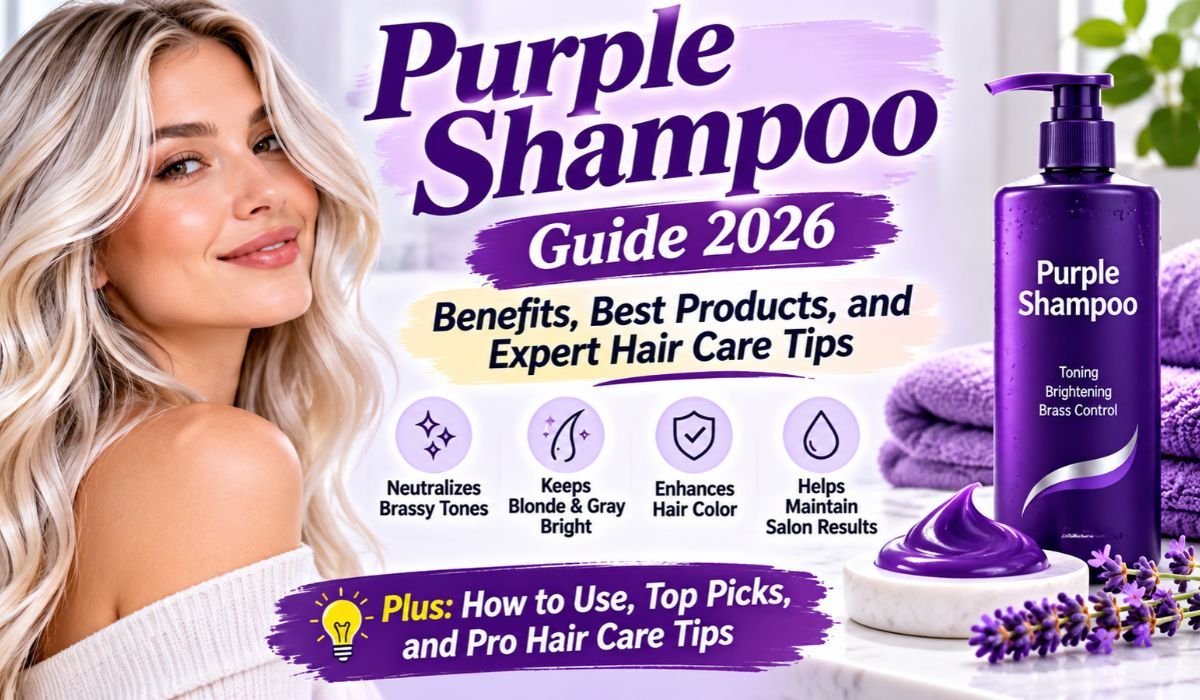
There’s something especially satisfying about leaving a salon with freshly colored blonde hair. The color looks bright, the highlights stand out, and every strand seems to catch the light beautifully. Unfortunately, maintaining that appearance isn’t always straightforward. After several washes, unwanted yellow tones can begin to appear, leaving your once-vibrant blonde looking dull and brassy.
That’s where Purple Shampoo comes in. This color-depositing hair care product helps neutralize unwanted yellow undertones, making it easier to maintain blonde, platinum, gray, and silver hair between salon appointments.
However, getting the best results involves more than simply buying a bottle of purple shampoo. Your hair’s condition, the strength of the formula, and how frequently you use it all influence the outcome.
Whether you’re new to blonde hair care or looking to improve your existing routine, this Purple Shampoo Guide 2026 covers everything you need to know, from the science behind color correction to the best products and practical advice from professional hairstylists.
Quick Information About Purple Shampoo
| Feature | Information |
|---|---|
| Product Name | Purple Shampoo |
| Product Category | Color-Depositing Shampoo |
| Primary Purpose | Neutralizing Yellow Undertones |
| Main Pigment | Violet Pigment |
| Working Principle | Color Theory |
| Best For | Blonde, Platinum, Gray, and Silver Hair |
| Suitable Hair Textures | Straight, Wavy, Curly, and Coarse |
| General Usage | Every Four to Six Washes |
| Application Time | Depends on Product Instructions |
| Color Correction | Temporary |
| Hair Lightening | Does Not Chemically Lighten Hair |
| Key Ingredients | Violet Pigments and Conditioning Agents |
| Moisturizing Ingredients | Glycerin, Shea Butter, and Hyaluronic Acid |
| Main Benefits | Reduced Brassiness and Improved Brightness |
| Potential Side Effects | Dryness and Violet Discoloration |
| Affordable Brands | Clairol and L’Oréal Paris |
| Premium Brands | Oribe and Kérastase |
| Recommended Aftercare | Moisturizing Conditioner |
| Alternative Products | Purple Conditioner and Toning Masks |
| Daily Use | Depends on Formula and Hair Condition |
What Is Purple Shampoo?
Purple Shampoo is a specially formulated hair care product that contains violet pigments to reduce unwanted yellow tones in light-colored hair. While ordinary shampoo focuses mainly on removing dirt, excess oil, and styling product buildup, purple shampoo performs an additional job by temporarily adjusting the appearance of hair color.
It’s particularly popular among people with natural blonde hair, bleached hair, platinum highlights, and naturally gray or silver strands. Even brunettes with lighter highlights can benefit from using it.
The violet pigments settle onto the hair, helping create a cooler and more balanced appearance. Unlike bleach or permanent hair dye, however, purple shampoo doesn’t chemically change your natural hair pigment.
Think of it as a maintenance product rather than a coloring treatment. It helps preserve the shade you already have, making it easier to enjoy your preferred hair color between professional appointments.
How Does Purple Shampoo Work?
The secret behind Purple Shampoo lies in a familiar artistic principle known as Color Theory. On the color wheel, purple sits directly opposite yellow. When violet pigments are introduced to yellow-toned hair, they visually counteract that unwanted warmth.
As you wash your hair, the pigments temporarily deposit onto the strands. The result is often a cooler, cleaner-looking blonde with less noticeable brassiness.
However, the process isn’t identical for everyone. Hair porosity, pigment concentration, application time, and previous chemical treatments can all affect how much color your hair absorbs.
Bleached hair, for example, is often more porous than untreated hair. Certain sections may absorb violet pigments faster, creating uneven results if the product is left on too long.
This explains why a heavily pigmented shampoo isn’t always the best choice. Sometimes, a gentler lavender formula provides a more attractive and natural-looking finish.
What Causes Brassy Hair?
Brassiness is a common frustration for anyone with lightened hair. It occurs when unwanted yellow, orange, or warm undertones become more visible, often as the effects of professional hair toner begin to fade.
Everyday environmental exposure can contribute to the problem. Sunlight, hard water, mineral deposits, and pollutants may gradually affect the appearance of blonde hair. Frequent washing can also accelerate the fading of temporary salon toners.
Brittany Byrd, a hairstylist and owner of Blondify Studio, identifies oxidation and environmental contamination as important factors behind brassiness.
Understanding what’s causing the discoloration can save you time and prevent unnecessary product use. If hard water deposits are responsible, a mineral-removing treatment may be more effective than repeated applications of purple shampoo.
Similarly, hair with strong orange undertones may respond better to blue shampoo. Choosing the correct treatment starts with recognizing the difference between yellow and orange brassiness.
Benefits of Using Purple Shampoo
One of the greatest advantages of Purple Shampoo is the convenience it offers. Instead of scheduling another salon appointment whenever yellow tones appear, you can often refresh your hair color at home.
Regular, appropriate use helps maintain cooler blonde shades, brighten platinum highlights, and reduce yellow discoloration in gray or silver hair. This can make hair look fresher and more vibrant without another chemical coloring treatment.
Many modern formulas also contain conditioning ingredients that improve softness, shine, and manageability. Products enriched with proteins and specialized strengthening ingredients may help reduce certain types of everyday breakage.
There’s also a practical financial benefit. Maintaining your color at home may help extend the time between professional toning appointments.
Still, it’s important to have realistic expectations. Purple shampoo cannot permanently repair split ends, reverse chemical damage, or replace every salon treatment. It works best as one part of a thoughtful Blonde Hair Care routine.
Best Purple Shampoos in 2026
With so many products available, choosing the Best Purple Shampoo can feel overwhelming. Some formulas focus on intense toning, while others prioritize moisture, gentle cleansing, or everyday color maintenance.
The following recommendations are based on previously published hairstylist advice, manufacturer information, and reported customer experiences. They represent research-based selections rather than independently tested product rankings.
| Purple Shampoo | Best For | Reference Price |
|---|---|---|
| Amika Bust Your Brass | Overall Toning and Conditioning | $28 |
| Oribe Bright Blonde | Luxury Hair Care | $49 |
| Klorane Anti-Yellowing | Gentle Toning | $22 |
| Clairol Shimmer Lights | Budget-Friendly Maintenance | $13 |
| Kérastase Blond Absolu Ultra-Violet | Cool-Toned Blondes | $44 |
| R+Co Sunset Blvd | Frequent Maintenance | $34 |
| Pureology Strength Cure Blonde | Damaged Hair | $37 |
| Sun Bum Purple Shampoo | Sun-Exposed Hair | $11 |
| Nak Hair Australia Blonde Shampoo | Natural Blondes | $35 |
| Redken Color Extend Blondage | Brassy Blonde Hair | $27 |
| Milk_Shake Silver Shine | Brightness and Shine | $26 |
| Davines Alchemic Shampoo Silver | Silver and Platinum Hair | $34 |
| Olaplex No. 4P | Toning and Strengthening | $32 |
| L’Oréal Paris EverPure | Affordable Sulfate-Free Care | $9 |
| Christophe Robin Baby Blonde Mask | Conditioning Alternative | $53 |
Amika Bust Your Brass combines violet pigments with plant butters and quinoa protein, making it an appealing option for people who want both toning and conditioning benefits. Oribe Bright Blonde offers a more luxurious approach, with botanical ingredients intended to enhance brightness and shine.
For shoppers working with a smaller budget, Clairol Shimmer Lights and L’Oréal Paris EverPure provide affordable alternatives. Clairol is particularly useful for occasional maintenance, although some users may find it drying.
Pureology Strength Cure Blonde and Olaplex No. 4P are marketed toward people concerned about chemically treated or damaged hair. Meanwhile, Davines Alchemic Shampoo Silver is particularly suited to silver and platinum shades.
R+Co Sunset Blvd offers a lighter lavender formula for gentler maintenance. Christophe Robin Baby Blonde Mask takes a different approach, combining temporary toning with conditioning rather than functioning as a traditional shampoo.
These prices are historical reference figures, not independently verified retail prices for 2026. Actual costs, bottle sizes, availability, currencies, and product formulations may vary.
How to Choose the Best Purple Shampoo
The right Purple Shampoo isn’t necessarily the one with the highest price or the darkest pigment. What matters most is how well the formula suits your hair.
If you’re dealing with mild yellow tones, a lighter lavender shampoo may be all you need. More noticeable brassiness might require a stronger violet formula, although highly concentrated products should be used carefully.
Hairstylist Tiffany Munoz recommends considering pigment intensity when choosing a shampoo for regular maintenance. However, the visible darkness of a product doesn’t always reveal exactly how much pigment it will deposit.
Fine, bleached, and highly porous hair can absorb color quickly, increasing the possibility of unwanted violet tones. Dry or curly hair may benefit more from formulas containing additional conditioning ingredients.
Before purchasing a product, consider your usual washing schedule, your hair’s moisture needs, and the amount of color correction you want. A reasonably priced shampoo that works well for your hair is often a better investment than an expensive product that doesn’t meet your needs.
Best Ingredients in Purple Shampoo
While violet pigments perform the main color-correcting function, the remaining ingredients can make a considerable difference in how your hair feels afterward.
Hyaluronic acid and glycerin are commonly used humectants that support moisture retention. Shea butter helps condition and soften hair, while panthenol can improve manageability and reduce roughness.
Aloe vera is another popular conditioning ingredient. Quinoa protein and other plant-based proteins appear in formulas designed to support hair strength and reduce breakage.
Some products also contain botanical ingredients such as centaury extract and edelweiss flower, which are included in certain anti-yellowing and protective hair care formulations.
If your hair tends to feel dry after washing, a Sulfate-Free Purple Shampoo may be worth exploring. However, sulfate-free doesn’t automatically mean gentle. The complete formulation determines how a product interacts with your hair and scalp.
Anyone with fragrance sensitivity or a history of scalp irritation should take a closer look at the ingredient label before introducing a new shampoo into their routine.
How to Use Purple Shampoo Correctly
Applying Purple Shampoo might seem straightforward, but a few small adjustments can make the difference between beautifully toned hair and an unwanted lavender tint.
Begin by thoroughly wetting your hair. If you’ve used several styling products or have noticeable oil buildup, washing with your regular shampoo first may help prepare your hair for more even toning.
Apply an appropriate amount of purple shampoo and distribute it carefully through the sections that need color correction. Remember that previously bleached areas may absorb pigment more quickly than healthier sections.
Allow the shampoo to remain on your hair for the time recommended on the packaging. Once the application is complete, rinse thoroughly until the remaining product has been removed.
If you’re trying a particularly concentrated formula for the first time, testing it on a small, less visible section of hair can help you understand how your strands respond.
Finish with a moisturizing conditioner. This simple step helps maintain softness, reduces tangling, and makes freshly washed hair easier to manage.
How Often Should You Use Purple Shampoo?
Professional hairstylists interviewed by NBC Select suggest using Purple Shampoo every four to six washes as a reasonable starting point. Nevertheless, your ideal schedule may look quite different from someone else’s.
Natural blonde hair often needs only occasional toning. Platinum or chemically lightened hair may require more frequent maintenance, particularly when unwanted yellow tones become noticeable.
Lightly pigmented shampoos are sometimes formulated for regular use, while concentrated violet products generally require greater caution.
Rather than following a rigid schedule, pay attention to your hair’s appearance. Natural daylight can be especially helpful when checking whether your blonde shade is becoming warmer or losing brightness.
If your hair begins to look grayish, slightly purple, or unusually dull, you may be using the product too frequently. Taking a break and returning to your regular shampoo can help restore a more balanced appearance.
How Long Should You Leave Purple Shampoo On?
There isn’t a universal application time that works for every Purple Shampoo. Different formulas contain different pigment concentrations, and individual hair types respond at different speeds.
Many products recommend leaving the shampoo on for a few minutes. Others are designed for shorter or longer application periods. The instructions on your particular bottle should always guide your routine.
People with fine, bleached, or highly porous hair should be especially cautious. Starting with the shortest recommended application time allows you to assess the results without exposing your hair to unnecessary pigment buildup.
Leaving purple shampoo on overnight is generally not advisable. Applying it to dry hair without specific manufacturer instructions can also increase the risk of uneven color absorption.
It’s worth remembering that leaving the product on longer doesn’t automatically improve the results. In many cases, a shorter and more controlled application produces a more natural finish.
Purple Shampoo for Different Hair Types
Every head of hair responds differently to toning products. That’s why a shampoo that works beautifully for one person may produce disappointing results for another.
Fine hair can become oversaturated with violet pigment, particularly when the strands have been chemically lightened. A milder formula and shorter application time may help prevent this problem.
Thick or coarse hair may respond differently depending on its porosity and previous treatments. Hair texture alone doesn’t determine how much pigment is needed.
Curly and textured hair often requires extra attention to moisture. Frequent use of certain cleansing shampoos may leave curls feeling dry or difficult to manage. In these situations, a Purple Conditioner or moisturizing toning mask may be a more suitable alternative.
Natural blondes generally benefit from occasional maintenance, while gray and silver hair can respond well to gentle anti-yellowing formulas.
Brunettes with blonde highlights or balayage can also use purple shampoo, concentrating the product on the lighter sections that need toning.
Purple Shampoo Before and After
One reason Purple Shampoo remains popular is that the difference can sometimes be noticeable after a single wash. Blonde hair with visible yellow undertones may appear cooler, brighter, and more balanced following an appropriate application.
Platinum shades can regain some of their desired cool appearance, while gray and silver strands may look clearer and less yellow.
However, Purple Shampoo Before and After results depend on several factors. The original hair color, degree of brassiness, pigment concentration, and hair condition all influence the outcome.
For a fair comparison, examine your hair when it’s completely dry and under similar lighting conditions. Bathroom lighting, sunlight, and wet hair can create noticeably different impressions of the same color.
Purple shampoo cannot transform dark hair into blonde or permanently alter its natural pigment. If your hair has severe discoloration or uneven bleaching, professional color correction is likely to provide more reliable results.
Purple Shampoo vs. Blue Shampoo
Purple Shampoo and Blue Shampoo are frequently mentioned together, but they aren’t interchangeable. Each product targets a different unwanted undertone.
Purple pigments counteract yellow tones, making them particularly useful for blonde, platinum, and silver hair. Blue pigments neutralize orange tones, which are commonly found in lightened brunette hair.
Regular shampoo, on the other hand, focuses primarily on cleansing rather than color correction.
| Feature | Purple Shampoo | Blue Shampoo | Regular Shampoo |
|---|---|---|---|
| Main Pigment | Violet | Blue | Usually None |
| Primary Purpose | Yellow Tone Correction | Orange Tone Correction | Cleansing |
| Best For | Blonde and Silver Hair | Lightened Brunette Hair | Everyday Hair Care |
| Color Effect | Temporary | Temporary | Generally None |
| Usage | As Needed | As Needed | According to Hair Needs |
Purple conditioner provides another option for people who want temporary toning alongside conditioning benefits. Professional hair toner offers more targeted color adjustment and may provide longer-lasting results, depending on the treatment.
Ultimately, choosing the right product comes down to identifying the unwanted undertone rather than relying solely on your overall hair color.
Side Effects and Common Mistakes
Although Purple Shampoo is a useful hair care product, using too much can create problems that are easily avoided with a more balanced routine.
Excessive application may leave hair feeling dry, rough, or difficult to manage. Concentrated pigments can also accumulate on porous strands, resulting in temporary purple discoloration or uneven patches of color.
One common mistake is assuming that stronger toning will always produce brighter blonde hair. In reality, excessive pigment buildup can make blonde shades appear darker or duller.
Skipping conditioner, exceeding recommended application times, and replacing regular shampoo entirely are other habits that may contribute to unwanted results.
Some individuals may experience scalp irritation due to fragrances, preservatives, or other ingredients. If irritation occurs, discontinue use and rinse the product thoroughly.
People with heavily processed or fragile hair should be particularly careful. Excessive dryness and tangling can increase the risk of breakage in strands that are already vulnerable.
How to Remove Purple Shampoo Buildup
Discovering a purple tint in your blonde hair can be frustrating, especially when you were hoping for a brighter result. Fortunately, the pigments found in most purple shampoos are temporary and gradually fade.
The first thing to do is stop using color-depositing products. Return to your regular shampoo and allow the excess pigment to wash away naturally.
If discoloration remains noticeable, an appropriate clarifying shampoo may help remove stubborn buildup. However, clarifying products should be used carefully on bleached or fragile hair because excessive cleansing can contribute to dryness.
Follow your cleansing routine with a moisturizing conditioner or nourishing hair mask to improve softness and manageability.
Avoid harsh homemade remedies involving baking soda mixtures, household cleaning products, or additional bleach. These approaches may worsen the condition of your hair without providing predictable results.
If the discoloration persists or appears uneven, a professional colorist can assess your hair and recommend an appropriate solution.
Expert Hair Care Tips for Blonde Hair
Beautiful blonde hair requires more than a bottle of toning shampoo. The condition of your hair plays an equally important role in how bright, smooth, and healthy it appears.
Professional hairstylists Brittany Byrd, Tiffany Munoz, and Jasmine Burnside have shared recommendations about managing brassiness, choosing suitable pigment concentrations, and selecting effective toning products. Trichologist Shab Caspara has also highlighted gentle anti-yellowing formulas as useful options for maintaining light-colored hair.
Alongside occasional toning, a good routine should include moisturizing conditioners, gentle detangling, and deep-conditioning treatments when needed.
Heat protection is particularly important if you regularly use straighteners, curling irons, or hair dryers. Reducing unnecessary exposure to high temperatures may help limit additional damage.
Protecting your hair from prolonged sunlight can also help preserve its appearance. If you live in an area with hard water, a suitable chelating or mineral-removing treatment may address buildup that ordinary toning shampoos cannot remove.
Most importantly, avoid treating every hair color concern with more pigment. Sometimes your hair needs moisture, gentler cleansing, or professional attention rather than another application of Purple Shampoo.
Final Thoughts
Purple Shampoo continues to be a valuable addition to modern hair care routines in 2026. For people with blonde, platinum, gray, or silver hair, it offers a convenient way to manage unwanted yellow tones and maintain a fresher appearance between salon visits.
The real secret to successful toning isn’t necessarily purchasing the most expensive product. It’s understanding your hair, choosing a suitable pigment concentration, and following an application routine that respects your hair’s condition.
Affordable options such as Clairol and L’Oréal Paris may provide satisfactory results, while premium formulas from Oribe, Kérastase, and other professional brands offer different combinations of toning and conditioning ingredients.
Whichever product you choose, remember that maintaining beautiful blonde hair involves more than color correction. Moisture, gentle cleansing, heat protection, and consistent care all contribute to the final result.
When used thoughtfully, purple shampoo can help keep your hair looking bright, balanced, and beautifully maintained without making your routine unnecessarily complicated.
FAQs About Purple Shampoo
What Does Purple Shampoo Do?
Purple Shampoo temporarily deposits violet pigments onto the hair to neutralize unwanted yellow undertones. It helps blonde, platinum, gray, and silver hair maintain a cooler and brighter appearance. Unlike permanent hair dye or bleach, it doesn’t chemically change the underlying hair color.
Can I Use Purple Shampoo Every Day?
Some lightly pigmented formulas are designed for frequent or daily use. However, using concentrated purple shampoo every day may cause dryness, excessive pigment buildup, or unwanted violet discoloration. Using it every four to six washes is a reasonable starting point, although individual needs and product instructions vary.
Does Purple Shampoo Lighten Hair?
No, purple shampoo doesn’t contain the bleaching action needed to permanently lighten hair. Instead, it reduces the appearance of unwanted yellow tones, which can make an existing blonde shade look brighter. It cannot turn naturally dark hair blonde or replace a professional lightening treatment.
Can Brunettes Use Purple Shampoo?
Yes, brunettes with blonde highlights, balayage, or other lightened sections can benefit from purple shampoo. It helps manage yellow undertones in those lighter areas. However, blue shampoo is generally a more suitable choice when the primary concern is orange brassiness.
Can Purple Shampoo Damage Hair?
Excessive use can contribute to dryness, roughness, and tangling, making already fragile hair more vulnerable to breakage. Choosing an appropriate formula, following recommended application times, and using a moisturizing conditioner can help reduce these risks. Purple shampoo should complement a balanced hair care routine.
Should I Use Conditioner After Purple Shampoo?
Yes, applying conditioner after purple shampoo is generally recommended. Conditioner helps improve softness, reduce tangling, and maintain manageability. This is particularly beneficial for bleached, curly, dry, or chemically treated hair, which may require additional moisture and conditioning.
What Is the Best Purple Shampoo for Damaged Hair?
Pureology Strength Cure Blonde and Olaplex No. 4P are popular options marketed toward damaged and chemically treated hair. Amika Bust Your Brass also combines toning pigments with conditioning and strengthening ingredients. The best choice depends on your hair’s porosity, moisture requirements, sensitivity, and overall condition.
How Long Does Purple Shampoo Last?
The effects of purple shampoo are temporary and gradually fade with subsequent washes. Results depend on pigment concentration, hair porosity, washing frequency, and the cleansing products you use. Some people notice the benefits for several washes, while others require more frequent maintenance to preserve their preferred shade.
Learn more and explore exciting content on: Hayden Panettiere How Did She Die? What We Know About the Reported Cause of Death









Leave a Reply