
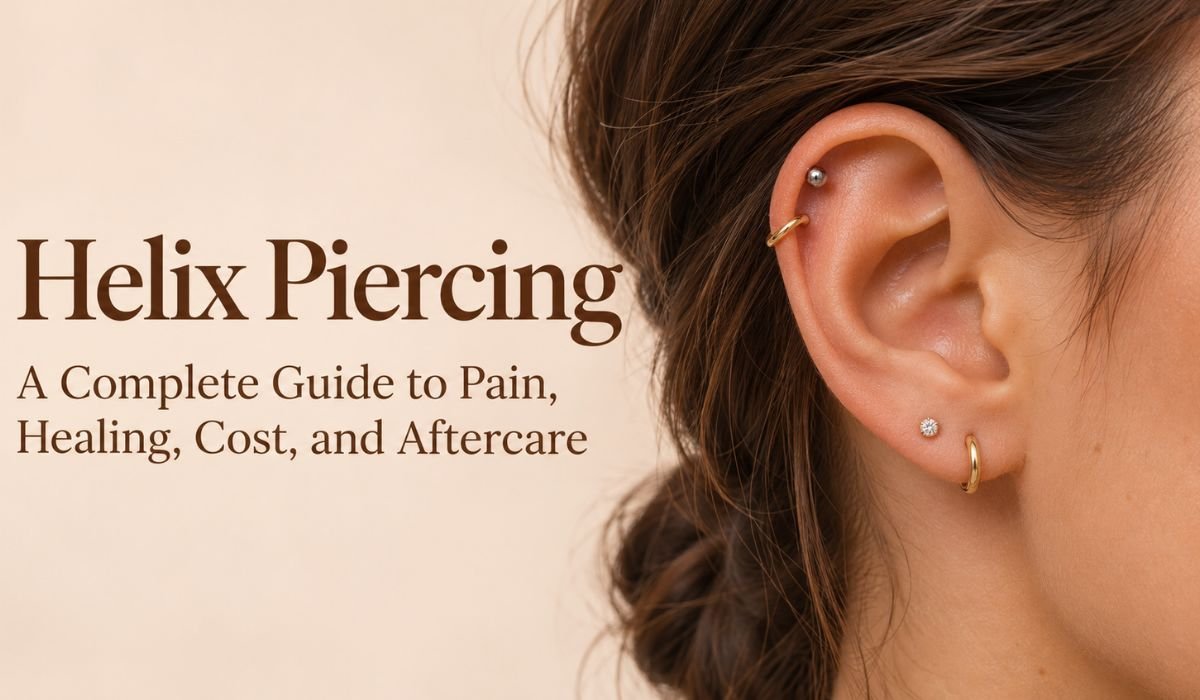
Sometimes, a small piece of jewelry can completely transform your look. A Helix Piercing is a perfect example. Positioned along the outer edge of the ear, it offers countless styling possibilities without requiring anything particularly bold or dramatic. A delicate diamond stud can add a little sparkle, while a gold hoop creates a simple, timeless appearance.
Still, there’s more to getting a helix piercing than choosing an earring you love. Unlike a traditional earlobe piercing, it involves cartilage, which takes considerably longer to heal and requires more careful attention during recovery.
If you’re thinking about getting a Helix Piercing in 2026, knowing what to expect can make the entire experience easier. From choosing the right piercing studio to understanding healing times and selecting suitable jewelry, this guide covers everything you need to know, drawing on established medical and professional piercing guidance.
Quick Bio Information
| Information | Details |
|---|---|
| Piercing Name | Helix Piercing |
| Piercing Location | Outer Rim of the Ear |
| Piercing Category | Cartilage Piercing |
| Pain Level | Varies From Person to Person |
| Healing Time | 6–9 Months or Longer |
| Estimated Cost | $55–$100 at Example US Studios |
| Piercing Method | Sterile, Single-Use Needle |
| Recommended Starter Jewelry | Flat-Back Stud |
| Preferred Jewelry Material | Implant-Grade Titanium |
| Alternative Material | Biocompatible Solid Gold |
| Cleaning Solution | Sterile 0.9% Saline |
| Popular Variation | Double Helix Piercing |
| Forward Helix Location | Upper Front Ear Cartilage |
| Jewelry Change | After Complete Healing |
| Potential Risks | Infection, Irritation, and Scarring |
| Aftercare Requirement | Consistent, Gentle Cleaning |
| Professional Follow-Up | Recommended |
| Piercing Gun | Not Recommended |
What Is a Helix Piercing?
A Helix Piercing is an ear piercing that passes through the cartilage along the outer rim of the ear. While many people associate it with the very top of the ear, there’s actually quite a bit of flexibility when it comes to placement.
Unlike traditional Earlobe Piercings, which involve soft tissue, a helix passes through firmer cartilage. That difference affects everything from the initial sensation to the length of the healing period.
Some people prefer a higher placement with a tiny gemstone, while others choose a lower position that accommodates a decorative hoop. A professional piercer can examine your ear and recommend a suitable location that complements both your natural anatomy and your preferred jewelry.
Different Types of Helix Piercings
One of the reasons helix piercings remain so popular is their versatility. The Standard Helix Piercing consists of a single opening along the outer cartilage, offering a clean appearance that works beautifully on its own.
A Forward Helix Piercing, on the other hand, sits closer to the front of the upper ear, near where it meets the head. Double and Triple Helix Piercings feature two or three openings, creating opportunities for layered jewelry arrangements. A Quadruple Helix Piercing takes that concept further with four separate openings.
There’s also the Mid Helix Piercing, which sits farther down the outer cartilage. Choosing between these variations isn’t simply about appearance. Your ear needs enough space to accommodate the jewelry comfortably, making professional guidance especially valuable.
How Is a Helix Piercing Done?
Getting a Helix Piercing is generally a straightforward process when performed by an experienced professional. Your appointment usually begins with a consultation, during which the piercer examines your ear, discusses jewelry options, and helps determine the best placement.
After cleaning the area, the piercer marks the intended position so you can check it before proceeding. Once you’re satisfied, a sterile, single-use needle creates the opening, followed by the insertion of suitable starter jewelry.
The Association of Professional Piercers advises against using piercing guns, particularly for cartilage piercings, because they can cause unnecessary tissue damage. Before leaving the studio, you should receive clear aftercare instructions and information about follow-up appointments, healing expectations, and possible jewelry downsizing.
Does a Helix Piercing Hurt?
Pain is often the biggest concern for anyone considering their first cartilage piercing. The reassuring news is that the actual procedure is usually brief.
Many people describe Helix Piercing Pain as a quick, sharp pinch accompanied by a feeling of pressure. However, everyone’s experience is different. Cartilage thickness, piercing location, individual sensitivity, and the piercer’s technique can all influence how uncomfortable the procedure feels.
You may notice tenderness, minor swelling, or occasional throbbing afterward. These symptoms generally improve as your ear begins to recover. Arriving well-rested and relaxed may also help make the experience more manageable. If discomfort becomes increasingly severe rather than gradually improving, it’s important to seek professional advice.
Helix Piercing Healing Time
Patience is essential when it comes to cartilage piercings. According to the Association of Professional Piercers, ear cartilage generally takes six to nine months or longer to heal completely. In some cases, recovery may take approximately a year.
Cartilage receives less blood flow than softer earlobe tissue, which helps explain why healing takes longer. During the first few weeks, you may experience localized swelling, sensitivity, and small amounts of pale fluid that dry into crusts around the jewelry.
As recovery progresses, these symptoms should gradually settle. However, don’t assume your piercing is fully healed just because it looks normal on the outside. The internal channel may still be delicate. Giving your ear enough time to recover can prevent unnecessary irritation and setbacks.
How Much Does a Helix Piercing Cost?
The price of a Helix Piercing in 2026 depends on several factors, including your location, the studio’s pricing, the piercer’s experience, and the jewelry you choose.
Published prices from two American piercing studios show starting totals of approximately $55 and $100, including basic jewelry. These figures provide useful examples rather than a universal average. A solid gold or diamond stud can cost significantly more, while double or triple piercings may involve additional procedure and jewelry charges.
It’s also worth asking whether the quoted price includes follow-up appointments and jewelry downsizing. Although a cheaper piercing might seem appealing, quality materials, professional experience, and proper sterilization are far more important than saving a few dollars.
Helix Piercing Aftercare
Looking after a new piercing doesn’t need to be complicated. In fact, gentle and consistent care is often more beneficial than an elaborate cleaning routine.
Start by washing your hands before touching the area. A sterile wound wash containing 0.9% sodium chloride is generally recommended for cleaning. After rinsing, gently dry the piercing with clean, disposable gauze.
Avoid rotating the jewelry, picking at crusts, or applying harsh products such as rubbing alcohol and hydrogen peroxide. Homemade salt solutions and strong antibacterial products can also irritate healing tissue.
Keep hair products and cosmetics away from the piercing, and avoid swimming in pools, lakes, or hot tubs during recovery. Depending on your piercer’s instructions, cleaning one to three times daily may be appropriate. Remember that excessive cleaning can create problems of its own.
How to Sleep With a Helix Piercing
One of the less obvious challenges of getting a Helix Piercing is adjusting your sleeping habits. If you’re accustomed to sleeping on the same side every night, a new piercing can make that position uncomfortable.
Repeated pressure may irritate the recovering tissue and, in some cases, affect the angle of the piercing. Sleeping on the opposite side is often the easiest solution.
A travel pillow can be another useful option. Its central opening allows your ear to rest without being pressed against a flat surface. Regularly changing your pillowcases also helps maintain cleanliness. During the day, pay attention to tight hats, headphones, helmets, and hair accessories that might catch on your jewelry or place unnecessary pressure on the area.
Best Helix Piercing Jewelry
Choosing jewelry is easily one of the most enjoyable parts of getting a helix piercing. From simple metallic studs to beautifully detailed gemstone designs, there’s something to suit nearly every personal style.
For a fresh piercing, a properly fitted Flat-Back Stud is often a practical choice because it helps minimize movement. Implant-Grade Titanium is particularly useful for people concerned about nickel sensitivity. Other suitable materials include certain grades of implant-certified steel, niobium, platinum, and biocompatible solid 14K or 18K gold.
Internally threaded and threadless jewelry designs can help protect delicate tissue during insertion. Once your piercing has fully healed, you can explore seamless hoops, captive bead rings, clickers, barbells, and more elaborate decorative pieces without compromising on comfort.
When Can You Change Helix Jewelry?
It’s understandable to want to replace your starter jewelry as soon as the initial tenderness disappears. However, changing it too early can interfere with recovery.
Decorative jewelry changes should generally wait until your Helix Piercing has completely healed. Professional downsizing is different and may be necessary much earlier.
Starter studs often feature longer posts to leave room for swelling. Once the swelling decreases, that extra length may cause the jewelry to catch on hair or clothing. A qualified piercer can assess the healing tissue and replace the post with a more suitable size if necessary.
Switching to a hoop prematurely may also introduce additional movement and pressure. Rather than following a specific date, let a professional evaluate your individual healing progress.
Helix Piercing Risks and Complications
Although many people enjoy their cartilage piercings without significant difficulties, complications can still occur. Irritation, allergic reactions, excessive scarring, jewelry embedding, and bacterial infections are among the possible concerns.
One particularly serious complication is Perichondritis, an infection affecting the tissue surrounding ear cartilage. Cleveland Clinic identifies upper ear piercings as a potential cause of this condition.
Increasing pain, significant swelling, unusual warmth, spreading redness or discoloration, pus, and fever are warning signs that shouldn’t be ignored. Suspected cartilage infections require prompt medical attention because untreated infections may permanently damage the ear.
Avoid relying exclusively on home remedies if you suspect an infection. You should also leave the jewelry in place unless a healthcare professional advises otherwise.
Piercing Bumps vs. Keloids
Discovering a bump beside your new piercing can be worrying, but it doesn’t necessarily mean you’ve developed a keloid.
Irritation bumps can result from several issues, including repeated friction, poorly fitted jewelry, pressure, and inflammation. A keloid is different. It’s a type of abnormal scar that extends beyond the boundaries of the original wound and may continue growing over time.
The American Academy of Dermatology notes that people with a personal or family history of keloids are more likely to develop them after skin injuries, including piercings.
Depending on the diagnosis, treatment may involve corticosteroid injections, pressure therapy, or other specialist procedures. Never attempt to squeeze, cut, or drain a piercing bump yourself. Persistent or growing lumps should be professionally examined.
Helix Piercing vs. Other Ear Piercings
If you’re exploring different Ear Piercings, understanding their locations can help you choose a style that suits you.
A Helix Piercing sits along the outer cartilage, whereas a Conch Piercing is positioned within the central part of the ear. A Tragus Piercing passes through the small cartilage structure beside the ear canal. Meanwhile, a Daith Piercing occupies an inner cartilage fold, and a Rook Piercing sits along an upper internal ridge.
Traditional Earlobe Piercings involve softer tissue and generally heal more quickly. Although each placement offers its own appeal, the helix stands out for its flexibility. It works beautifully as a single piercing and can also complement several other jewelry arrangements.
Choosing a Professional Piercing Studio
Finding the right studio can make an enormous difference to your piercing experience. A professional piercer should have a solid understanding of ear anatomy, appropriate hygiene procedures, and suitable body jewelry.
Don’t hesitate to ask questions about sterilization, equipment, jewelry materials, and training. A reputable studio should be comfortable discussing its autoclave testing and explaining how instruments are sterilized. An experienced piercer will also tell you whether a particular placement is unsuitable for your ear rather than simply agreeing to every request.
If you have diabetes, a weakened immune system, a bleeding disorder, or a history of abnormal scarring, discuss these concerns with a healthcare professional before booking. A little preparation can help you avoid unnecessary complications.
Beautiful Helix Piercing Styling Ideas
Once your Helix Piercing has fully healed, you’ll have plenty of opportunities to experiment with different looks.
A thin gold hoop offers understated elegance and works well with almost any outfit. A small diamond or colorful gemstone stud adds a subtle sparkle without overwhelming the ear.
Double Helix Piercings look particularly attractive with matching hoops, while Triple Helix Piercings can feature studs of different sizes to create a balanced arrangement. Silver-colored titanium jewelry provides a modern, minimalist appearance.
For something more expressive, combine healed helix piercings with decorative lobe or conch jewelry. Whatever style you choose, remember that jewelry should feel as comfortable as it looks. Weight, size, and fit matter, particularly when wearing larger decorative pieces.
Final Thoughts
A Helix Piercing is more than a simple fashion accessory. It provides an opportunity to express your individuality, experiment with jewelry, and create a look that feels personal to you.
Still, the most successful piercing experiences involve more than appearance. Choosing an experienced professional, investing in suitable jewelry, following sensible aftercare recommendations, and allowing enough time for healing are equally important.
There’s no reason to rush the process. Cartilage needs time to recover, and protecting your ear throughout that period is far more valuable than switching to fashionable jewelry prematurely.
While this guide offers general educational information rather than individual medical advice, understanding the process and recognizing potential warning signs can help you approach your piercing with greater confidence.
FAQs About Helix Piercing
Is a Helix Piercing Painful?
Most people describe the procedure as a brief, sharp pinch followed by pressure. However, discomfort varies depending on personal pain tolerance, cartilage thickness, placement, and piercing technique. Mild tenderness afterward is normal, but severe or increasing pain should be professionally assessed.
Can a Helix Piercing Heal in Three Months?
Although a Helix Piercing may look considerably better after three months, the tissue inside the piercing channel may still be recovering. Complete healing generally takes six to nine months or longer, with some piercings requiring approximately a year.
Is a Hoop or Stud Better?
A properly fitted flat-back stud is often a practical choice for a fresh piercing because it can limit unnecessary movement. Once healing is complete, hoops become an attractive alternative, provided their size and design suit your ear.
Can I Get Two Helix Piercings Together?
Yes, many people choose to get two helix piercings during the same appointment. However, the suitability depends on available ear space and your piercer’s assessment. Healing multiple piercings simultaneously may require additional attention and patience.
Can a Helix Piercing Close Up?
Yes, a Helix Piercing can shrink or close when jewelry is removed, even if it has been established for some time. Fresh piercings are particularly vulnerable, so avoid leaving them empty unnecessarily.
Can I Wear Headphones After a Helix Piercing?
Headphones are generally fine as long as they don’t press against or irritate the healing area. Avoid tight over-ear headphones that cause discomfort, and keep any devices that contact your ears clean.
Is a Helix Piercing Safe?
Professional piercing techniques, sterile equipment, high-quality jewelry, and consistent aftercare can reduce the likelihood of complications. However, no cartilage piercing is completely risk-free. Recognizing signs of infection and seeking timely medical attention remain essential parts of responsible piercing care.
Learn more and explore exciting content on: Miu Miu Spectacle Frames: A Complete Guide to Styles, Features, and Buying Tips















Leave a Reply