
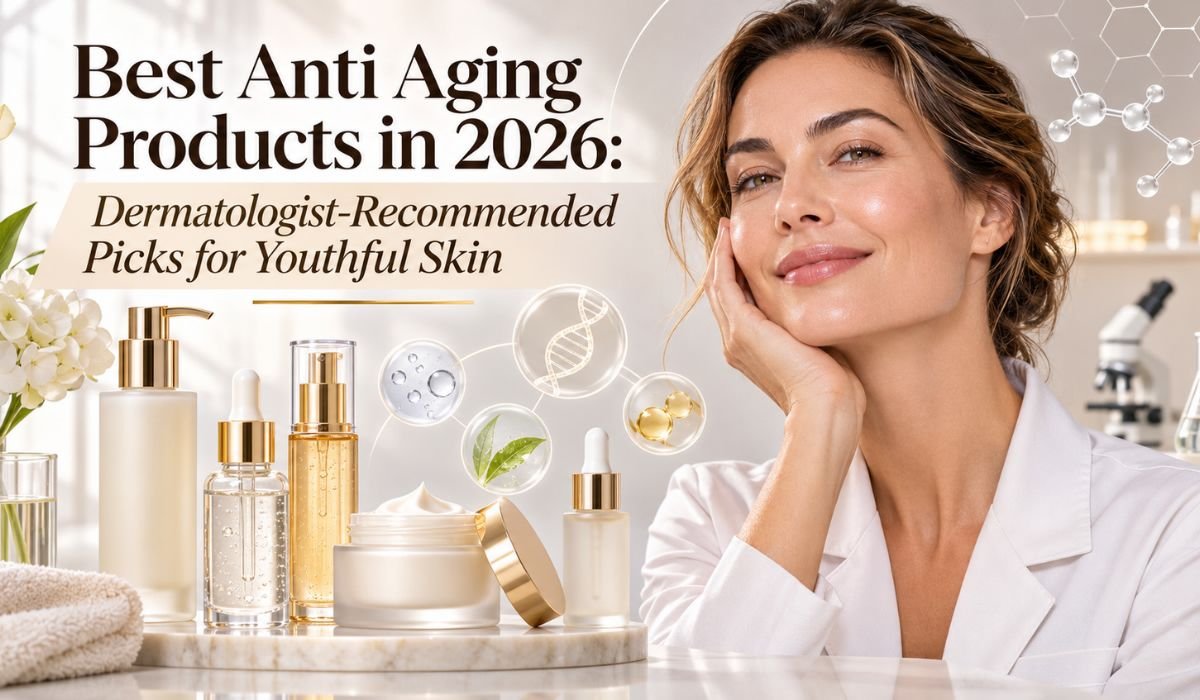
Walk into any beauty store or browse a skincare website, and you’ll find hundreds of products promising smoother, firmer, and younger-looking skin. Some cost less than a restaurant meal, while others come with price tags that rival a monthly grocery bill. But which ones are actually worth buying?
The best Anti Aging Products can make a meaningful difference in the appearance of fine lines, wrinkles, dryness, and uneven skin tone. The secret isn’t necessarily spending more money. It’s understanding what your skin needs and choosing ingredients with genuine scientific evidence behind them.
In 2026, dermatologists continue to recommend established skincare ingredients such as Retinol, Vitamin C, Hyaluronic Acid, and Ceramides. Daily sun protection remains just as important as any expensive serum or facial cream.
Drawing on dermatologist recommendations published by CNN Underscored, guidance from the American Academy of Dermatology, and clinical research, this guide explores effective anti-aging skincare products, their benefits, and practical ways to keep your skin healthy and radiant at every age.
Quick Bio Information About Anti Aging Products
| Category | Information |
|---|---|
| Topic | Anti Aging Products |
| Primary Purpose | Reducing Visible Signs of Aging |
| Best Preventive Product | Broad-Spectrum Sunscreen |
| Recommended SPF | SPF 30 or Higher |
| Leading Anti-Aging Ingredient | Retinoids |
| Popular Hydrating Ingredient | Hyaluronic Acid |
| Leading Antioxidant | Vitamin C |
| Skin Barrier Support | Ceramides |
| Skin Brightening Ingredient | Niacinamide |
| Plant-Derived Alternative | Bakuchiol |
| Firmness Support | Peptides |
| Affordable Serum | CeraVe Skin Renewing Retinol Serum |
| Premium Antioxidant Serum | SkinCeuticals C E Ferulic |
| Popular Eye Cream | L’Oréal Midnight Eye Cream |
| Retinol Application Time | Nighttime |
| Suitable Starting Age | Depends on Individual Skin Concerns |
| Expected Results | Several Weeks to Several Months |
| Skincare Technology | Red Light Therapy |
| Pregnancy Precaution | Avoid Retinoids |
| Key to Better Results | Consistency and Sun Protection |
What Are Anti Aging Products?
Anti Aging Products are skincare treatments formulated to address the visible changes that naturally occur as skin ages. They come in many forms, including facial serums, moisturizers, sunscreens, eye creams, and overnight treatments.
Not every product works in the same way. A hydrating serum, for example, attracts moisture to the skin, helping fine lines appear less noticeable. Retinoids work differently by encouraging skin cell renewal and gradually improving the appearance of sun-damaged skin. Antioxidants, meanwhile, help protect against environmental stress.
It’s important to understand that these products cannot completely reverse the natural aging process. What they can do is improve skin texture, restore moisture, and help maintain a healthier-looking complexion.
A few carefully chosen products that work well together will often be more useful than a bathroom cabinet filled with treatments you rarely use.
What Causes Skin Aging?
Skin Aging happens gradually, and everyone experiences it differently. Genetics certainly play a role, but everyday habits, environmental exposure, and hormonal changes also influence how the skin looks and feels over time.
As we grow older, our skin produces less Collagen and Elastin. These proteins help maintain firmness and flexibility, so their gradual decline contributes to wrinkles and sagging. Changes in moisture retention and slower Skin Cell Turnover can also leave the complexion looking dry, dull, or uneven.
Hormonal changes, particularly during menopause, may make dryness and sensitivity more noticeable.
One of the biggest external contributors to premature aging is Sun Exposure. Repeated exposure to ultraviolet radiation damages skin structures, encouraging the development of wrinkles, dark spots, and reduced elasticity.
Smoking and environmental pollution can contribute to further damage. While aging itself is unavoidable, protecting your skin from unnecessary environmental stress can make a meaningful difference over the years.
Best Anti-Aging Serums in 2026
A good Facial Serum can help address specific concerns without making your skincare routine unnecessarily complicated. The best option depends on whether you’re dealing with dryness, pigmentation, fine lines, or uneven texture.
CeraVe Skin Renewing Retinol Serum stands out as an affordable option. Recommended by board-certified dermatologist Dr. Sonia Badreshia-Bansal, it combines Retinol with Ceramides, Niacinamide, and Hyaluronic Acid to improve skin texture while supporting moisture retention.
For antioxidant protection, SkinCeuticals C E Ferulic Serum remains a popular premium choice. Its combination of Vitamin C, Vitamin E, and Ferulic Acid is designed to address visible environmental damage and uneven skin tone.
Medik8 Crystal Retinal 1 is another noteworthy option, particularly for beginners interested in Retinal. Its low-strength, 0.01% Retinaldehyde formulation allows users to introduce the ingredient gradually.
Sulwhasoo First Care Activating Serum focuses on hydration, while Mother Science Retinol Synergist combines Retinol with ingredients that support moisture and skin texture. SkinMedica TNS Advanced+ Serum offers a more expensive approach built around Growth Factors.
These selections reflect published dermatologist recommendations rather than independent hands-on testing conducted for this guide.
Best Anti-Aging Creams and Moisturizers
There’s a good reason dermatologists place so much importance on moisturizing. Skin that retains moisture generally looks smoother, feels more comfortable, and shows fewer dehydration-related fine lines.
Dermatologist Dr. Hadley C. King recommends Fig. 1 Retinol Night Cream Level 1, which combines Retinol with hydrating ingredients and Peptides. Its lower-strength formula makes it worth considering for people gradually introducing Retinol into their evening routine.
PCA Skin Collagen Hydrator is another option for those experiencing dryness and changes associated with mature skin. Meanwhile, Augustinus Bader The Rich Cream offers a luxury moisturizing experience for consumers with a larger skincare budget.
When comparing Anti-Aging Moisturizers, look beyond attractive packaging and familiar brand names. Ingredients such as Glycerin, Ceramides, and Hyaluronic Acid deserve particular attention because of their ability to support hydration and barrier health.
People with sensitive skin may find fragrance-free moisturizers more comfortable. In many cases, an affordable facial cream can provide all the moisture your skin needs.
Best Anti-Aging Eye Creams
Fine lines around the eyes are often among the first visible signs of aging. The skin in this area is thinner than much of the rest of the face, making dryness and wrinkles particularly noticeable.
L’Oréal Midnight Eye Cream offers a relatively affordable way to improve hydration around the eyes. SkinCeuticals A.G.E. Advanced Eye Cream provides a premium alternative formulated with Peptides and moisturizing ingredients that may help improve the appearance of Crow’s Feet.
Dark Circles, however, are a slightly more complicated concern. They may develop because of genetics, allergies, pigmentation, visible blood vessels, or age-related changes in facial structure. Unfortunately, no single eye cream can address every underlying cause.
Before investing in a specialized treatment, consider whether your regular facial moisturizer already provides enough hydration. Many people don’t need a separate eye cream unless they have a specific concern that requires additional attention.
Sunscreen: The Most Important Anti-Aging Product
If there’s one product worth using consistently, regardless of age or skin type, it’s Sunscreen. Even the most sophisticated anti-aging serum cannot compensate for repeated, unprotected exposure to ultraviolet radiation.
Daily sun protection helps reduce the risk of premature wrinkles, sunspots, uneven pigmentation, and other visible signs of sun damage.
La Roche-Posay Anthelios Light Fluid Mineral Sunscreen SPF 50 is a dermatologist-recommended option featured in CNN Underscored’s skincare guide. Dermalogica Dynamic Skin Recovery SPF 50 is another option for people who prefer to combine moisturizing benefits with sun protection.
The American Academy of Dermatology recommends choosing a Broad-Spectrum, Water-Resistant Sunscreen with SPF 30 or higher. Apply it generously before heading outdoors and reapply approximately every two hours while outside, particularly after swimming or sweating.
For individuals dealing with hyperpigmentation, tinted sunscreens containing Iron Oxides may offer additional protection against visible light.
The best sunscreen is ultimately one you find comfortable enough to wear regularly.
Most Effective Anti-Aging Ingredients
Understanding a few key skincare ingredients makes shopping considerably easier. Rather than relying on promises printed across the packaging, you can make more informed decisions by checking what a product contains.
Retinoids are among the best-studied topical treatments for visible signs of aging. With consistent use, they can improve fine lines, uneven pigmentation, and rough skin texture.
Hyaluronic Acid and Glycerin help attract moisture, while Ceramides strengthen the skin’s protective barrier. Niacinamide offers several potential benefits, including improved barrier function and a more even-looking complexion.
Vitamin C provides Antioxidant Protection and may help brighten skin affected by environmental damage. Peptides are also widely used in anti-aging formulations, although their ability to improve visible firmness depends on the particular ingredient and formulation.
Growth Factors represent another interesting area of skincare research. However, their supporting evidence isn’t as extensive as that available for established Retinoids.
Products promising permanent wrinkle removal or dramatic collagen restoration should always be approached with realistic expectations.
Retinol vs. Retinal vs. Bakuchiol
Retinol, Retinal, and Bakuchiol often appear in discussions about the best Anti Aging Products, but they aren’t interchangeable.
Retinol and Retinal are both Vitamin A derivatives. Once applied, the skin converts them into Retinoic Acid, the biologically active form of vitamin A. Retinal requires fewer conversion steps, although this doesn’t automatically make every Retinal product more effective than every Retinol formula.
Bakuchiol takes a different approach. Derived from plants, it has gained attention as a potential alternative for individuals who experience irritation when using Retinol.
A randomized, double-blind clinical study published in 2019 involved 44 participants and found that both Bakuchiol and Retinol improved wrinkles and pigmentation over 12 weeks. Participants using Retinol reported more scaling and stinging.
BYOS Rewind Youth Boost Bakuchiol Serum is one example of a commercially available option. However, Bakuchiol still has a smaller body of supporting research and shouldn’t be viewed as a proven replacement for prescription Retinoids.
The right choice depends on your skin’s sensitivity, treatment goals, and tolerance.
Best Anti Aging Products for Different Skin Types
A skincare product that works beautifully for one person may cause irritation or discomfort for another. That’s why understanding your skin type is more useful than simply following popular recommendations.
Dry Skin generally benefits from richer moisturizers containing Ceramides, Glycerin, and Hyaluronic Acid. These ingredients help maintain moisture and reduce the uncomfortable tightness that often accompanies dryness.
For Oily Skin, lightweight, non-comedogenic formulations may feel more comfortable. Niacinamide can also be helpful for addressing uneven texture and supporting barrier function.
People with Sensitive Skin should look for fragrance-free products and introduce stronger ingredients carefully. Combination Skin often responds well to lightweight hydration that doesn’t feel excessively heavy.
Mature Skin may benefit from nourishing moisturizers, antioxidants, and appropriate Retinoids. Certain Retinoids can also be useful for Acne-Prone Skin.
If you experience Eczema, Rosacea, or persistent sensitivity, professional dermatological advice can help you avoid treatments that might make your symptoms worse.
Anti-Aging Skincare for Every Age
Your skin’s needs at 25 may be quite different from what they are at 55. Although there isn’t a strict age-based rulebook for skincare, understanding these gradual changes can help you adjust your routine.
During your 20s, regular Sunscreen and moisturizing provide an excellent foundation. By your 30s, Vitamin C and carefully introduced Retinol may help address early fine lines and visible sun damage.
As you enter your 40s, changes in moisture retention, pigmentation, and firmness may become more noticeable. During your 50s, hormonal changes can contribute to additional dryness and sensitivity.
For people in their 60s and beyond, gentle cleansing, richer moisturizers, and Skin Barrier support often become increasingly valuable.
Still, age is only part of the picture. Your medical history, skin concerns, and tolerance matter more than the number of candles on your birthday cake. There’s no reason to adopt an entirely new skincare routine simply because you’ve entered another decade.
Affordable vs. Luxury Anti Aging Products
Luxury skincare can certainly be enjoyable, but expensive doesn’t necessarily mean more effective. Some of the most established skincare ingredients are available in products that cost considerably less than their premium counterparts.
Brands such as CeraVe and L’Oréal offer affordable formulations containing ingredients commonly recommended by dermatologists. Premium brands, including SkinCeuticals, SkinMedica, and Augustinus Bader, may offer specialized formulations, advanced packaging, or particularly luxurious textures.
Those differences can be worth considering, but they don’t automatically guarantee better results.
Packaging is especially relevant for certain antioxidants, which may lose effectiveness when repeatedly exposed to light or air. The overall formulation also matters because an impressive ingredient list doesn’t necessarily tell you how well a product performs.
If you’re working with a limited budget, prioritize a reliable Sunscreen, a good Moisturizer, and one targeted treatment. Check current ingredient labels and prices before purchasing, as manufacturers occasionally update their formulations.
Best Anti-Aging Skincare Tools in 2026
At-home beauty devices have become a familiar part of the skincare market. Products such as the Solawave 4-in-1 Red Light Therapy Wand, Medicube Age-R Booster Pro, NuFace Trinity Starter Kit, and Therabody TheraFace Mask offer different approaches to improving the appearance of skin.
Red Light Therapy may produce modest improvements in certain visible signs of aging. Microcurrent Devices, on the other hand, may temporarily enhance the appearance of facial firmness and contouring.
However, evidence supporting substantial, long-lasting improvements from some at-home devices remains limited. Results also depend on the technology, treatment schedule, and individual response.
Before purchasing a device, examine its intended use, safety instructions, and supporting clinical evidence. FDA clearance for a particular purpose shouldn’t be interpreted as a guarantee of dramatic results.
Individuals taking photosensitizing medications or living with certain medical conditions should seek professional guidance before using these technologies. For most people, skincare devices are optional extras rather than necessities.
How to Build an Anti-Aging Skincare Routine
One of the easiest ways to improve your skincare routine is to simplify it. You don’t need ten different treatments to care for your skin effectively.
In the morning, begin with a gentle cleanser. Follow it with an optional Vitamin C Serum, a suitable moisturizer, and Broad-Spectrum Sunscreen. If your skin feels particularly dry, a hydrating serum can provide additional moisture.
Your evening routine should begin by removing makeup, sunscreen, and impurities. Once your skin is clean, apply your chosen treatment, followed by a nourishing moisturizer.
If you’re new to Retinol, start with one or two applications per week. Gradually increase the frequency if your skin tolerates it. A pea-sized amount is generally sufficient for the entire face, although you should always follow the instructions for your particular product.
Applying moisturizer before and after Retinol may help reduce irritation. Most importantly, avoid introducing several strong treatments at the same time. A manageable routine is much easier to follow consistently.
How Long Do Anti-Aging Products Take to Work?
It’s easy to become impatient when you’ve invested in a new skincare product. Unfortunately, most treatments that address wrinkles and pigmentation need considerably more time than a few days.
Moisturizers and Hyaluronic Acid may provide relatively quick hydration, leaving the skin looking and feeling smoother. Ingredients such as Vitamin C and Niacinamide generally require several weeks or months before more noticeable improvements appear.
Retinol often takes three to six months of consistent use to produce meaningful visible changes, although some people may notice improvements earlier.
Sunscreen works differently. It provides UV protection when properly applied, while its long-term preventive benefits accumulate through regular use.
Rather than inspecting your skin every morning for dramatic changes, consider taking occasional photographs under similar lighting conditions. This provides a more realistic way to evaluate gradual progress without comparing yourself to heavily edited advertising images.
Common Mistakes and Safety Precautions
Even effective Anti Aging Products can cause problems when used incorrectly. Excessive exfoliation, skipping Sunscreen, and combining too many strong ingredients are common mistakes that can leave skin irritated rather than improved.
When the Skin Barrier becomes compromised, you may experience redness, dryness, peeling, burning, or increased sensitivity. Introduce new products individually and test unfamiliar formulations on a small area before applying them across your face.
Beginners should also avoid combining strong exfoliating acids with Retinol until they understand how their skin responds.
Pregnancy requires additional caution. Retinoids, including Retinol and prescription Tretinoin, should be avoided during pregnancy. Bakuchiol shouldn’t automatically be considered a safe alternative because pregnancy-specific safety evidence remains limited.
Balanced nutrition, adequate sleep, and avoiding smoking can complement your skincare efforts. If irritation persists, or if you notice an unusual, changing, or non-healing skin lesion, arrange an appointment with a dermatologist rather than attempting to treat it with cosmetic products.
Final Thoughts
The best Anti Aging Products in 2026 aren’t necessarily the newest arrivals or the most expensive treatments on the shelf. Often, the most useful products contain ingredients that dermatologists have recommended for years.
Daily Sunscreen, suitable Retinoids, antioxidants, and reliable moisturizers remain the foundation of an effective anti-aging skincare routine. Supporting ingredients such as Hyaluronic Acid, Ceramides, and Niacinamide can make that routine more comfortable and better suited to your individual needs.
The real challenge isn’t finding a miracle product. It’s building a routine that works for your skin, fits your budget, and feels manageable enough to maintain over time.
Wrinkles, fine lines, and changes in skin texture are natural parts of growing older. Rather than trying to erase every sign of aging, focus on protecting your skin, maintaining its health, and feeling comfortable in it.
Healthy, well-cared-for skin deserves attention at every age.
FAQs About Anti Aging Products
What Are the Best Anti Aging Products in 2026?
CeraVe Skin Renewing Retinol Serum, SkinCeuticals C E Ferulic, Medik8 Crystal Retinal 1, and La Roche-Posay Anthelios SPF 50 are noteworthy options featured in published skincare recommendations. Each serves a different purpose, so your choice should depend on whether you’re concerned about wrinkles, dryness, pigmentation, or sun protection.
Do Anti Aging Products Really Work?
Yes, products containing scientifically supported ingredients can improve the appearance of fine lines, dryness, rough texture, and uneven pigmentation. However, results depend on the formulation and consistent application. No cosmetic product can completely stop or reverse natural skin aging.
What Is the Most Effective Anti-Aging Ingredient?
Retinoids are among the most extensively researched topical ingredients for improving visible signs of aging. They help encourage skin cell renewal and can improve fine lines and uneven texture over time. For preventing premature aging, daily Broad-Spectrum Sunscreen remains the most important product.
At What Age Should You Start Anti-Aging Skincare?
Sun Protection and moisturizing are beneficial from an early age. Adults may consider introducing targeted ingredients such as Vitamin C or Retinol during their 20s or 30s. However, there is no universal starting age. Your skin concerns and tolerance should guide your decision.
Can You Use Vitamin C and Retinol Together?
Yes, both ingredients can be included in the same daily skincare routine. Many people find it more comfortable to apply Vitamin C in the morning and Retinol at night. Separating their application may help minimize irritation while allowing you to benefit from both ingredients.
Are Expensive Anti Aging Products Worth Buying?
Sometimes, but price alone isn’t a reliable indicator of effectiveness. Premium products may offer specialized formulations or better packaging, while affordable alternatives can contain equally valuable ingredients. Focus on scientific evidence, formulation quality, skin compatibility, and consistent use rather than brand prestige.
What Are the Best Anti Aging Products for Mature Skin?
Mature skin often benefits from hydrating moisturizers containing Ceramides, Glycerin, and Hyaluronic Acid. Suitable Retinoids and Vitamin C may help address visible changes in texture and pigmentation, while daily Sunscreen protects against further UV-related damage. Gentle formulations are particularly helpful for individuals experiencing increased dryness or sensitivity.
Can Anti Aging Products Remove Deep Wrinkles?
Topical treatments may gradually soften the appearance of wrinkles, but they cannot completely remove deep lines. A dermatologist can assess the underlying cause and discuss appropriate professional treatments for individuals seeking more noticeable improvements.
Learn more and explore exciting content on: Archie Lilibet New School UK: Inside Their Journey Into British School Life













Leave a Reply