
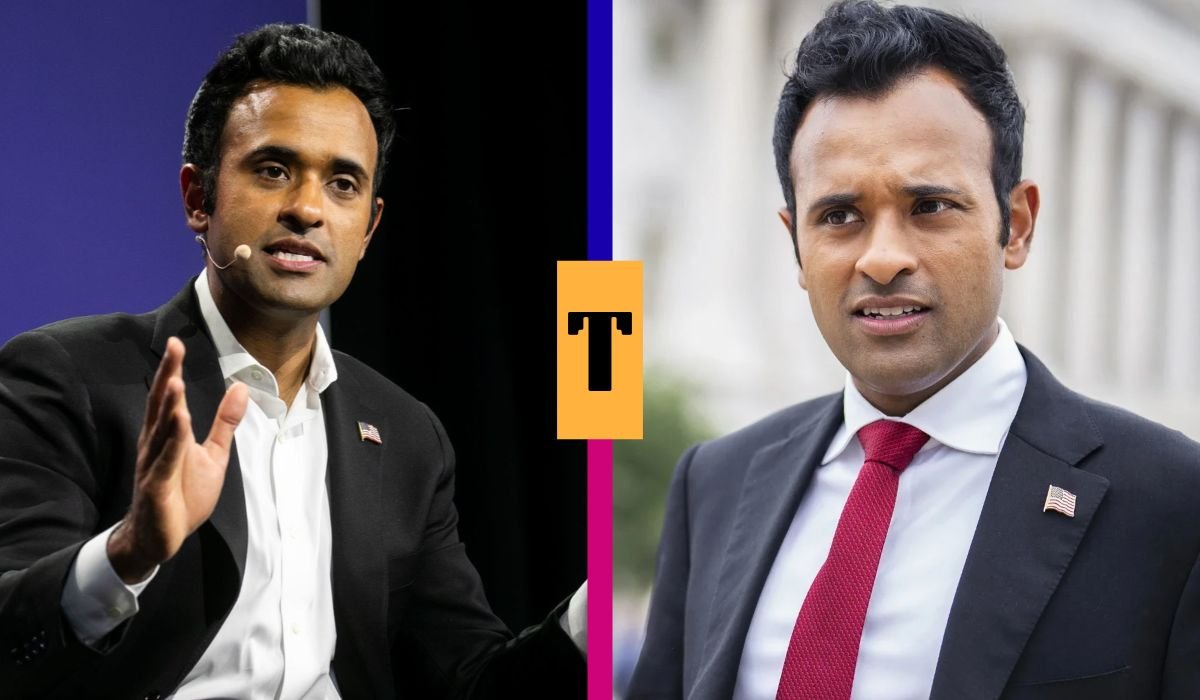
Few American political figures have made the transition from business to national politics quite like Vivek Ramaswamy. Once best known for building companies in the biotechnology industry, he has become a familiar voice in conservative politics, drawing attention for his outspoken views, ambitious policy ideas, and willingness to challenge established political leaders.
His rise hasn’t followed the traditional path of a career politician. Ramaswamy built his reputation in finance and pharmaceuticals before entering the national spotlight as an author and political commentator. His 2024 presidential campaign introduced him to millions of voters, even though he ultimately withdrew from the Republican primary.
Now, the 2026 Ohio governor race presents another defining moment. Facing Democrat Amy Acton, Ramaswamy is asking voters to trust his business experience and conservative vision to guide the state’s future. His journey offers an interesting look at how entrepreneurship, political ambition, and public debate intersect in modern America.
Who Is Vivek Ramaswamy?
Vivek Ganapathy Ramaswamy is an American entrepreneur, investor, author, and Republican politician who was born on August 9, 1985, in Cincinnati, Ohio.
Before entering electoral politics, he made his name in biotechnology, founding Roivant Sciences in 2014. He later co-founded Strive Asset Management, an investment firm that challenged the growing emphasis on environmental, social, and governance considerations in corporate decision-making.
His political profile began growing with the publication of Woke, Inc. in 2021. The book questioned the influence of corporate activism on American society and helped establish him as a prominent conservative commentator.
In 2023, Ramaswamy launched an ambitious campaign for the Republican presidential nomination. Although he withdrew after the Iowa caucuses in January 2024, the campaign significantly expanded his national recognition.
Today, his political attention is centered on Ohio, where he’s competing in the 2026 gubernatorial election.
Vivek Ramaswamy Quick Bio Information
| Information | Details |
|---|---|
| Full Name | Vivek Ganapathy Ramaswamy |
| Date of Birth | August 9, 1985 |
| Age in October 2026 | 41 Years |
| Birthplace | Cincinnati, Ohio |
| Nationality | American |
| Heritage | Indian American |
| Political Party | Republican |
| High School | St. Xavier High School |
| University | Harvard University |
| Undergraduate Degree | Biology |
| Law School | Yale Law School |
| Profession | Entrepreneur, Investor, Author, Politician |
| Major Business | Roivant Sciences |
| Investment Venture | Strive Asset Management |
| Notable Book | Woke, Inc. |
| Wife | Apoorva Ramaswamy |
| Children | Two Sons |
| Presidential Campaign | 2024 Republican Primary |
| Current Political Campaign | Ohio Governor Election 2026 |
| Election Date | November 3, 2026 |
Early Life And Family Background
Long before becoming a nationally recognized political figure, Vivek Ramaswamy was growing up in Cincinnati in a family that placed considerable value on education, professional achievement, and cultural traditions.
His parents immigrated to the United States from Kerala, India. His father, V. G. Ramaswamy, pursued a career in engineering and patent law, while his mother, Geetha Ramaswamy, worked as a geriatric psychiatrist.
Their professional backgrounds helped create a household where academic achievement and intellectual curiosity were encouraged.
Ramaswamy was raised in the Hindu faith while attending St. Xavier High School, a Jesuit Catholic institution. That combination exposed him to different religious and cultural traditions during his formative years.
His childhood in Ohio has remained an important part of his public identity. During his campaign for governor, he has frequently emphasized his connection to the state and his desire to contribute to its economic and political future.
Education At Harvard And Yale
Ramaswamy’s academic journey took him from Cincinnati to two of America’s most prestigious universities.
He attended Harvard University, where he studied biology and graduated in 2007. His interest in science would later prove important when he entered the biotechnology industry.
Rather than following a conventional medical or research career, he became interested in the financial and commercial side of pharmaceutical development.
He eventually continued his education at Yale Law School, receiving his Juris Doctor degree in 2013.
Studying both biology and law gave him a distinctive professional foundation. His scientific training helped him understand drug research, while his legal education introduced him to corporate structures, regulation, and the relationship between business and government.
Those subjects would become recurring themes throughout his entrepreneurial and political careers.
How Vivek Ramaswamy Built His Business Career
Before Americans knew him as a presidential candidate, Ramaswamy was establishing a career in investment management.
He worked at QVT Financial, where he focused on biotechnology and pharmaceutical investments. The position required him to evaluate companies, examine drug-development opportunities, and consider the financial risks associated with medical research.
That experience helped shape his approach to business.
In 2014, he founded Roivant Sciences, a biotechnology company built around an unconventional pharmaceutical development model. Rather than operating as a single traditional drugmaker, Roivant established specialized businesses focused on individual medicines or therapeutic areas.
The strategy attracted investors and helped the company expand.
Still, the pharmaceutical industry is unpredictable. Some Roivant-related projects progressed successfully, while others suffered costly setbacks.
One widely reported disappointment involved Axovant, a company associated with Roivant, whose experimental Alzheimer’s treatment failed to meet expectations in clinical testing.
The experience demonstrated a basic reality of biotechnology: financial investment and scientific promise don’t guarantee that a medicine will succeed.
Roivant Sciences And Strive Asset Management
Roivant Sciences became a major part of Ramaswamy’s professional reputation and personal wealth.
Its business model relied on identifying pharmaceutical opportunities and creating dedicated companies to pursue them. The approach offered flexibility, although individual projects still faced the scientific, regulatory, and financial challenges common to drug development.
As his career progressed, Ramaswamy became increasingly interested in questions about corporate responsibility.
In 2022, he co-founded Strive Asset Management, an investment firm that promoted an alternative to investment strategies emphasizing environmental, social, and governance goals.
Ramaswamy argued that investment managers should prioritize financial returns and shareholder interests rather than pursue political objectives through corporate influence.
His position appealed to conservatives who believed major companies were becoming too involved in social and political debates.
Critics, however, argued that environmental risks, workplace practices, and corporate governance can affect financial performance and therefore deserve attention from investors.
The disagreement helped bring Ramaswamy into broader political discussions and introduced his views to audiences beyond the business community.
Books And Rise As A Conservative Voice
Ramaswamy’s transformation into a public political figure accelerated in 2021 with the publication of Woke, Inc.
The book challenged what he described as the growing influence of political activism within corporate America. He argued that large businesses were increasingly using their financial power to influence social debates without being accountable to voters.
His criticism connected with conservative audiences concerned about corporate power, political expression, and the influence of major institutions.
At the same time, his arguments attracted opposition from people who believed businesses have responsibilities that extend beyond immediate financial returns.
Ramaswamy continued developing his ideas through public speaking, interviews, and additional books.
His communication style also became an important part of his reputation. He spoke confidently, embraced political confrontation, and regularly challenged conventional positions within both business and government.
By the time he announced his presidential campaign, he had already developed a recognizable political identity.
Vivek Ramaswamy’s 2024 Presidential Campaign
When Ramaswamy announced his presidential candidacy in February 2023, he entered a crowded Republican field without previous experience in elected office.
That lack of political experience became part of his message.
He presented himself as an outsider who could challenge Washington’s established institutions and bring a business-oriented approach to government.
His campaign focused on reducing federal bureaucracy, limiting regulation, strengthening national identity, and promoting economic independence.
During Republican presidential debates, Ramaswamy gained attention for his energetic performances and confrontations with other candidates.
His approach helped him build national recognition, but attracting media attention proved different from winning primary votes.
In the January 2024 Iowa Republican caucuses, he finished fourth. Shortly afterward, he suspended his campaign and endorsed Donald Trump.
Although his presidential ambitions ended for that election cycle, the experience introduced him to a much larger political audience and strengthened his connections within the Republican Party.
Vivek Ramaswamy And Donald Trump
Ramaswamy’s relationship with Donald Trump has played an important role in his political development.
During the 2024 Republican primaries, he frequently defended Trump even while competing against him for the nomination.
After leaving the race, Ramaswamy became an enthusiastic supporter of Trump’s presidential campaign.
Following Trump’s election victory, Ramaswamy and Elon Musk were announced as prospective leaders of the Department of Government Efficiency initiative, widely known as DOGE.
The initiative was intended to identify opportunities to reduce government spending, streamline administration, and eliminate unnecessary regulations.
However, Ramaswamy ultimately did not assume an operational leadership position within DOGE. Instead, he shifted his attention toward seeking the Ohio governorship.
His political relationship with Trump remained significant, particularly among Republican voters who supported the president’s broader agenda.
For Ramaswamy, that connection offered national visibility and political support, although winning a statewide election would require appealing to voters with a wider range of priorities.
Why Vivek Ramaswamy Is Running For Ohio Governor
In February 2025, Ramaswamy announced his campaign for Ohio governor, describing the state as a place with significant economic potential.
He secured the Republican nomination in May 2026 and moved into the general election against Democrat Amy Acton.
His campaign emphasizes attracting businesses, creating economic opportunities, improving education, and making government more efficient.
Ohio has a diverse economy that includes manufacturing, agriculture, logistics, healthcare, and emerging technology industries.
These sectors provide employment and investment opportunities, but the state also faces challenges involving infrastructure, workforce development, education, and competition for new businesses.
Ramaswamy believes his entrepreneurial experience gives him a useful perspective on these issues.
Yet governing a state involves responsibilities that differ substantially from managing a private company. A governor must work with legislators, oversee public agencies, and make decisions affecting millions of residents.
The election therefore presents voters with an opportunity to evaluate whether Ramaswamy’s business experience can translate into effective public leadership.
Vivek Ramaswamy’s Policies And Plans For Ohio
Economic development sits at the center of Ramaswamy’s campaign for governor.
He has argued that Ohio can attract more investment by encouraging entrepreneurship, supporting manufacturing, reducing regulatory burdens, and maintaining a competitive tax environment.
His broader economic message reflects the belief that businesses are more likely to expand when government creates predictable conditions and limits unnecessary restrictions.
Education is another important part of his platform.
Ramaswamy supports school choice, stronger academic expectations, and greater parental involvement in educational decisions.
He has also emphasized domestic energy production and the importance of maintaining a strong American manufacturing sector.
Government efficiency remains a recurring theme, connecting his Ohio campaign with his earlier national political positions.
Supporters believe these priorities could strengthen Ohio’s economy and improve the state’s long-term competitiveness.
Critics raise questions about how proposed tax and spending changes might affect public schools, infrastructure, healthcare, and other essential services.
Ultimately, the practical value of these proposals depends on their details, financial implications, and implementation.
Amy Acton And The Ohio Governor Race
Ramaswamy’s Democratic opponent, Amy Acton, brings a very different professional background to the election.
Acton is a physician and former director of the Ohio Department of Health. She became a familiar public figure during the COVID-19 pandemic, when she helped lead the state’s emergency public-health response.
Her decisions attracted praise from supporters who valued her medical leadership, while critics questioned the economic and social consequences of pandemic restrictions.
Her campaign for governor emphasizes affordability, healthcare, public education, and support for working families.
The contrast between the candidates is striking.
Ramaswamy approaches government through the lens of entrepreneurship and conservative economic reform. Acton emphasizes her experience in medicine, public administration, and health policy.
Their contest gives Ohio voters two different visions for the state’s leadership.
The election is scheduled for November 3, 2026, with both campaigns working to persuade undecided voters and encourage supporters to participate.
Ohio Governor Polls And Campaign Controversy
The 2026 Ohio governor race has attracted increasing attention as Election Day approaches.
Polling during October has suggested a competitive contest, although several surveys have shown Acton holding an advantage.
A Marist College poll conducted October 16–19 among 1,176 likely voters reported 50% support for Acton and 43% for Ramaswamy.
Other surveys have produced narrower margins, and some have shown Ramaswamy slightly ahead.
On October 21, The Hill and Decision Desk HQ polling estimate placed Acton at approximately 49%, compared with 45.6% for Ramaswamy.
These figures offer a snapshot of voter preferences rather than a prediction of the final result. Polling methods, sampling differences, and voter turnout can all affect election outcomes.
The campaign has also faced controversy involving a political advertisement featuring Acton’s estranged mother, Donna Arthur.
In the advertisement, Arthur challenged Acton’s public description of her childhood experiences.
Acton and her brother disputed those claims, while historical court records examined by journalists provided context concerning serious allegations involving Acton’s former stepfather.
The available reporting does not establish a criminal conviction arising from those allegations, making careful distinctions between documented records and disputed personal accounts essential.
Ramaswamy’s campaign acknowledged producing the advertisement and announced a substantial promotional effort.
The advertisement drew criticism from political figures across party lines, while Ramaswamy and some supporters defended the campaign’s decision.
Beyond its immediate political impact, the controversy has raised questions about the boundaries of campaign advertising and the responsibility of candidates when discussing deeply personal family matters.
Vivek Ramaswamy’s Net Worth And Personal Life
Ramaswamy’s financial background has been a frequent subject of public interest.
Much of his wealth comes from biotechnology investments, business ownership, and his earlier work in financial management.
Because his holdings are connected to investments and company valuations, estimates of his personal net worth can change considerably over time.
Public estimates have placed his fortune in the hundreds of millions of dollars, although any precise figure should be understood in the context of its valuation date.
Outside politics, Ramaswamy is married to Apoorva Ramaswamy, a physician with a background in surgery.
The couple met while studying at Yale and have two sons.
Ramaswamy has spoken publicly about his Hindu faith, Indian American heritage, and family life. These experiences have contributed to his personal identity and occasionally become part of his political conversations.
Still, his financial achievements and personal background are only part of the picture. For voters, his policy positions, leadership experience, and approach to public responsibility remain central considerations.
What The Ohio Election Means For His Future
The Ohio governor election could become one of the most consequential moments in Ramaswamy’s political career.
A victory would give him the opportunity to move beyond political commentary and demonstrate how his ideas work in practice.
As governor, he would face decisions involving state budgets, education, economic development, public services, and relationships with the legislature.
Those responsibilities would provide a direct test of his leadership approach.
A defeat, meanwhile, would raise questions about whether his national popularity and business reputation can translate into broader statewide electoral support.
Ramaswamy enters the contest with several advantages, including national name recognition, fundraising connections, and support among conservative voters.
He also faces challenges. His lack of elected-office experience, controversial campaign decisions, and need to appeal beyond the Republican base could influence voter perceptions.
For Ohio residents, however, the central question is less about his national political future and more about which candidate can address the state’s immediate needs.
Final Thoughts
Vivek Ramaswamy’s career has taken him from Cincinnati classrooms to Harvard and Yale, from biotechnology investments to national political debates, and eventually into one of Ohio’s most closely watched elections.
His business achievements helped establish his reputation, while his writing and presidential campaign introduced him to a national audience. Now, his campaign for governor offers a different kind of challenge.
Running a business, debating national policy, and governing a state require different skills. The Ohio election will test whether Ramaswamy can convince voters that his experience and ideas are suited to the responsibilities of public office.
With Amy Acton presenting a contrasting approach, Ohio residents have a choice between candidates with different professional backgrounds and political priorities.
Whatever voters decide in November, the campaign marks an important chapter in Ramaswamy’s political journey and reflects a broader debate about the role of business experience in American government.
Frequently Asked Questions About Vivek Ramaswamy
How Old Is Vivek Ramaswamy?
Vivek Ramaswamy was born on August 9, 1985, in Cincinnati, Ohio. As of October 2026, he is 41 years old. He spent his early years in Ohio before attending Harvard University and Yale Law School.
What Is Vivek Ramaswamy Famous For?
He is best known for founding Roivant Sciences, co-founding Strive Asset Management, writing Woke, Inc., and running for the 2024 Republican presidential nomination. His campaign for Ohio governor has further increased his political visibility.
Who Is Vivek Ramaswamy’s Wife?
Ramaswamy is married to Apoorva Ramaswamy, a physician with a surgical background. They met while studying at Yale and have two sons. She has pursued her medical career while he has worked in business and politics.
What Is Vivek Ramaswamy’s Net Worth?
His wealth primarily comes from biotechnology investments and business ownership. Public estimates have placed his net worth in the hundreds of millions of dollars, although the exact amount fluctuates with investment values and market conditions.
Did Vivek Ramaswamy Run For President?
Yes. He entered the Republican presidential race in February 2023 and competed in the 2024 primaries. After finishing fourth in the Iowa caucuses, he withdrew and endorsed Donald Trump.
Is Vivek Ramaswamy Running For Ohio Governor?
Yes. Ramaswamy won the Republican nomination for Ohio governor in May 2026. He is competing in the November 3 general election, focusing on economic development, education, and government reform.
Who Is Running Against Vivek Ramaswamy?
His main Democratic opponent is Amy Acton, a physician and former Ohio Department of Health director. Libertarian Don Kissick is also on the general-election ballot. The candidates offer different perspectives on economic policy, healthcare, education, and government leadership.
Learn more and explore exciting content on: Who Was John Anderson? Inside the Life and Career of the Country Music Legend













Leave a Reply