
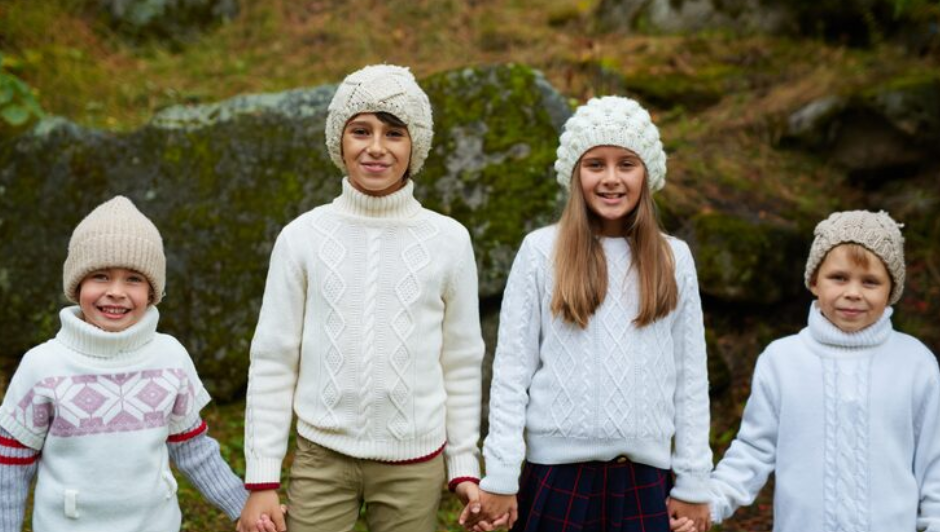
Layering isn’t really about adding loads of clothing – so you actually do feel safe. Rather it’s all about catching some warmth with very thin layers rather than just wearing one quite thick item that really holds nothing back. A lightweight undershirt under a knitted top performs far better than just one very heavy sweater, and most folks hardly ever give this a go. The trick with womens knit wear is picking pieces built to sit on top of each other without adding bulk. Each garment performs a different function – and omitting even one layer disrupts the entire set-up.
Core Rules of Layering
Some very specific habits really set apart an outfit with layers that works from one that just looks rather lumpy.
- Base layer should sit close to skin, never loose
- Mid layer does the real warming, so pick knit here
- Outer layer only needs to block wind, not add heat
- Each layer should be thinner than the one under it
- Necklines should step down in size from inside out
What to Wear in Each Season
Layering changes shape as the weather shifts, not just the number of pieces you own.
| Season | Base Layer | Mid Layer | Outer Layer |
|---|---|---|---|
| Early autumn | Cotton tee | Light knit cardigan | None needed |
| Deep winter | Merino thermal | Chunky wool knit | Wool coat |
| Spring | Silk cami | Fine knit vest | Denim jacket |
| Cold snap indoors | Fitted knit | Oversized cardigan | Scarf only |
Why Trapped Air Keeps You Warm
Heat isn’t generated by our clothing itself really. It originates within our bodies – and fabric just determines just how much of that heat we lose. Wool fibres curl up into countless small coils – and every coil contains a little space of stationary air close to your skin. Stationary air hardly transfers heat whatsoever – that’s why it outperforms even the thickest individual fabrics quite well. Down jackets employ a similar technique using feathers rather than fibre curls. Two very fine knitted layers having a small gap in between them hold significantly more warm air than one knitted twice as heavily, and that really sums it up for effective layering done correctly.
Avoiding the Bulky Marshmallow Look
Thickness really becomes an issue when stacking more than two or three items. Opt for a finer-gauge knit for that very first layer touching your skin – while saving the chunkier knit for the outermost position where bulk will be perceived as warm rather than puffy. Sleeves can quickly become constricting with additional layers, so do make sure to try out the entire ensemble before leaving home – with arms raised high! A short cardigan over a longer knitted dress helps keep your overall line looking sleeker. The same cardigan over a short top just cuts you in half at the worst spot. Collars matter here too. Stack a round neck under a V neck, never two round necks on top of each other, or the layers fight for the same space on your throat.















Leave a Reply