
Introduction: Why Profile Link Building Still Gets Attention
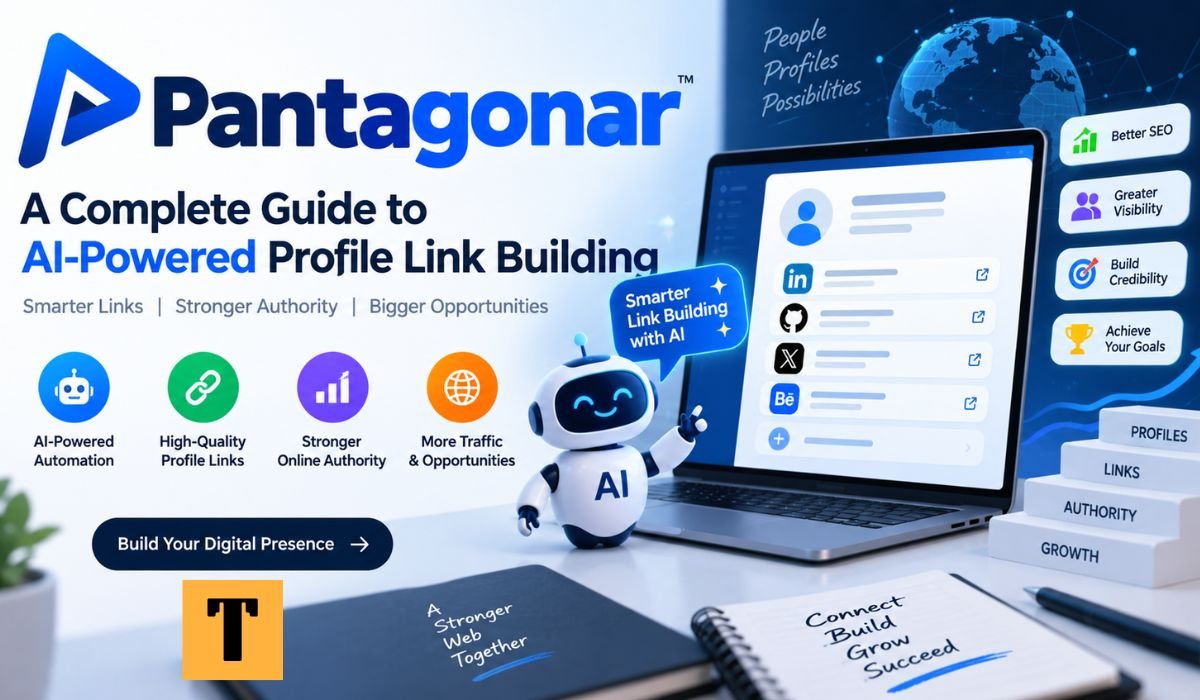
Pantagonar is presented as an AI-powered approach to Profile Link Building, an SEO practice that has been around for years. Profile links are commonly associated with forums, online communities, professional platforms, directories, and other websites that allow users to create public profiles. While this approach was once promoted heavily as an easy way to build backlinks, modern SEO calls for a much more careful and selective strategy.
That distinction matters because a backlink isn’t automatically valuable simply because it exists. Google says that links can help its systems understand content, but it also warns against acquiring links primarily to manipulate search rankings. Its current spam policies specifically identify the use of automated programs or services to create links as an example of link spam.
So, where does Pantagonar fit into the picture? The tool is described as helping automate several repetitive parts of Profile Link Building, from finding potential platforms to creating and completing profiles. This guide takes a closer look at that approach while separating the tool’s described functionality from broader, established SEO guidance. That makes it easier to understand not only what Pantagonar is supposed to do, but also where profile backlinks can provide genuine value and where caution is necessary.
Quick Bio Information About Pantagonar
| Information | Details |
|---|---|
| Name | Pantagonar |
| Category | AI-Assisted SEO Tool |
| Main Focus | Profile Link Building |
| Primary Use | Automating Repetitive Link-Building Activities |
| SEO Area | Off-Page SEO |
| Link Type | Profile Backlinks |
| Technology Described | Artificial Intelligence |
| Main Audience | SEO Professionals And Website Owners |
| Beginner Friendly | Presented As A Guided Workflow |
| Website Research | Designed To Help Identify Potential Platforms |
| Profile Creation | Described As An Automated Process |
| Profile Content | AI-Assisted Profile Introduction |
| Website Links | Added Where Platform Rules Permit |
| Workflow | Research, Creation, Completion, And Review |
| Main Benefit | Reduced Manual Work |
| Other Benefit | Time-Saving Workflow |
| Organization | Profile Monitoring And Management |
| Important Limitation | Automation Does Not Guarantee SEO Results |
| Main SEO Concern | Low-Quality Or Manipulative Link Building |
What Is Pantagonar?
Pantagonar is described as an AI-Powered Profile Link-Building Tool designed to simplify the repetitive tasks involved in creating online profiles. According to the description of the tool, the process begins with information about a website and its niche. From there, the system is presented as helping identify potential websites where profiles can be created and assisting with the profile-building process.
The appeal is easy to understand. Finding suitable websites, registering accounts, completing profile fields, writing descriptions, adding permitted website information, and keeping track of those profiles can take a considerable amount of time. An AI-assisted workflow is intended to make those activities more organized and less repetitive.
There is, however, an important distinction between a product’s described capabilities and independently verified SEO performance. Publicly verifiable information about Pantagonar itself is limited, so specific product claims should be understood as descriptions of its intended or claimed functionality, rather than guarantees of particular SEO outcomes.
That distinction is important for anyone researching a Pantagonar Review. A useful evaluation should consider how the tool works, what it can potentially save time on, and whether the resulting link-building activities are relevant, legitimate, and consistent with search-engine and platform guidelines.
What Are Profile Backlinks?
A Profile Backlink is a link associated with a user, professional, business, contributor, or community profile on another website. Depending on the platform, the link may appear in a website field, biography, description, contributor page, or another section of the profile.
Profile links can serve purposes beyond SEO. A legitimate profile on a relevant professional or industry platform can help people discover a business, individual, project, or website. It can also create a path for referral traffic and strengthen an organization’s broader online presence.
That doesn’t mean every profile link carries meaningful ranking value. Google recommends using appropriate link attributes for different types of links. For example, it recommends rel="ugc" for links in user-generated content such as forum posts and comments, while nofollow can be used when a site owner doesn’t want to imply endorsement.
The context behind a profile therefore matters. A genuine profile created to participate in a community is very different from a collection of empty accounts created only to produce backlinks.
Why Do People Still Use Profile Links For SEO?
Profile links continue to attract attention because they can be relatively easy to create and may establish a presence on relevant online platforms. A professional profile, industry-community account, association page, or legitimate business listing can put a website in front of people who may actually be interested in what it offers.
For that reason, the strongest reason to create a profile shouldn’t simply be, “I need another backlink.” The better reason is that the profile itself serves a legitimate purpose. If a professional participates in an industry community, provides useful information, maintains an accurate profile, and naturally references their website, the link exists within a meaningful context.
That is fundamentally different from creating hundreds of low-value accounts simply to increase the number of URLs pointing toward a website. Google’s current spam policies specifically identify automated programs or services used to create links, low-quality directory links, and certain manipulative forum links as examples of link spam.
In other words, profile links haven’t necessarily become irrelevant. Rather, the way they’re created and the reason for creating them matter more than ever.
How Does Pantagonar Work?
The workflow described for Pantagonar centers on automation. Users are expected to begin by providing a website URL along with relevant profile information. The system is then described as analyzing the website and helping generate search terms that can be used to find potential profile platforms.
The process is subsequently presented as moving toward profile discovery, profile creation, information completion, introduction generation, website-link placement, and profile review. The main attraction is the possibility of completing repetitive activities more efficiently than they could be handled manually.
That doesn’t mean automation eliminates the need for human judgment. In fact, website selection remains one of the most important parts of the process. An automated system may identify an available platform, but a human still needs to consider whether that platform is relevant, trustworthy, active, properly moderated, and appropriate for the website.
This is where an AI Link-Building Tool should be viewed as an assistant rather than a replacement for SEO strategy. Efficiency is useful, but only when the underlying decisions are sound.
Pantagonar’s Profile Link-Building Workflow
The described workflow begins with Entering Your Website URL, which gives the process its starting point. Users then move to Providing Your Profile Details, supplying the information that may be required for account and profile creation.
The next stages involve Analyzing Your Website and Generating Relevant Search Terms. These steps are intended to connect the website’s subject matter with potential profile opportunities. After that comes Discovering Potential Profile Websites, followed by Evaluating Suitable Websites.
That evaluation stage deserves particular attention. Finding a website that allows profile creation doesn’t automatically make it a good link-building opportunity. Relevance, reputation, user activity, moderation, platform policies, and the overall quality of the site should all be considered before proceeding.
The later stages are described as Creating Profiles Automatically, Completing Required Profile Information, and Generating A Professional Profile Introduction. Where a platform permits an external website link, the process may then include Adding Your Website Link and Finalizing The Profile Creation Process.
Finally, Reviewing The Created Profiles gives users an opportunity to check the resulting profiles and determine whether they remain accurate, active, and appropriate.
Key Features Of Pantagonar
The features attributed to Pantagonar largely revolve around reducing repetitive work. Website discovery, profile creation, profile completion, AI-assisted writing, URL placement, and profile monitoring are all presented as parts of the broader workflow.
For an SEO professional, organization can be just as useful as automation. Link-building campaigns can become difficult to manage when profiles are spread across numerous platforms. Keeping track of where an account was created, what information was submitted, whether the profile remains active, and whether a website link is still available can make ongoing campaign management easier.
The important caveat is that automation doesn’t automatically equal quality. A tool may make a process faster, but the marketer still needs to decide whether an opportunity is worth pursuing.
This distinction becomes even more important because Google recommends that websites protect their platforms from user-generated spam and suggests measures such as moderation, reputation systems, and appropriate link attributes for untrusted user-generated links.
Benefits Of Using Pantagonar
One of the clearest potential advantages of an AI-assisted Link Building Tool is time savings. Researching websites, checking registration requirements, completing repetitive forms, and maintaining records can take substantial effort. Automation may reduce some of that workload and allow SEO professionals to devote more time to content, technical SEO, strategy, outreach, and other higher-value activities.
Pantagonar is also described as helping reduce manual work and discover potential websites relevant to a particular niche. For beginners, a guided workflow could make a complicated process easier to understand.
Organization is another potential advantage. When numerous profiles are created across different platforms, tracking them manually can become cumbersome. A system designed to centralize that information may make it easier to monitor the campaign.
These benefits, however, should be understood as workflow benefits, not guaranteed ranking benefits. Saving time is valuable, but the real SEO question is whether the activity being automated is worthwhile in the first place.
AI Vs. Manual Profile Link Building
Manual Profile Link Building gives the marketer control over every stage. The user searches for an appropriate platform, evaluates it, registers an account, completes the profile, writes the information, and decides whether including a website link makes sense.
AI-assisted Profile Link Building can potentially speed up research, writing, organization, and repetitive execution. That can be especially attractive when a marketer is dealing with many opportunities.
The trade-off is straightforward: greater automation can also make it easier to scale poor decisions. If a weak website is worth avoiding manually, creating profiles there faster doesn’t make the opportunity better.
For that reason, the strongest approach isn’t necessarily choosing AI over humans. A more sensible model is AI-assisted research and execution combined with human oversight. Let technology handle repetitive work while people remain responsible for quality, relevance, accuracy, and compliance.
How To Choose High-Quality Profile Websites
Website selection is arguably more important than the number of profiles created. A relevant industry platform with genuine users can be considerably more useful than a large collection of abandoned, poorly moderated, or spam-filled websites.
Before creating a profile, consider whether the platform has a real audience and whether it is relevant to the website’s topic. It is also worth examining whether users genuinely participate, whether profiles are moderated, whether external links are permitted, and whether the platform shows obvious signs of widespread spam.
Indexability can also be worth considering, although an indexed profile shouldn’t be treated as a guarantee of SEO value. A page being visible in search doesn’t automatically make its link valuable.
Most importantly, create profiles for legitimate reasons. A profile representing a real person, business, organization, or professional contribution is much more defensible than a collection of artificial accounts created exclusively to manufacture backlinks.
Are Profile Backlinks Still Effective For SEO?
Profile backlinks can still have practical uses, but they shouldn’t be presented as a shortcut to higher Google rankings. Their potential value may come from referral traffic, brand exposure, website discovery, professional visibility, or participation in relevant communities.
Google’s guidance makes the distinction particularly important. Its current spam policies define link spam as creating links primarily to manipulate search rankings and specifically list automated programs or services used to create links as an example.
This means the more useful question isn’t simply, “Does this profile contain a backlink?” Instead, ask why the profile exists, whether it contributes something legitimate, and whether the link is useful to people who encounter it.
Google also explains that links should be qualified appropriately depending on their nature. For example, user-generated links can use rel="ugc", while sponsored links can use rel="sponsored".
A relevant profile created for genuine participation is therefore very different from mass-produced profiles whose primary purpose is ranking manipulation.
Pantagonar And Google SEO
Anyone considering Pantagonar or another AI-Powered Link-Building Tool should understand Google’s position before launching a campaign. Google explicitly lists the use of automated programs or services to create links to a website among its examples of link spam.
That doesn’t mean every form of software-assisted SEO activity is automatically problematic. The critical issue is what the automation is being used to accomplish. Automating legitimate research or organization is different from using software to mass-produce manipulative links.
Google also recommends appropriate attributes for different types of links. User-generated links can be marked with ugc, paid placements can use sponsored, and nofollow remains available when a site owner doesn’t want to imply endorsement or ranking credit.
This is why anyone using a Profile Backlink Tool should understand the rules of the websites where profiles are being created. Platform terms matter, and search-engine guidelines matter too.
Potential Risks And Limitations
Automation introduces a particular risk: scale. A poor decision made once may have little impact, but repeating that decision across dozens or hundreds of profiles can create a much larger problem.
Potential concerns include irrelevant websites, spam-heavy platforms, generic or duplicated profile descriptions, removed accounts, deindexed pages, platform restrictions, and excessive reliance on automated link creation.
There is also the question of evidence. Publicly verifiable information about Pantagonar’s independent performance, case studies, pricing, and measurable SEO results is limited. That means readers shouldn’t interpret promotional descriptions as proof that the tool will increase rankings, traffic, or authority.
AI-generated profile text deserves human review as well. A profile should accurately represent the person, company, or project behind it. Generic copy stuffed with keywords can make an account look artificial and reduce its usefulness to actual readers.
Google’s guidance reinforces the broader concern: automated link creation becomes problematic when it is used primarily to manipulate rankings.
How To Use Pantagonar More Responsibly
The most sensible way to approach Pantagonar is as a workflow assistant rather than a ranking machine. Potential websites should be reviewed before profiles are created, and every account should have a legitimate reason for existing.
Profile information should be accurate and consistent. AI-generated introductions should be checked before publication, particularly when they describe a business, professional background, product, or organization.
It’s also important to respect each platform’s rules. If a website doesn’t permit promotional links, adding one simply because a tool makes it technically possible isn’t a sound strategy.
Finally, Profile Link Building should represent only a small part of a broader SEO plan. Useful content, technical SEO, genuine outreach, digital PR, relevant partnerships, and naturally earned editorial links provide a much stronger foundation than a strategy centered entirely on profile URLs.
Who Can Benefit From Pantagonar?
Pantagonar may be of interest to SEO beginners, freelance SEO professionals, link builders, agencies, small businesses, and website owners who want to reduce repetitive research and organizational work.
Beginners may find a guided workflow useful because Profile Link Building involves numerous small steps. Experienced professionals may be more interested in efficiency, especially when managing multiple campaigns or websites.
Even experienced SEO professionals, however, should maintain oversight. A faster workflow is only an advantage when the opportunities being processed are worthwhile. If automation simply increases the number of low-quality links, the added speed doesn’t necessarily translate into better SEO.
Does Pantagonar Guarantee Better Rankings?
No responsible SEO professional should promise guaranteed rankings from Pantagonar or any other Profile Backlink Tool.
Search visibility depends on many factors, including content quality, topical relevance, technical SEO, competition, website reputation, user experience, and how search engines interpret the available signals.
A profile link may be crawled without producing an obvious ranking improvement. Another profile may bring referral traffic while providing little direct ranking value. Some platforms may also use nofollow or ugc attributes. Google says these link attributes are treated as hints that help its systems understand how links should be considered.
The goal, therefore, shouldn’t be to collect the largest possible number of profile URLs. A better objective is to build a credible online presence through relevant, legitimate activity.
Is Pantagonar Worth Trying?
Pantagonar may be worth investigating for people who value automation and want to reduce repetitive Profile Link-Building work. Its described workflow addresses several genuine challenges, particularly website research, profile creation, information management, and repetitive execution.
At the same time, limited publicly verifiable information about the tool means users should evaluate it carefully. Independent case studies, documented results, transparent pricing, technical documentation, and evidence of actual performance would all help readers make a more informed decision.
A good Pantagonar Review should therefore look beyond the promise of automation. Users should examine the quality of websites the tool identifies, the degree of human control available, the accuracy of generated information, the way accounts are handled, and whether the resulting profiles provide genuine value.
In short, efficiency can be useful, but it shouldn’t come at the expense of relevance or quality.
Final Thoughts
Pantagonar represents an interesting approach to AI-Powered Link Building, particularly because it focuses on reducing the repetitive work associated with Profile Link Building. Its described workflow covers website research, profile discovery, profile creation, content generation, website-link placement, and profile review.
But the more important lesson goes beyond the tool itself. Modern SEO isn’t simply about collecting as many backlinks as possible. It’s about building visibility through relevance, usefulness, credibility, and legitimate online activity.
Google’s current guidance makes that distinction clear. Its spam policies identify automated link creation used for ranking manipulation as link spam, while its link guidance emphasizes using appropriate attributes for user-generated, sponsored, and other types of links.
For anyone considering Pantagonar, the most sensible approach is to treat automation as a way to reduce repetitive work rather than as a shortcut to guaranteed rankings. Review potential platforms carefully, create profiles for legitimate reasons, check AI-generated information, follow platform rules, and focus on opportunities that make sense for real users.
Used with that mindset, Pantagonar becomes less about chasing backlinks and more about exploring whether AI can make certain SEO workflows more manageable without sacrificing quality, relevance, authenticity, or trust.
FAQs About Pantagonar
What Is Pantagonar?
Pantagonar is described as an AI-assisted tool focused on Profile Link Building. Its stated purpose is to simplify repetitive activities associated with discovering potential profile platforms, creating profiles, completing profile information, generating introductions, and adding website links where those links are permitted.
What Is Profile Link Building?
Profile Link Building involves creating legitimate profiles on websites and, when the platform permits it, adding information about a person, business, organization, or website. The profile may contain a website link. Its usefulness depends on factors such as relevance, quality, context, and the purpose of the profile.
Are Profile Backlinks Still Useful?
They can provide practical value through referral traffic, brand visibility, website discovery, and participation in relevant online communities. However, they shouldn’t be treated as guaranteed ranking links. Google warns against manipulative link-building practices, including automated services used to create links for ranking purposes.
Can AI Automate Profile Link Building?
AI can potentially assist with research, writing, organization, and other repetitive workflow tasks. However, responsible Profile Link Building still requires human judgment. Website quality, relevance, platform policies, account authenticity, and the purpose of each profile should be reviewed before proceeding.
Is Pantagonar Good For Beginners?
Pantagonar is presented as beginner-friendly because its workflow is designed to simplify several tasks involved in Profile Link Building. Beginners should still understand basic SEO principles so they can recognize useful opportunities and reject platforms that aren’t relevant or trustworthy.
Can Pantagonar Improve Google Rankings?
There is no reliable basis for promising guaranteed ranking improvements from Pantagonar or Profile Backlinks generally. Google’s systems consider many signals, and its spam policies specifically address automated and manipulative link creation.
Are Automated Profile Links Safe?
Their safety depends on how they’re created, why they’re created, and where they’re placed. Mass-created, irrelevant, or manipulative links can create SEO and platform-policy concerns. Legitimate profiles created for genuine participation are a much more defensible approach.
Should Profile Links Be The Main SEO Strategy?
No. Profile links shouldn’t replace useful content, technical SEO, genuine outreach, digital PR, or naturally earned editorial links. At most, they should be considered one supporting element of a broader and well-rounded SEO strategy.
Learn more and explore exciting content on: Keilani Bautista: Inside the Private Life of Dave Bautista’s Daughter










Leave a Reply