
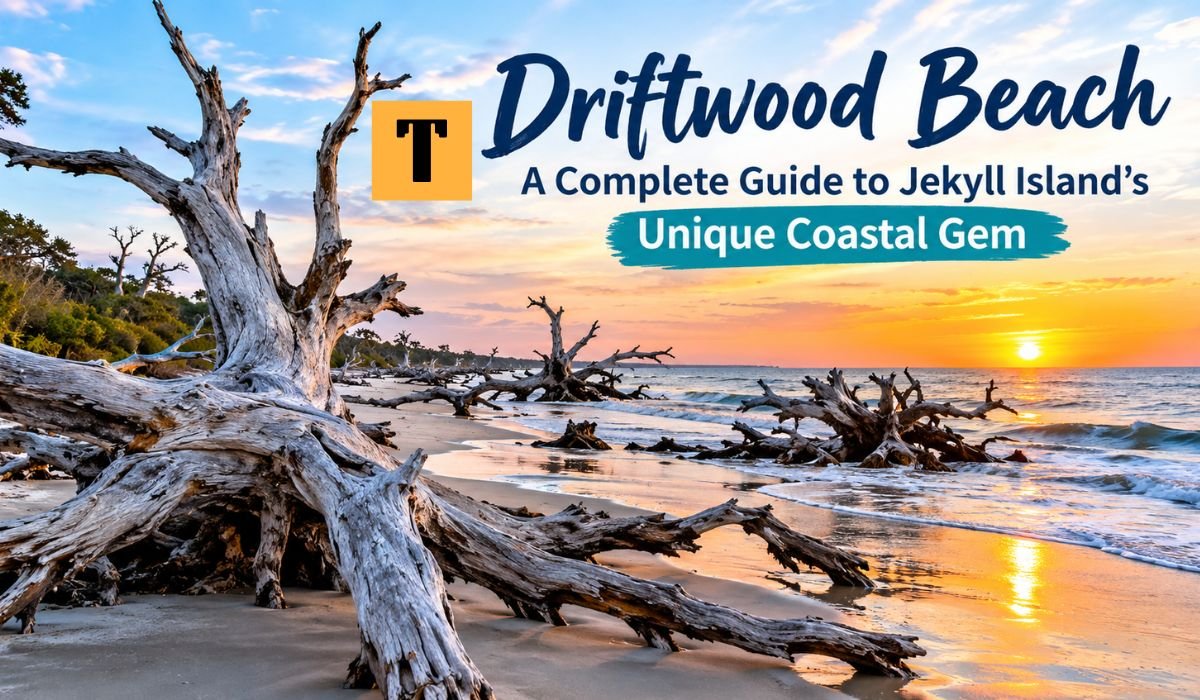
Driftwood Beach Is One Of The Most Unusual Coastal Attractions On Jekyll Island, Georgia. Rather Than The Typical Open Stretch Of Sand Associated With A Beach, Visitors Here Encounter Weathered Tree Trunks, Exposed Roots, Twisted Branches, And The Atlantic Ocean Stretching Beyond Them. The Result Is A Landscape That Feels Almost Otherworldly And Gives The Beach A Character All Its Own.
Located On The Northern Part Of Jekyll Island, Driftwood Beach Has Become A Favorite Among Photographers, Nature Lovers, Couples, And Travelers Who Enjoy Quiet Coastal Walks. Its Distinctive Appearance Has Also Earned National Attention. In The 2023 USA TODAY 10Best Readers’ Choice Awards, Driftwood Beach Was Named A Runner-Up For Best Beach In The South. The Jekyll Island Authority Also Reports That The Beach Ranked No. 3 In The United States And No. 12 In The World In Tripadvisor’s 2023 Travelers’ Choice Best Of The Best Beaches Awards.
There’s More To Driftwood Beach Than Its Photogenic Appearance, Though. The Fallen Trees Tell The Story Of A Barrier Island That Has Been Gradually Reshaped By Erosion, Waves, Tides, Wind, And Shifting Sediment. Once You Understand How The Landscape Came To Look This Way, A Visit Feels Less Like A Simple Trip To The Beach And More Like A Close-Up Look At A Living Coastal Environment.
Quick Bio Information
Beach Name: Driftwood Beach
Location: Jekyll Island, Georgia
Country: United States
Coastal Region: Georgia Coast
Island Group: Golden Isles
Beach Type: Natural Atlantic Coastal Beach
Signature Feature: Weathered Trees And Exposed Roots
Main Appeal: Unique Coastal Landscape
Popular Experience: Walking And Nature Observation
Photography Appeal: Natural Tree Formations And Ocean Views
Public Parking: Available Near Beach Access
Beach Access Area: Near Beachview Drive
2023 USA TODAY Recognition: Runner-Up For Best Beach In The South
2023 Tripadvisor Recognition: No. 3 In The United States And No. 12 In The World
Pet Policy: Pets Are Allowed On Most Beaches When Properly Leashed
Standard Jekyll Island Vehicle Fee: $10 Per Day As Of 2026
Island Management: Jekyll Island Authority
Island Status: State Park
Driftwood Beach At A Glance
Driftwood Beach Is A Public Beach On Jekyll Island, One Of Georgia’s Golden Isles. Its Defining Feature Is The Collection Of Large, Weathered Trees Spread Along The Shoreline. Some Lie Across The Sand, While Others Remain Upright Or Lean At Dramatic Angles, Their Exposed Roots Adding Even More Character To The Scene.
Unlike Beaches Built Around Extensive Recreation And Facilities, Driftwood Beach Is Primarily About Experiencing The Natural Landscape. Visitors Come Here To Walk Along The Shore, Photograph The Trees And Ocean, Observe Nature, Or Simply Enjoy A Quieter Coastal Setting.
Public Parking Is Available Near The Beach Access Off Beachview Drive. The Jekyll Island Authority Describes The Weathered Trees As Ancient Driftwood Monuments Along The Waterfront, And They Remain The Main Reason The Beach Is So Easily Recognized.
Where Is Driftwood Beach?
Driftwood Beach Is Located On The Northern Portion Of Jekyll Island, Along Georgia’s Atlantic Coast. Jekyll Island Is Part Of The Golden Isles And Is Managed By The Jekyll Island Authority As A State Park.
The Island Has Roughly 10 Miles Of Shoreline, But Not Every Beach Offers The Same Experience. Some Areas Are Designed More Around Traditional Beach Recreation, While Driftwood Beach Is Known For Its Natural Scenery, Unusual Coastal Landscape, And Photography Opportunities.
Visitors Traveling By Car Can Find Public Parking Near The Driftwood Beach Access Just Off Beachview Drive. There’s An Important Detail To Keep In Mind When Planning A Trip: Driving Onto Jekyll Island Requires Payment Of A Vehicle Entry Fee.
As Of 2026, The Standard Daily Vehicle Fee Is $10. Vehicles Taller Than Eight Feet Pay $15 Per Day, And Certain Special Events May Carry An Additional Daily Charge. Since Fees Can Change, It’s Sensible To Confirm The Current Rate Before Traveling.
What Makes Driftwood Beach Unique?
The First Thing Most Visitors Notice At Driftwood Beach Is The Trees. Their Weathered Gray And Brown Trunks Rise From Or Lie Across The Sand, While Exposed Root Systems Spread Out Around Them. Some Trees Look Almost Sculptural, And Their Shapes Change As You Move Along The Shore.
That Creates A Landscape Unlike A Conventional Georgia Beach. A Fallen Trunk Can Become A Natural Frame For The Ocean, While A Cluster Of Branches Can Lead The Eye Toward The Horizon. Even Visitors Who Aren’t Particularly Interested In Photography Often Find The Shapes, Textures, And Patterns Fascinating.
There’s Also A Deeper Story Behind What You See. These Aren’t Simply Pieces Of Small Driftwood That Happened To Wash Ashore. Much Of The Landscape Consists Of The Remains Of Large Trees That Once Grew Along The Island’s Coastal Edge.
As The Shoreline Changed, Those Trees Became Exposed To Coastal Forces, Eventually Falling And Weathering Along The beach. In That Sense, Driftwood Beach Is Almost Like A Natural Record Of Jekyll Island’s Changing Geography.
The Story Behind The Driftwood Trees
The Trees At Driftwood Beach Are Closely Connected To The Long-Term Evolution Of Jekyll Island. Like Other Barrier Islands, Jekyll Isn’t A Fixed Piece Of Land. Its Shoreline Changes Over Time As Waves, Currents, Tides, Wind, Storms, And Moving Sediment Continuously Reshape The Coast.
At Driftwood Beach, Coastal Erosion Has Gradually Exposed Parts Of The Island’s Former Forest Edge. Areas That Once Stood Farther From The Ocean Became Increasingly Vulnerable As The Shoreline Moved. Eventually, Trees Were Exposed, Their Roots Became Visible, And Many Fell As Coastal Conditions Took Their Toll.
The Jekyll Island Authority Explains That Atlantic Currents Have Helped Expose The Forest Edge At Driftwood Beach, Leaving Behind The Gnarled Remains Of Live Oak, Pine, And Cedar Trees.
That’s Why The Name “Driftwood Beach” Can Be A Little Misleading. Much Of What Visitors See Isn’t Ordinary Driftwood In The Traditional Sense. These Are The Remains Of Trees That Once Formed Part Of Jekyll Island’s Coastal Forest.
The Landscape Is Therefore More Than A Collection Of Interesting-Looking Trees. It’s Physical Evidence Of How A Barrier Island Changes Over Time.
Driftwood Beach And Jekyll Island’s Natural Landscape
To Fully Appreciate Driftwood Beach, It Helps To Look At It As One Part Of Jekyll Island’s Larger Coastal Ecosystem. The Island Contains Beaches, Maritime Forests, Marshes, Dunes, Wildlife Habitat, And Other Natural Areas, Each Contributing To Its Coastal Character.
The Jekyll Island Authority Describes The Island As A Place Where Nature And Human Activity Coexist. Its Different Beaches Reflect That Balance In Different Ways. Some Have More Developed Facilities, While Driftwood Beach Remains Particularly Focused On Its Natural Scenery.
That Distinction Matters When Planning A Visit. Driftwood Beach Isn’t Designed Like A Traditional Resort Beach With A Long Line Of Amenities Directly Along The Shore. Its Main Attraction Is The Environment Itself.
The Weathered Trees, Open Water, Sand, And Coastal Vegetation Work Together To Create An Experience That Feels Much More Natural And Unstructured. For Travelers Who Prefer Scenic Exploration Over Organized Recreation, That’s A Major Part Of The Appeal.
What Can You Do At Driftwood Beach?
Walking Is One Of The Best Ways To Experience Driftwood Beach. There’s No Need To Rush. Moving Slowly Along The Shore Gives You Time To Notice The Different Shapes Of The Trees, The Exposed Root Systems, The Sand Patterns, And The Changing Views Of The Ocean.
Photography Is Another Major Draw. The Trees Create Natural Foreground Subjects And Can Be Used To Frame The Ocean Or Horizon. Their Textures Also Add Depth To Landscape And Travel Photographs.
For Visitors Who Aren’t Carrying A Camera, The Beach Still Offers Plenty To Do. Sitting Near The Shore, Watching The Waves, Observing The Coastal Environment, Or Simply Enjoying A Quiet Walk Can Make For A Relaxing Experience.
Pets Are Allowed At Driftwood Beach, But They Must Remain Under Immediate Control And On A Physical Leash No Longer Than 16 Feet. Visitors Should Also Keep Pets Out Of The Dunes And Follow Current Jekyll Island Rules.
Why Driftwood Beach Is Popular For Photography
Driftwood Beach Gives Photographers Something That Many Conventional Beaches Simply Don’t Have: A Shoreline Filled With Naturally Formed Subjects.
A Single Fallen Tree Can Dominate The Foreground Of An Image, While Its Branches Draw The Eye Toward The Ocean. Several Trees Together Can Create Layers And Depth, Particularly When The Light Changes Across The Sand.
Sunrise Can Be Especially Appealing Because Early Light Often Produces Softer Shadows And Highlights The Texture Of The Weathered Wood. Later In The Day, Lower Sunlight Can Create Longer Shadows And Stronger Contrast.
Still, There’s No Guaranteed Perfect Moment. Cloud Cover, Tide, Weather, Season, And Wind All Influence How The Beach Looks. That Unpredictability Is Part Of What Makes The Setting Interesting.
Good Photography Here Also Means Leaving The Landscape Alone. Visitors Shouldn’t Remove Pieces Of Wood, Move Branches, Damage Vegetation, Disturb Wildlife, Or Climb On Unstable Trees Just To Create A Photograph. The Natural Setting Is The Subject, So Protecting It Is Part Of Responsible Photography.
Best Time To Visit Driftwood Beach
There Isn’t One Universal Best Time To Visit Driftwood Beach. The Ideal Timing Depends On What You Want From Your Trip.
Early Morning Can Be A Good Choice For Visitors Looking For A Quieter Atmosphere And Softer Light. Late Afternoon And Sunset Offer A Different Mood, With Lower Sunlight Often Creating Longer Shadows Across The Sand And Weathered Trees.
Tides Should Also Be Considered. The Amount Of Exposed Sand Can Change During The Day, Which Means The Same Section Of Shoreline May Look Quite Different At Different Times.
Seasonal Weather Matters, Too. Coastal Georgia Can Be Warm, Humid, Windy, Or Stormy Depending On The Time Of Year. Checking The Forecast Before Heading Out Is A Simple Way To Avoid Surprises.
If Photography Is Your Main Goal, It’s Worth Arriving Early Enough To Settle In And Explore Rather Than Treating Sunrise Or Sunset As A Quick Stop.
What To Expect During A Visit
Driftwood Beach Feels More Natural And Less Developed Than Some Of Jekyll Island’s Other Beach Areas. That’s Part Of Its Charm, But It Also Means Visitors Should Adjust Their Expectations.
The Shoreline Around The Trees Can Be Uneven, With Exposed Roots, Fallen Branches, Loose Sand, And Other Natural Obstacles. Comfortable Shoes Are A Good Idea, Especially If You Plan To Explore Beyond The Immediate Access Area.
The Beach Can Also Look Different From One Visit To The Next. Storms, Tides, Erosion, Wind, And Shifting Sand Can Alter The Shoreline And Change How The Trees Are Positioned.
For A Longer Visit, Basic Coastal Essentials Such As Drinking Water, Sun Protection, Weather-Appropriate Clothing, And A Charged Phone Can Make The Experience Much More Comfortable.
The More Time You Give Yourself, The More Details You’re Likely To Notice. Driftwood Beach Rewards Visitors Who Slow Down.
How To Plan Your Visit To Driftwood Beach
Planning A Trip To Driftwood Beach Is Fairly Straightforward. Public Parking Is Available Near The Beach Access Off Beachview Drive, Making The Area Relatively Easy To Reach By Car.
Because Jekyll Island Operates As A State Park Without Regular State Operational Funding, Visitors Driving Onto The Island Pay A Vehicle Entry Fee. As Of 2026, The Standard Daily Rate Is $10 And Is Valid Until Midnight. Vehicles Taller Than Eight Feet Pay $15 Per Day, While Certain Special Events May Have Higher Daily Rates.
Visitors Can Purchase The Applicable Entry Or Parking Pass In Advance Or At The Gate. Buying Ahead Can Be Helpful For Travelers Who Want To Spend Less Time At The Entry Point.
There’s Another Practical Detail Worth Remembering: Public Beach Parking Areas Don’t Allow Overnight Parking. Anyone Planning A Longer Stay Should Make Separate Arrangements For Overnight Accommodation And Parking.
Since Fees, access information, and special-event rules can change, checking the latest official Jekyll Island information before a trip is the safest approach.
Driftwood Beach Safety And Responsible Visiting
Driftwood Beach May Look Calm, But It’s Still A Natural Coastal Environment. The Weathered Trees Can Be Unstable, And Exposed Roots Or Branches Can Create Tripping Hazards. Visitors Are Better Off Admiring The Trees Without Climbing On Them, Moving Them, Or Standing Beneath Unstable Sections.
The Dunes Also Deserve Special Attention. Jekyll Island Prohibits Visitors From Entering The Dunes Because They Are Important To The Island’s Coastal Protection System And Provide Habitat For Plants And Wildlife.
Other Beach Rules Prohibit Fires, Glass Containers, Overnight Camping, Motorized Vehicles On The Beach, And Recreational Drones. Visitors Are Also Expected To Remove Trash And Personal Belongings When They Leave.
Wildlife Should Be Given Plenty Of Space. Feeding Animals, Approaching Wildlife, Or Disturbing Sea Turtle Nests Can Cause Harm To The Environment And May Violate Island Rules.
Responsible Visiting Doesn’t Take Away From The Experience. In Fact, It Helps Preserve The Natural Character That Makes Driftwood Beach Worth Visiting In The First Place.
Driftwood Beach’s Recognition In The 2023 USA TODAY 10Best Awards
Driftwood Beach Received National Attention In The 2023 USA TODAY 10Best Readers’ Choice Awards, Where It Finished As A Runner-Up In The Best Beach In The South Category.
The Recognition Is Notable Because Driftwood Beach’s Appeal Comes From Its Natural Character Rather Than From A Large Collection Of Traditional Resort Amenities. Its Weathered Trees And Changing Shoreline Give It A Distinct Identity Among Southern Beaches.
The Jekyll Island Authority Also Reports That Driftwood Beach Ranked No. 3 In The United States And No. 12 In The World In Tripadvisor’s 2023 Travelers’ Choice Best Of The Best Beaches Awards.
These Recognitions Have Helped Introduce Driftwood Beach To A Wider Audience, But The Awards Aren’t What Make The Location Interesting. The Beach’s Distinctive Landscape And Natural History Are Its Real Story.
Places And Attractions Near Driftwood Beach
Driftwood Beach Can Easily Be Included In A Larger Jekyll Island Itinerary. The Island Offers Historic Sites, Bicycle Paths, Other Beaches, Wildlife Experiences, Outdoor Recreation, And Plenty Of Opportunities To Explore Its Natural Environment.
Jekyll Island Also Has A Remarkable History. Evidence Of Native American Use Dates Back Thousands Of Years, Long Before The Island Became Associated With Wealthy American Families.
During The Gilded Age, Jekyll Island Became Home To The Exclusive Jekyll Island Club. Families Such As The Rockefellers, Morgans, Vanderbilts, And Pulitzers Were Among Those Connected With The Island’s Famous Winter Colony.
That History Creates A Striking Contrast With Driftwood Beach. At The Beach, The Focus Is On Erosion, Trees, Sand, And The Ocean. In The Historic District, Visitors Encounter Preserved Buildings, Landscapes, And Stories From A Very Different Chapter Of Jekyll Island’s Past.
The Island’s Other Beaches Are Also Worth Exploring. Great Dunes Beach Park, Oceanview Beach Park, St. Andrews Beach Park, South Dunes Beach Park, Glory Beach, And Corsair Beach Park Each Offer Different Settings And Amenities.
Spending More Than A Few Hours On Jekyll Island Makes It Easier To Experience Both Its Natural And Historical Sides.
Is Driftwood Beach Worth Visiting?
Driftwood Beach Offers A Different Kind Of Coastal Experience. Travelers Searching For A Highly Developed Beach With Extensive Facilities May Prefer One Of Jekyll Island’s More Amenity-Rich Beach Parks.
For Those Interested In Photography, Nature, Walking, Coastal Landscapes, Or Quiet Exploration, However, Driftwood Beach Has A Very Different Appeal.
Its Most Interesting Feature May Be The Story Hidden In The Landscape. The Weathered Trees Aren’t Simply Attractive Objects Scattered Across The Sand. They’re Evidence Of A Shoreline That Has Moved And A Coastal Forest That Has Been Gradually Exposed.
That Makes Driftwood Beach More Than A Scenic Photo Location. It’s A Place Where The Effects Of Coastal Change Can Be Seen With Your Own Eyes.
Final Thoughts
Driftwood Beach Is The Kind Of Place That Becomes More Interesting The Longer You Look At It. At First Glance, The Weathered Trees And Open Atlantic Create A Striking Coastal Scene. Look Closer, And The Landscape Begins To Tell A Much Larger Story About Erosion, Shoreline Movement, Coastal Forests, And The Ever-Changing Nature Of A Barrier Island.
That Combination Of Beauty And Natural History Is What Gives Driftwood Beach Its Lasting Appeal. It’s A Memorable Setting For Photography And Quiet Walks, But It’s Also A Place Where Visitors Can See Coastal Change In A Very Tangible Way.
For Anyone Exploring Jekyll Island In 2026, Driftwood Beach Offers An Experience That Feels Both Peaceful And Remarkable. The Trees Will Continue To Weather, Sand Will Continue To Move, And The Shoreline Will Continue To Evolve.
That Constant Change Is Part Of The Point. Driftwood Beach Isn’t Beautiful Because It Has Been Frozen In Time. It’s Beautiful Because Nature Has Been Shaping It For Years, And Visitors Get To See The Results.
FAQs About Driftwood Beach
Where Is Driftwood Beach Located?
Driftwood Beach Is Located On The Northern Part Of Jekyll Island, Georgia, Along The Atlantic Coast. Public Parking Is Available Near The Beach Access Off Beachview Drive.
Why Are There So Many Trees At Driftwood Beach?
The Trees Are Connected To Long-Term Coastal Change. As Erosion And Other Coastal Forces Have Altered The Shoreline, Parts Of The Former Forest Edge Have Become Exposed. Trees That Once Grew Further Inland Eventually Fell And Weathered Along The Coast, Creating The Landscape Visitors See Today.
Is Driftwood Beach Good For Photography?
Yes. The Weathered Trees, Exposed Roots, Sand, Ocean, And Open Sky Provide Numerous Natural Photography Opportunities. Sunrise And Sunset Can Offer Particularly Interesting Light, Although The Actual Conditions Depend On Weather, Season, Tide, And Cloud Cover.
Can You Walk At Driftwood Beach?
Yes. Walking Is One Of The Main Ways To Experience The Shoreline. Visitors Can Explore The Trees, Watch The Ocean, And Take In The Changing Coastal Scenery. Because Roots, Branches, And Uneven Sand Are Common, Visitors Should Watch Their Step And Wear Comfortable Footwear.
Are Pets Allowed At Driftwood Beach?
Yes. Pets Are Allowed On Most Jekyll Island Beaches, Including Driftwood Beach, But They Must Remain Under Immediate Control And Be Kept On A Physical Leash No Longer Than 16 Feet. Pets Must Also Stay Out Of The Dunes.
Is There Parking At Driftwood Beach?
Yes. Public Parking Is Available Near The Driftwood Beach Access Off Beachview Drive. Visitors Driving Onto Jekyll Island Must Pay The Applicable Vehicle Entry Fee. As Of 2026, The Standard Daily Rate Is $10, While Vehicles Taller Than Eight Feet Pay $15. Special-Event Rates May Apply On Certain Dates.
When Is The Best Time To Visit Driftwood Beach?
Early Morning And Late Afternoon Are Popular Choices For Visitors Who Want Softer Light And A Quieter Experience. However, There’s No Single Best Time For Everyone. Weather, Tide, Season, Photography Goals, And Personal Preference All Play A Role.
Is Driftwood Beach Accessible?
Jekyll Island Has Several Beach Access Points Designed To Improve Accessibility And Offers Beach-Going Wheelchairs At No Cost On A First-Come, First-Served Basis. Driftwood Beach Itself Can Be More Challenging Because Of Uneven Sand, Roots, Fallen Trees, And Natural Terrain. Visitors With Specific Accessibility Needs Should Check Current Access Conditions Before Traveling.
Learn more and explore exciting content on: Diane Addonizio: Inside Howie Long’s Marriage, Family, Career, and Life











Leave a Reply