
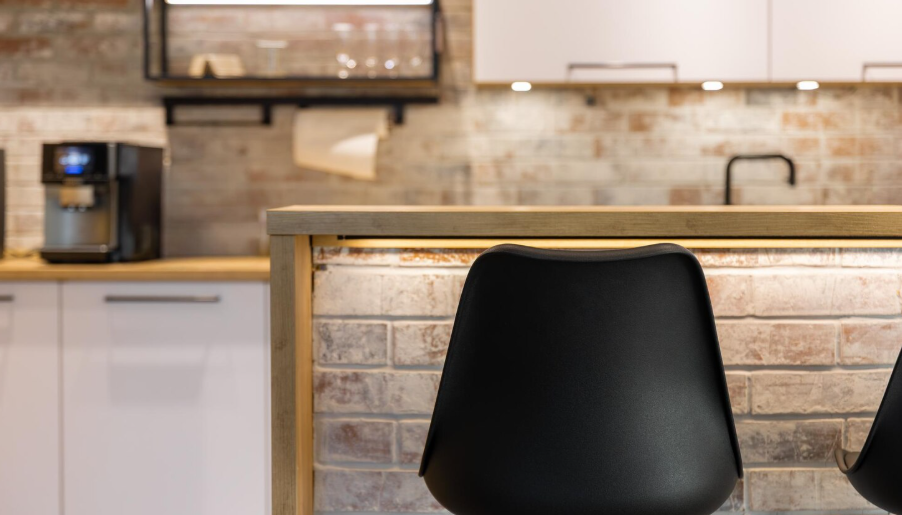
Purchase the incorrect barstools – you will know by dinner time itself! Your knees hit the underside of the bench, or your elbows sit way above the counter like you’re reaching up for something. It’s an easy mistake and an easy one to avoid once you know the actual numbers. Finding the right bar stools in Australia at Poliform comes down to one measurement most people skip entirely: the gap between your seat and your bench. Get that number right and everything else falls into place fast.
The Two Heights That Actually Exist
Only two counter heights really matter. Regular kitchen worktops sit about 90-92cm off the ground. Higher bar-height counters – you’ll find them on kitchen islands or a raised ledge – are around 100-105cm tall. The rest are just slight variations on these figures.
The seat height rule is quite straightforward: allow 23-30cm of space between the top of the stool seat and the bottom of the counter. That’s where our knees and thighs reside – and having too little room will make even a brief meal seem rather claustrophobic.
Bar Stool Heights by Counter Type
| Counter Type | Counter Height | Matching Stool Seat Height |
| Standard kitchen bench | 90-92 cm | 60-67 cm |
| Raised kitchen island ledge | 100-105 cm | 73-82 cm |
| Breakfast bar (higher) | 105-110 cm | 75-85 cm |
Measuring Your Own Kitchen Before You Buy
Don’t trust a showroom display. Showroom counters are rarely the same height as your kitchen, and a stool that looks perfect under their bench can be completely wrong under yours. Measure your own counter first, every single time.
Here’s the fastest way to get it right, step by step.
- Measure from the floor to the underside of your counter or island ledge
- Subtract 25 to 30 cm from that number
- That’s your target stool seat height, not a rough guess
- Add 15 cm of space between each stool for comfortable elbow room
- Check if the stool has a footrest, since dangling feet get uncomfortable fast
Swivel or Fixed, Backrest or None
An adjustable base is so much more than just an entertaining feature. It really makes it possible for people to get in and out – without having to drag the stool all over the floor itself, which is far more important than one might initially think on a very sensitive tiled or wooden kitchen floor that scratches rather easily. Fixed stools are indeed stronger and often much less expensive, yet they demand even more effort from the person getting seated, since there isn’t the simple turning motion available.
Backrests truly make a big difference to those who sit for longer than about 15 minutes. A backless stool may suffice if you’re just grabbing a fast coffee, but when your kitchen island functions as our breakfast area each day, a backrest will earn its worth very quickly indeed. Low-back styles work perfectly in wide-open kitchens where clear lines of sight really matter. On the other hand, full-back designs fit stools best for extended periods, such as doing homework or having conversations during dinner preparation time.
The material also greatly affects comfort, more so than many would expect. Wooden seats have a nice, warm feel, yet they tend to show their wear quite quickly in our busy kitchens. Upholstered seats offer extra comfort needs but require a fabric type that can be easily wiped clean, because kitchen islands witness even more spills than anywhere else within the entire home. Metal-framed stools with a molded seat kind of split the middle ground fairly well, handling our daily routines without demanding much upkeep whatsoever.
When you finally determine the right height and base style, everything else pretty much becomes your own personal preference. However, skip the height part altogether – and not even the best sense of style will save a stool that doesn’t actually match your counter top height.






Leave a Reply