
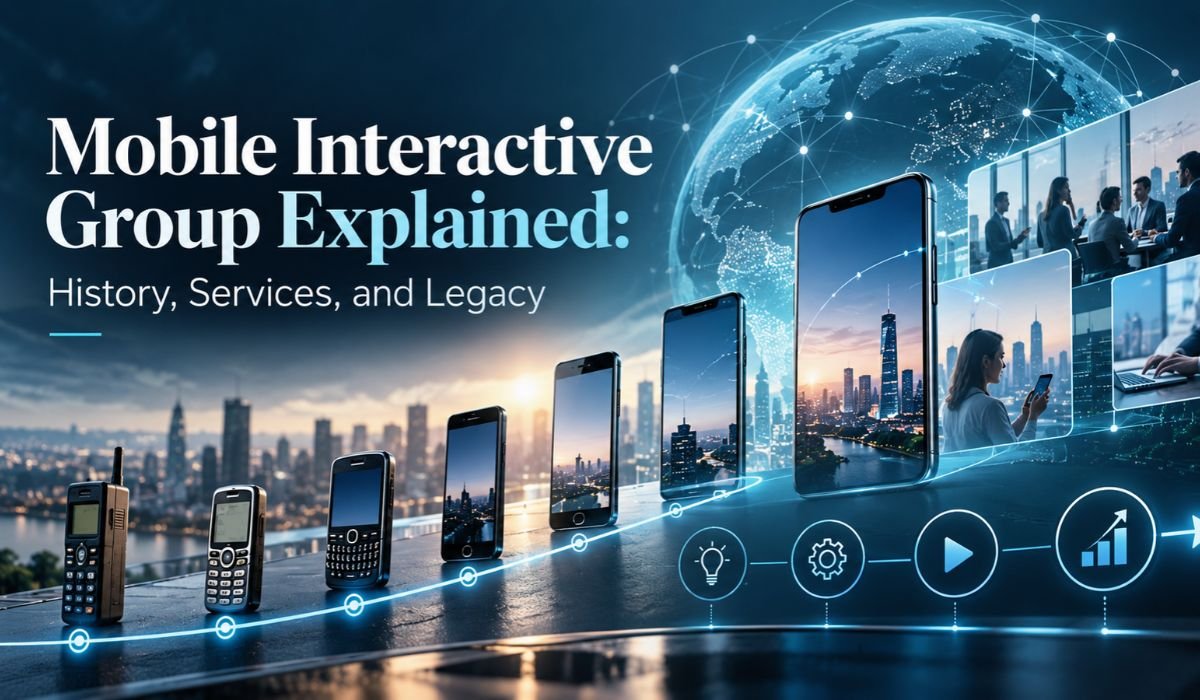
Mobile Interactive Group emerged at a time when the Mobile Industry was undergoing a remarkable transformation. Phones were no longer being viewed simply as devices for calls and text messages. Businesses were beginning to see them as tools for Marketing, Shopping, Entertainment, Customer Communication, and Digital Payments.
That changing landscape created an opportunity for Mobile Interactive Group, commonly known as MIG. The UK-based business developed services across Mobile Marketing, Messaging, Advertising, Mobile Commerce, Billing, Applications, and Interactive Technology. Instead of relying on one narrow product, MIG gradually built a broader portfolio that addressed different stages of the Mobile Customer Journey.
Acquisitions became an important part of that strategy. Piri strengthened MIG’s Mobile Marketing and CRM capabilities. Golden Bytes expanded its technical expertise and European presence, while Zaypay brought Micropayment technology into the business. By 2011, MIG had grown large enough to attract Velti, which acquired the company as part of its own international expansion.
Viewed from 2026, the story of Mobile Interactive Group offers more than a piece of corporate history. It provides a useful window into an earlier era when Mobile Marketing, Commerce, Payments, and Customer Engagement were beginning to converge into the connected Digital Ecosystem that now feels familiar.
Quick Bio Information
| Company Detail | Information |
|---|---|
| Company Name | Mobile Interactive Group Limited |
| Common Name | Mobile Interactive Group |
| Abbreviation | MIG |
| Home Market | United Kingdom |
| Legal Incorporation | February 20, 2003 |
| Company Number | 04672067 |
| Founder And CEO | Barry Houlihan |
| Industry | Mobile Marketing And Digital Technology |
| Core Services | Marketing, Messaging, Billing, Commerce, And Advertising |
| Marketing Acquisition | Piri Limited |
| Technology Acquisition | Golden Bytes International |
| Payments Acquisition | Zaypay |
| Zaypay Announcement | September 2011 |
| Velti Acquisition Announcement | November 15, 2011 |
| Reported 2010 Gross Billings | More Than $100 Million |
| Reported 2010 Net Revenue | More Than $20 Million |
| Reported Employees | More Than 160 |
| Reported Enterprise Customers | More Than 300 |
| Reported Service Reach | 44 Countries |
| Historical Status | Acquired By Velti |
These details describe Mobile Interactive Group during its historical operating period. The financial, customer, employee, and geographic figures were reported around the time of the Velti acquisition and shouldn’t be read as current company statistics. They are most useful as a snapshot of the scale MIG had reached before it became part of another organization.
What Was Mobile Interactive Group?
Mobile Interactive Group was a British Mobile Marketing and Digital Technology company that helped organizations communicate with customers and conduct commercial activity through Mobile Devices.
Its business went well beyond promotional SMS campaigns. MIG developed capabilities in Mobile Advertising, Messaging, Customer Relationship Management, Mobile Websites, Applications, Billing, Commerce, and Interactive Communications. That range is important because it shows how the company positioned itself as Mobile Technology became more sophisticated.
Different industries had very different requirements. A retailer might want a Mobile Commerce experience that made browsing and buying easier. A broadcaster could use Mobile Technology to encourage audience participation. Another business might need Messaging infrastructure, Advertising services, or a reliable Billing solution.
MIG tried to bring several of these requirements together. Rather than treating Marketing, Communication, Technology, and Transactions as completely separate activities, it built a portfolio that could address different parts of the customer relationship.
Early History
Mobile Interactive Group developed in a Mobile Market that would look unfamiliar to many consumers today. Its UK corporate history dates to 2003, although Velti later described MIG as having been founded in 2004. That difference is worth noting because the legal incorporation of a company and the start of its commercial operations aren’t necessarily recorded as the same event.
Feature phones dominated the market during this period. SMS was already deeply established, but smartphones hadn’t yet become the everyday computing platforms they would later become.
Even so, businesses could see the commercial potential of Mobile Devices. A phone was personal, portable, and usually close to its owner. That made it an attractive communication channel.
As Mobile Internet access improved, the possibilities widened. Companies could begin experimenting with Mobile Advertising, Digital Content, Shopping, Audience Participation, and paid services. The challenge was turning those ideas into experiences that worked across different phones and networks.
Barry Houlihan became closely associated with MIG’s development as the company’s Founder and Chief Executive. Under his leadership, the business expanded beyond individual Mobile Services and moved toward a broader technology portfolio.
Services And Business Model
The logic behind Mobile Interactive Group becomes clearer when its services are viewed as parts of the same customer journey.
Mobile Marketing could introduce an offer or brand to a consumer. Messaging provided a direct communication channel. CRM technology helped companies organize campaigns and Customer Relationships. Mobile Advertising created additional opportunities to reach audiences, while Commerce and Billing technology could support the transaction once a customer decided to buy.
Taken together, those services created an early version of the integrated Digital Customer Journey that businesses now take for granted.
Today, companies routinely connect Advertising, Customer Data, Messaging, Apps, Websites, Payments, and Retention tools. During MIG’s growth years, however, the Mobile Environment was far more fragmented. Devices differed considerably, network performance varied, and payment options weren’t consistent from one country to another.
That complexity made specialist providers valuable. MIG’s opportunity wasn’t simply to send messages or build Mobile Sites. It was to help businesses navigate several parts of a fast-changing Mobile Ecosystem.
Technology Behind MIG
Technology sat at the heart of Mobile Interactive Group’s business. Historical reporting associated the company with platforms including MIDAS, Kilrush, and Mpression.
MIDAS was linked with Interactive Messaging capabilities, while Kilrush was associated with Mobile Web and Application Publishing. Mpression supported Mobile Advertising. Historical reporting also identified SMS and MMS gateway technology within MIG’s wider portfolio.
Those systems help explain why describing MIG purely as a Marketing Company doesn’t tell the full story. It wasn’t only developing campaigns. The company also provided technology that allowed Mobile Experiences to be delivered and managed.
That mattered because Mobile Development was considerably more complicated than it may appear from today’s smartphone-first perspective. Screen sizes varied dramatically. Browsers had different capabilities. Network speeds could be limited, and there was no single standardized experience across every device.
Businesses needed technology that could work within those limitations. MIG’s combination of Marketing knowledge and technical infrastructure allowed it to operate on both sides of that challenge.
Customers And Industries
MIG’s customer base provides another indication of how broadly Mobile Technology was spreading.
By the time Velti announced its acquisition, Mobile Interactive Group was reported to serve more than 300 enterprise customers. Historical materials named organizations such as Skype, Vodafone, O2, PepsiCo, ITV, BBC, Sony, Barclaycard, Marks & Spencer, and New Look.
Those customer names need some context. Their inclusion doesn’t mean that every organization used every MIG service. A telecommunications company, retailer, broadcaster, financial business, or Consumer Brand could have very different Mobile Technology requirements.
The variety itself is significant.
Retailers were interested in Mobile Commerce. Broadcasters wanted new forms of audience participation. Telecommunications companies were already deeply connected to the Mobile Ecosystem, while Consumer Brands increasingly saw phones as Marketing channels.
MIG’s work with broadcasters was particularly forward-looking. Its technology was used to support real-time Mobile and Social Media interaction, helping audiences participate rather than simply watch. Today, that type of multi-screen engagement is common, but at the time it represented an important shift in how Media Companies thought about their audiences.
Mobile Commerce Growth
As Mobile Internet use increased, Commerce naturally followed.
Retailers began asking a simple but important question: if customers were spending more time on their phones, why shouldn’t they be able to shop there too?
Mobile Interactive Group became involved in that transition, and historical reporting associated MIG with powering New Look’s Mobile Commerce site.
Early Mobile Shopping was very different from the polished smartphone experiences consumers expect in 2026. Connections could be slow, screens were small, Mobile Browsers were limited, and entering payment or delivery information wasn’t always convenient.
Retailers couldn’t simply shrink a desktop website and expect good results. Navigation, product pages, checkout flows, images, and User Experience all needed to be reconsidered for smaller devices.
MIG’s involvement in Mobile Commerce therefore represented more than another Marketing service. It placed the company inside a much larger change in consumer behavior, as the phone evolved from a communication device into a practical shopping and transaction platform.
Piri Acquisition
Acquisitions became one of the clearest ways Mobile Interactive Group expanded its capabilities.
In June 2010, MIG acquired Piri Limited, a company specializing in Mobile Marketing and Customer Relationship Management software. Piri brought integrated cross-platform CRM technology as well as a self-service Web interface for Mobile Marketing.
The strategic fit was straightforward.
MIG already worked in Messaging and Mobile Marketing. Adding CRM technology could help businesses manage customer information and communications more effectively rather than treating each campaign as an isolated interaction.
Piri’s technology was intended to become part of MIG’s wider offering. Contemporary reporting didn’t disclose the purchase price, so the financial value of the transaction shouldn’t be assumed.
The broader importance of the deal was strategic. Instead of spending years developing every new capability internally, MIG could acquire specialist companies with existing technology and expertise. Piri was an early example of that approach.
Golden Bytes And European Expansion
MIG continued building through acquisitions in 2011 when it bought Golden Bytes International.
Golden Bytes had been active in the European Mobile Services market since 1999 and operated in the Netherlands and Belgium. Its expertise included areas such as SMS, MMS, Interactive Voice Response, Mobile Technology, and related Digital Services.
The deal offered MIG more than an additional set of products. It also strengthened the company’s position in continental Europe and supported its wider international ambitions.
Placed alongside the Piri acquisition, a pattern starts to emerge. Piri added depth in Mobile Marketing and CRM. Golden Bytes brought further technical experience and greater European reach.
These weren’t random additions to a growing company. They complemented areas where MIG was already active and helped create a broader service portfolio.
That approach also reflected the speed at which the Mobile Industry was changing. Acquiring an established specialist could give MIG immediate access to expertise, technology, customers, and regional knowledge that would have taken much longer to develop independently.
Zaypay And Mobile Payments
Payments became another important part of MIG’s expansion.
Zaypay was a Netherlands-based Micropayments company launched in 2006. Mobile Interactive Group announced its acquisition of the business in September 2011, while contemporary reports indicated that the transaction itself had closed in August.
The deal was described as an all-cash acquisition, although its purchase price wasn’t publicly disclosed.
Zaypay provided Micropayment technology to several hundred customers and supported alternative payment methods, including premium messaging and voice-based options. Its services were available across more than 40 countries.
That international reach addressed a problem that many Digital Businesses faced. Attracting users online was becoming easier, but collecting relatively small payments from those users could still be difficult, especially across different countries.
Payment infrastructure wasn’t uniform. Credit card use varied by market, and local consumers could prefer different methods. For developers selling Digital Products or services internationally, those differences created friction.
Zaypay offered technology designed to reduce part of that problem.
Why Zaypay Mattered
The Zaypay acquisition makes even more sense when viewed as part of MIG’s wider strategy.
Mobile Marketing could help a business attract users. Messaging could maintain contact with them. Mobile Websites and Applications could deliver the actual experience. Commerce technology could help present a product or service.
But none of those things alone completed the commercial journey. Businesses also needed a practical way to collect payment.
Zaypay strengthened that final step.
Barry Houlihan described MIG’s broader ambition around Online and Mobile Monetization for merchants, Online Billing providers, and developers. That made the acquisition more than a simple expansion into another technology category.
MIG was bringing Customer Engagement and Revenue Generation closer together.
The idea remains highly relevant in 2026. Digital Companies increasingly think about discovery, engagement, conversion, payment, and retention as connected stages rather than separate business functions.
MIG was pursuing a version of that integrated model during a much earlier period of Mobile Commerce.
International Reach And Business Scale
By the time Velti moved to acquire Mobile Interactive Group, MIG had developed considerable international reach.
Velti reported that the company offered Mobile Marketing, Mobile Commerce, and Mobile Billing services across 44 countries, with operations in the United Kingdom, United States, Netherlands, Belgium, and Australia.
Those figures should be read carefully. Providing services in 44 countries doesn’t necessarily mean MIG maintained offices or employees in every one of those markets. Service coverage and physical operations are different measures.
The company’s financial and operational figures nevertheless show that it had reached meaningful scale.
For 2010, Velti reported more than $100 million in Gross Billings and more than $20 million in Net Revenue. MIG also had more than 160 employees and over 300 enterprise customers.
Gross Billings shouldn’t be confused with either Net Revenue or profit. Gross Billings broadly reflect amounts billed or processed through a business, while Net Revenue is determined according to the company’s accounting treatment. Profit is another measure altogether.
That distinction is important, but it doesn’t diminish MIG’s growth. By 2011, the business had built an international customer base, expanded its technology portfolio, and established itself well beyond the scale of a small Mobile Startup.
Velti Acquisition
That growth eventually attracted Velti.
On November 15, 2011, Velti announced that it had acquired Mobile Interactive Group. The deal’s structure is sometimes reduced to a single headline figure, but the actual terms were more nuanced.
Velti announced minimum consideration of $25 million, including $20 million in cash at closing. Depending on MIG’s performance, Velti could pay up to another $34 million through 2013.
That meant the maximum potential consideration was approximately $59 million. It doesn’t mean $59 million was definitely paid. The additional amount depended on future performance conditions, so the maximum potential value and confirmed consideration shouldn’t be treated as the same figure.
For Velti, the attraction was broader than MIG’s revenue. The acquisition added Mobile Technology, enterprise customer relationships, geographic reach, experienced management, and Mobile Commerce and Billing capabilities.
MIG’s management was expected to join Velti’s global management team and continue operating the business. In that sense, the acquisition was designed to combine complementary businesses rather than simply purchase a collection of assets.
What Happened After The Acquisition?
Velti’s acquisition ended Mobile Interactive Group’s period as an independently owned company, but the transaction didn’t mean that everything carrying MIG’s technology or expertise immediately disappeared.
Velti said MIG’s management would join its global management team and continue operating the business. That’s an important detail because corporate acquisitions often involve a gradual integration rather than an overnight shutdown.
The picture became more complicated in the following years.
In 2013, Velti announced a restructuring involving parts of its US, UK, and India Mobile Marketing businesses. Its announcement specifically referred to the UK-based MIG business line while explaining that Velti’s UK operations weren’t included in the US Chapter 11 filing.
This later history is important because it prevents an overly simple interpretation of what happened to MIG after 2011.
Its independent ownership ended with the Velti acquisition, but tracing every former product, technology, contract, employee, and business asset after that point requires separate evidence. They shouldn’t all be assumed to have followed exactly the same path.
For anyone researching Mobile Interactive Group in 2026, that distinction is essential to understanding its later corporate history accurately.
Why Mobile Interactive Group Still Matters
Mobile Interactive Group is historically interesting not because it invented Mobile Marketing, Mobile Commerce, or Digital Payments, but because its strategy reflected the direction in which the wider industry was moving.
Messaging, Marketing, CRM, Advertising, Mobile Publishing, Commerce, Billing, and Payments were becoming increasingly interconnected. MIG’s development mirrored that convergence.
Its acquisitions reinforce the point.
Piri strengthened Marketing and CRM. Golden Bytes expanded technology capabilities and European reach. Zaypay brought greater expertise in Micropayments and Monetization.
Rather than moving into unrelated industries, MIG was building around different parts of the same Digital Customer Journey.
There’s also a broader business lesson in its story. Technology companies often need to decide whether to build new capabilities internally, partner with specialists, or acquire them. MIG repeatedly chose acquisition as a way to broaden its expertise and international presence.
Eventually, the same logic worked in reverse. After becoming larger and more strategically valuable, MIG itself became an acquisition target for Velti.
That cycle of expansion and consolidation remains common across the Technology Industry today.
Final Thoughts
Mobile Interactive Group grew during one of the most important transitions in the history of Mobile Technology.
When its story began, feature phones and SMS still defined much of the Mobile Experience. Over the following years, phones became increasingly capable platforms for Advertising, Media, Shopping, Customer Communication, Applications, and Digital Transactions.
MIG adapted alongside that transformation.
Its services expanded across Mobile Marketing, Messaging, CRM, Advertising, Publishing, Commerce, and Billing. Acquisitions accelerated the process. Piri added strength in Marketing and Customer Relationship Management, Golden Bytes expanded technical expertise and European reach, and Zaypay introduced deeper Micropayment and Monetization capabilities.
By the time Velti acquired Mobile Interactive Group in 2011, MIG was reported to have generated more than $100 million in Gross Billings and more than $20 million in Net Revenue during 2010. It employed more than 160 people and served over 300 enterprise customers.
Those numbers tell only part of the story.
MIG’s broader significance lies in what its development says about the Mobile Industry itself. Marketing, Communications, Commerce, and Payments were no longer evolving separately. They were becoming parts of one increasingly connected Digital Experience.
For readers looking back from 2026, Mobile Interactive Group offers a useful case study in how companies responded to that change. Its history shows the importance of following customer behavior, expanding technical capabilities at the right time, and recognizing when previously separate Digital Services are beginning to converge.
FAQs About Mobile Interactive Group
What Was Mobile Interactive Group?
Mobile Interactive Group was a UK-based Mobile Marketing and Digital Technology company. It provided services involving Messaging, Advertising, CRM, Mobile Commerce, Billing, Mobile Publishing, and Interactive Technology. MIG expanded internationally and through several acquisitions before Velti acquired it in 2011.
Who Founded Mobile Interactive Group?
Barry Houlihan was identified by Velti as the Founder and CEO of Mobile Interactive Group. He was closely involved with the company’s growth as it expanded from Mobile Marketing into a wider range of Technology, Commerce, Billing, and Monetization services.
What Services Did Mobile Interactive Group Offer?
Mobile Interactive Group worked across Mobile Marketing, Messaging, Advertising, CRM, Mobile Commerce, Billing, Mobile Web and Application Publishing, and Interactive Digital Technology. These capabilities allowed enterprise customers to use Mobile Devices for several stages of Customer Communication and commercial activity.
Which Companies Did MIG Acquire?
MIG made several important acquisitions during its expansion. Piri Limited strengthened its Mobile Marketing and CRM capabilities. Golden Bytes International added Mobile Technology expertise and supported European growth, while Zaypay expanded MIG into Micropayments and Online and Mobile Monetization.
What Was Zaypay?
Zaypay was a Netherlands-based Micropayments company launched in 2006. Its technology helped developers and Digital Businesses collect relatively small payments using alternative methods across international markets. Mobile Interactive Group announced its acquisition of Zaypay in September 2011.
Why Did Velti Acquire Mobile Interactive Group?
Velti acquired Mobile Interactive Group to add complementary Mobile Marketing technology, enterprise customer relationships, international operations, experienced management, and Mobile Commerce and Billing capabilities. MIG had already developed substantial scale and international reach by the time the acquisition was announced.
How Much Was The Velti Deal Worth?
Velti announced minimum consideration of $25 million, including $20 million in cash at closing. Up to an additional $34 million could become payable depending on MIG’s subsequent performance, bringing the maximum potential consideration to approximately $59 million. That maximum figure shouldn’t be treated as confirmation that the entire amount was ultimately paid.
Is Mobile Interactive Group Still Operating?
Mobile Interactive Group no longer operates as the same independent company that existed before Velti’s 2011 acquisition. Its later history became connected with Velti and subsequent corporate developments. Because individual MIG technologies, assets, contracts, and operations may have followed different paths, their later status shouldn’t be generalized without specific supporting evidence.
Learn more and explore exciting content on: BoyEnd Explained: Premium Boys’ Fashion, Styles, and Shopping Guide













Leave a Reply