
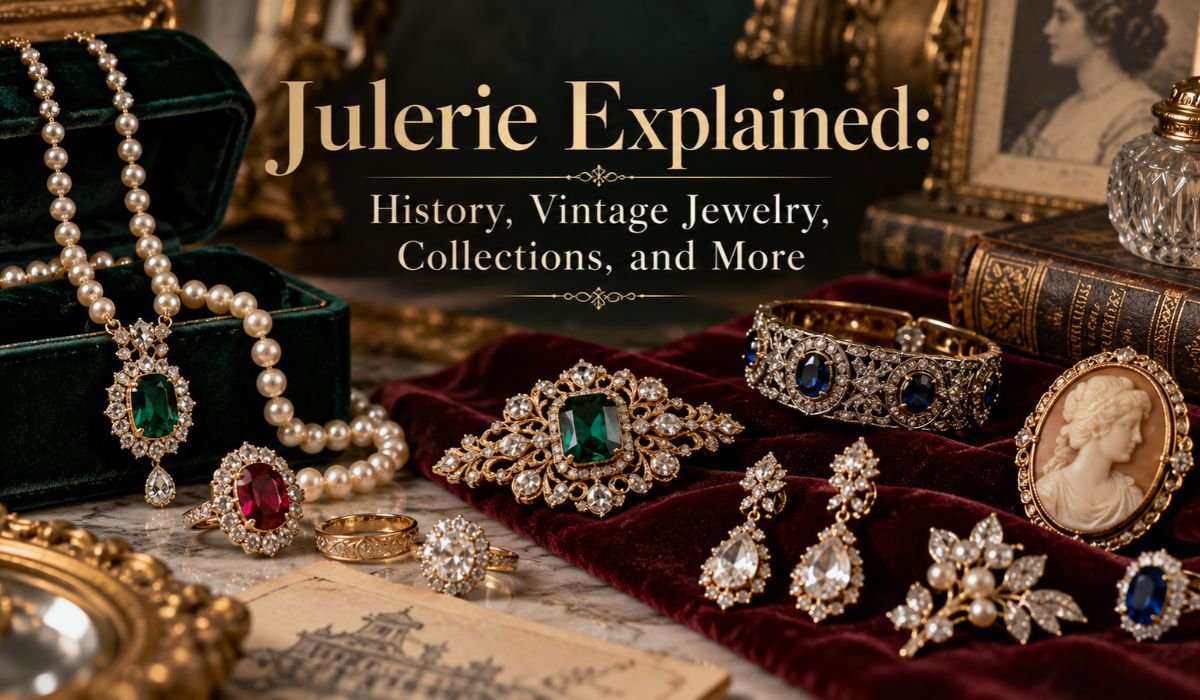
At first glance, Julerie looks a little like a creative spelling of “jewelry.” In this case, though, the name points to something much more specific: a jewelry retailer in Ghent, Belgium, with a strong focus on vintage pieces, pre-loved fine jewelry, gemstones, and selected luxury-branded items.
There’s also a family story behind the business. Julerie’s published history traces its jewelry roots to 1976, when Suzanne, the grandmother of Julie and Christophe, opened a jewelry shop in Ghent with her daughter. That history helps explain why vintage pieces, antique influences, and colorful gemstones remain such visible parts of the retailer’s identity today.
Of course, heritage is only part of the picture when you’re considering fine jewelry. A buyer also needs to know what a piece is made from, what condition it’s in, whether it has been repaired or resized, what documentation accompanies it, and whether the asking price makes sense for the individual item.
With that in mind, this guide looks beyond the name and explores Julerie Jewelry, its family background, vintage and pre-loved collections, gemstones, branded pieces, Ghent store, and the practical details shoppers should consider before making a purchase.
Julerie Quick Information
| Information | Details |
|---|---|
| Business Name | Julerie |
| Business Type | Jewelry Retailer |
| Industry | Fine Jewelry |
| Location | Ghent, Belgium |
| Published Address | Sint-Niklaasstraat 8, 9000 Gent |
| Family Jewelry Roots | 1976 |
| Family Story Begins With | Suzanne |
| Current Family Generation | Third Generation |
| Family Members Identified | Julie and Christophe |
| Main Focus | Vintage and Pre-Loved Jewelry |
| Major Categories | Rings, Earrings, Necklaces, Pendants, Bracelets, Watches |
| Precious Materials | Gold, Diamonds, and Colored Gemstones |
| Gemstones Seen in Collections | Aquamarine, Citrine, Topaz, Morganite, and Others |
| Own-Name Range | Julerie Collection |
| Luxury Pieces | Selected Pre-Owned Branded Jewelry |
| Authentication | Seller States Pre-Loved Pieces Are Professionally Checked |
| Documentation | Authenticity Certificate Stated for Pre-Loved Pieces |
| Ring Resizing | Available for Many Pieces, Subject to Design |
| Shopping Format | Physical Store and Online Catalog |
| Pricing | Varies by Individual Piece |
One thing to keep in mind is that vintage and pre-owned inventories rarely stand still. Pieces sell, new items arrive, and prices or policies may change. For that reason, current details should always be checked before buying.
What Is Julerie?
Julerie is a jewelry retailer based in Ghent, Belgium, with an emphasis on vintage, pre-loved, fine, and selected branded jewelry. Its catalog has included rings, earrings, necklaces, pendants, bracelets, watches, diamonds, and jewelry featuring colorful gemstones.
That mix separates Julerie from a typical fashion-accessory retailer built around large quantities of standardized products. With vintage and pre-owned fine jewelry, each item can have its own history and characteristics. Condition, measurements, gemstone specifications, sizing, repairs, and documentation can differ considerably from one piece to the next.
Even two rings that look remarkably similar in photographs may tell very different stories. One could contain a larger diamond, another might use a different gold alloy, while a third may have undergone resizing or restoration during its lifetime.
Julerie’s combination of a physical Ghent store and an online catalog reflects the way many people now shop for fine jewelry. Customers can discover pieces digitally while still having the option, where practical, to examine jewelry in person.
The Family History Behind Julerie
The family story associated with Julerie starts with Suzanne, the grandmother of Julie and Christophe.
According to Julerie’s published account, Suzanne had a particular affection for antique jewelry and colorful gemstones. In 1976, she opened a jewelry shop in Ghent with her daughter. The company says she initially drew from her own jewelry collection to help fill the shop’s displays.
What began as a family jewelry business eventually expanded beyond that first store, with the family later opening additional shops across Flanders.
Today, Julie and her brother Christophe are presented as the third generation involved in the family’s jewelry tradition. Julerie’s history describes Christophe as having built years of experience in the jewelry sector. Julie followed a different route initially, working in luxury hospitality and events before joining the family business.
Those backgrounds offer useful context for Julerie’s present identity, which combines jewelry expertise with an emphasis on presentation and customer experience.
There’s an important historical distinction, however. The year 1976 represents the beginning of the family’s stated jewelry story. It shouldn’t automatically be treated as the founding year of the current Julerie brand unless separate evidence establishes that connection. Keeping those two ideas separate makes the history more accurate without diminishing the family’s long involvement in jewelry.
What Makes Julerie Different?
Julerie occupies an interesting space between traditional fine-jewelry retail and the modern market for vintage and previously owned luxury goods.
Instead of relying exclusively on newly manufactured jewelry, the retailer gives substantial attention to pieces that have already had another life. That can open the door to designs that are no longer widely produced, along with styles shaped by earlier periods of jewelry making.
The attraction of vintage jewelry isn’t simply age. Older pieces may feature proportions, settings, decorative techniques, or gemstone combinations that feel noticeably different from contemporary designs. For someone who doesn’t want the same ring or necklace seen everywhere else, that individuality can be appealing.
Julerie also mixes its older inventory with newer jewelry and gemstone-focused designs, giving the catalog a broader character than a vintage-only store.
Still, shoppers shouldn’t confuse an interesting story with guaranteed value. A piece doesn’t automatically become rare, valuable, or desirable because it’s old. Its materials, craftsmanship, condition, provenance, and overall quality remain far more important.
Exploring The Julerie Jewelry Collections
The Julerie Jewelry catalog covers many of the categories shoppers would expect from a fine-jewelry retailer, although the changing nature of vintage inventory means the exact selection can vary.
Rings are particularly visible. The retailer has presented vintage rings, diamond pieces, colorful gemstone designs, and pre-loved styles. Earrings, necklaces, pendants, bracelets, and watches broaden the assortment further.
Then there’s the Julerie Collection, which shows that the business isn’t solely concerned with previously owned pieces. Julerie has also presented newer jewelry designs alongside its vintage inventory.
Colored gemstones play an important role here. The retailer’s collections have featured stones such as aquamarine, topaz, morganite, and citrine alongside diamonds and other gems. Examples have included Anne gemstone rings in several stone variations.
Julerie has also presented gemstone-and-pearl necklaces through its MAR GALLITI collection, adding another style to the wider selection.
For shoppers, the changing catalog is part of the appeal. A vintage or pre-loved piece may be available today and gone tomorrow. At the same time, something entirely different can appear as new inventory is sourced. That’s why an old review, article, or product photograph shouldn’t be treated as proof that a particular item remains available.
Vintage Jewelry At Julerie
Vintage jewelry is central to Julerie’s identity, but understanding what “vintage” means can make shopping considerably easier.
Within the wider jewelry market, the term generally refers to pieces associated with an earlier period, often at least a couple of decades old. There isn’t always a universally applied retail threshold, however, so sellers can use the term somewhat differently.
For that reason, the word “vintage” should be the beginning of a buyer’s research rather than the end of it.
Age, construction, materials, condition, hallmarks, provenance, and previous alterations all tell a more complete story. An older gold ring may show surface scratches from years of wear. A gemstone setting could have been strengthened or repaired. A ring might have been resized for one or more previous owners.
Those details aren’t automatically negative. In fact, signs of careful repair can simply reflect a long life of use. What matters is knowing what you’re buying.
When looking at Julerie Vintage Jewelry, it makes sense to study photographs closely and compare them with the written description. Measurements, hallmarks, gemstone information, visible wear, restoration, and previous resizing can all influence whether a piece is right for you.
Understanding Julerie Pre-Loved Jewelry
“Pre-loved” sounds similar to “vintage,” but the two terms aren’t interchangeable.
A pre-loved piece is simply jewelry that has previously been owned. It doesn’t have to be particularly old. A designer bracelet produced only a few years ago, for instance, can enter the pre-owned market without qualifying as vintage.
This distinction becomes particularly useful when considering contemporary luxury-branded jewelry.
Julerie states that its vintage and pre-loved jewelry is professionally checked before sale and that pieces are cleaned or polished. The retailer also says these items are supplied with authenticity documentation.
That’s useful information, but buyers should still look closely at the history of the individual item. If a piece has been polished, for example, it’s reasonable to ask how extensively. Heavy polishing can soften details on some older jewelry. Resizing may alter engravings, decorative features, or hallmarks, while replaced stones or components can affect originality.
In other words, “pre-loved” tells you that a piece has had a previous owner. A detailed condition report tells you much more about what you’re actually purchasing.
Rings, Earrings, Necklaces, Bracelets, And Watches
Different kinds of jewelry come with different questions, and those details become especially important in the secondhand market.
With rings, fit is often the first concern. Vintage rings were made or previously adjusted for someone else’s hand, so the existing size may not work for a new owner. Julerie indicates that many of its rings can be resized, although the possibilities depend on the construction of each design.
Stone placement, engravings, decorative patterns, and the amount of resizing required can all affect whether an alteration is practical.
Earrings raise different considerations. Buyers should check their dimensions, weight, fastening mechanisms, and whether both pieces are a properly matched pair.
For necklaces and bracelets, length and clasp condition matter alongside the quality of the chain or links. Signs of previous repairs deserve attention as well.
Pre-owned watches introduce another layer entirely. A watch can look excellent from the outside while still requiring mechanical attention. Movement condition, servicing history, replacement components, reference details, and originality can all influence both usability and value.
Whatever the category, appearances only tell part of the story.
Diamonds, Gemstones, And Gold At Julerie
Color is one of the most noticeable features across Julerie’s gemstone selection.
The retailer’s collections have included diamonds as well as stones such as citrine, aquamarine, topaz, and morganite. Each material has its own characteristics, and understanding a few basics can make product descriptions much easier to interpret.
Diamonds are commonly assessed using the four Cs: cut, color, clarity, and carat weight. Those factors can influence appearance and value, although grading consistency matters too. A seller’s description isn’t necessarily equivalent to a grading report from an independent gemological laboratory.
Colored gemstones bring their own questions. Color intensity, transparency, cut, treatments, condition, size, and documented origin can all influence how a stone is evaluated.
The metal holding those stones matters just as much. 18-carat gold contains 75% pure gold, with other metals making up the remainder of the alloy. Those additional metals can influence characteristics such as color and hardness.
Hallmarks may provide clues about metal purity and, in some cases, assay or manufacturing history. Older marks aren’t always straightforward to interpret, though, and specialist knowledge may sometimes be needed.
Luxury-Branded And Pre-Owned Jewelry
Luxury-branded jewelry has become an important part of the wider resale market, and Julerie has displayed pre-owned pieces identified with established luxury names.
These items can attract buyers looking for recognizable designs, discontinued models, or pieces that aren’t readily available through conventional retail channels.
Brand recognition, however, makes careful authentication even more important.
The fact that a reseller offers an item carrying a luxury name doesn’t, by itself, mean the store is an authorized retailer for that manufacturer. Authorized retail and legitimate secondhand resale are separate concepts.
When examining a branded piece, buyers can look for appropriate signatures, hallmarks, model or reference information, serial details where relevant, and supporting documentation. Previous repairs or modifications should also be considered.
Original boxes and paperwork can add useful context, but neither should be treated as automatic proof of authenticity.
For a particularly expensive item, an independent specialist opinion may provide an additional level of reassurance.
Julerie Jewelry Prices And What Affects Value
There’s no single Julerie Jewelry price range that accurately describes the entire catalog. Vintage gold earrings and luxury-branded diamond pieces naturally occupy very different parts of the market.
During previous research, examples included vintage gold lion earrings listed at €580 and a vintage diamond ring at €960. An emerald-and-diamond half-eternity ring appeared at €1,620, while a citrine-and-diamond ring was listed at €1,800. Messika diamond earrings were displayed at €4,200.
Those figures are best viewed as snapshots of earlier listings. They aren’t guaranteed current prices, and the same products may no longer be available.
Why can prices vary so widely? Precious-metal content is one factor, but it’s far from the only one. Gemstone quality, diamond characteristics, craftsmanship, condition, brand attribution, age, documentation, rarity, and market demand can all influence an asking price.
It’s also worth separating emotional or collectible appeal from investment value. Vintage jewelry isn’t automatically a financial investment simply because it’s old. Retail asking prices, professional valuations, and eventual resale prices can be very different numbers.
How Julerie Approaches Authenticity And Condition
Trust matters in any fine-jewelry purchase, but it becomes especially important when jewelry is pre-owned.
Julerie states that its vintage and pre-loved pieces undergo professional checks before sale. According to the retailer, items are also cleaned or polished and supplied with authenticity certificates.
Those assurances are relevant, but the next question should be: what exactly does the documentation verify?
The phrase “authenticity certificate” can cover different things depending on the issuer and the item involved. A document might address the jewelry’s materials, gemstones, identity, brand attribution, or a combination of characteristics.
An independent gemological report serves a different purpose. Depending on the laboratory and material, such reports can identify or grade diamonds and gemstones according to established testing procedures.
For a significant purchase, asking who performed the examination, who issued the certificate, and precisely what was verified can make the buying process much clearer.
Visiting The Julerie Store In Ghent
Julerie’s published physical address is Sint-Niklaasstraat 8, 9000 Gent, Belgium.
For anyone able to visit Ghent, seeing fine jewelry in person has obvious advantages. Studio photography can be beautiful, but it can’t fully communicate weight, comfort, scale, surface texture, or the way a gemstone responds to changing light.
Trying on a ring can also settle questions that measurements alone don’t always answer. A wide band, for example, can feel different from a narrow ring even when both are technically the same size.
A physical examination also makes it easier to notice signs of wear or previous work that may be difficult to see in photographs.
Because vintage and pre-loved pieces may be unique, customers traveling specifically to view an item should confirm that it’s still available before making the trip. Current visiting arrangements are also worth checking in advance.
Buying Julerie Jewelry Online
Not everyone can travel to Belgium, which makes Julerie’s online catalog an important part of the shopping experience.
Buying fine jewelry online can work well, but it rewards careful reading. The main photograph shouldn’t be the only thing guiding a purchase.
Look at the full description. Check measurements, gold purity, gemstone details, condition information, ring size, and available documentation. Where possible, photographs should provide enough detail to show important surfaces, settings, hallmarks, and visible signs of wear.
International customers have a few additional considerations. Shipping arrangements, insurance, import taxes or duties, accepted payment methods, and return conditions can all affect the final cost and convenience of a purchase.
Those policies may change over time, so buyers should verify the current terms rather than relying on an older review or article.
If something important isn’t clear, asking before paying is far easier than resolving a misunderstanding afterward.
What To Check Before Buying From Julerie
The safest way to approach a Julerie purchase is to evaluate the actual piece rather than relying primarily on the broader story of the retailer.
Start by checking whether the photographs and written description agree. Confirm the metal, dimensions, gemstone information, condition, and size.
With vintage jewelry, find out whether there have been known repairs, resizing, polishing, stone replacements, or other alterations. Not every modification is a problem, but it should be understood.
For branded pieces, look at what supports the brand attribution and what documentation is included.
When diamonds or valuable colored gemstones are involved, determine whether the stated specifications come from the retailer or from an independent gemological report.
Then consider the transaction itself. Current price, availability, secure payment options, delivery arrangements, insurance, possible international charges, and return terms all deserve attention.
A compelling family history can make a jewelry store memorable. A well-documented individual piece is what makes a purchase easier to evaluate.
Caring For Vintage And Pre-Loved Jewelry
Once a vintage or pre-loved piece becomes yours, thoughtful care can help preserve it.
Storage is a good place to start. Fine jewelry shouldn’t necessarily be piled together in one box, since harder gemstones and metals can scratch softer surfaces. Separating delicate pieces reduces unnecessary contact.
Cleaning needs even more caution. There isn’t one universally safe method for every gemstone.
Some stones can be sensitive to chemicals, heat, ultrasonic cleaners, or rapid temperature changes. Older jewelry may also contain settings or components that require gentler treatment than a modern piece.
Regularly checking settings is particularly important for frequently worn rings and bracelets. A worn or weakened prong can increase the risk of a gemstone becoming loose.
When you’re unsure how a particular piece should be cleaned, professional guidance is safer than experimenting with strong household solutions.
Julerie, Jewelry, And Jewellery: Understanding The Name
The spelling of Julerie creates an unusual search issue.
Julerie is the name of the Ghent jewelry retailer discussed throughout this guide. It shouldn’t automatically be corrected or interpreted as a typo.
“Jewelry,” meanwhile, is the standard American-English spelling for decorative personal objects such as rings, earrings, necklaces, and bracelets. “Jewellery” is the usual British-English spelling.
The distinction may seem minor, but it’s important for search intent. Someone typing “Julerie” may be looking specifically for the Belgian business, its history, products, store, collections, or reputation rather than general information about jewelry.
Understanding that difference makes it much easier to find relevant information.
Is Julerie Legit? A Balanced Way To Evaluate The Retailer
It’s reasonable to investigate a jewelry retailer carefully before spending a significant amount of money, particularly when the purchase involves vintage or luxury goods.
Julerie provides several pieces of information that potential customers can examine for themselves. These include a published physical address in Ghent, named family members, an online product catalog, detailed listings, and a public account of the family’s jewelry history.
Those details provide useful context, but no expensive purchase should rest on a single indicator.
Before ordering, shoppers can review current business information, recent independent customer experiences, payment protections, shipping arrangements, return conditions, and the documentation supplied with the individual piece.
High-value purchases may justify additional questions or independent expertise.
Ultimately, evaluating a retailer and evaluating a piece of jewelry are related but separate tasks. A business’s history can establish context; the item’s condition, materials, authenticity, documentation, and purchase terms determine whether a particular transaction makes sense.
Final Thoughts On Julerie
Julerie brings together several sides of the modern fine-jewelry market. There’s a multigenerational family story, a strong interest in vintage pieces, pre-loved luxury jewelry, colorful gemstones, diamonds, and the convenience of online discovery.
Its published family history reaches back to a Ghent jewelry shop opened in 1976. The Julerie of today, however, operates in a very different retail environment—one where customers can discover a one-off vintage ring online, compare gemstone specifications from home, and consider pre-owned luxury alongside newly made jewelry.
That combination gives the business a distinctive identity.
For buyers, though, the best approach remains refreshingly simple: focus on the actual piece. Understand what it’s made from, examine its condition, check its dimensions and sizing, review the available documentation, and make sure the current price and purchase terms work for you.
Vintage and pre-loved jewelry can carry history in a way that newly produced objects sometimes can’t. Appreciating that history is part of the pleasure. Understanding exactly what you’re buying is what turns that interest into an informed decision.
FAQs About Julerie
What Is Julerie?
Julerie is a fine-jewelry retailer based in Ghent, Belgium. Its catalog emphasizes vintage and pre-loved jewelry while also featuring diamonds, colored gemstones, watches, selected luxury-branded pieces, and newer jewelry designs. Because some inventory consists of individually sourced pieces, the selection can change over time.
Where Is Julerie Located?
Julerie’s published store address is Sint-Niklaasstraat 8, 9000 Gent, Belgium. Customers planning to visit for a specific piece should confirm both current visiting arrangements and product availability before traveling, particularly when the item is vintage or one of a kind.
When Did Julerie’s Jewelry History Begin?
According to Julerie’s published family history, the story began in 1976 when Suzanne opened a jewelry shop in Ghent with her daughter. Julie and Christophe are presented as the family’s third generation in jewelry. The 1976 date refers to the family’s jewelry roots and shouldn’t automatically be described as the founding year of the present Julerie brand.
Does Julerie Sell Vintage And Pre-Loved Jewelry?
Yes. Vintage and pre-loved pieces form a major part of Julerie’s offering. Its catalog has included rings, earrings, necklaces, bracelets, watches, diamonds, gemstones, and selected branded jewelry. Because pre-owned inventory can consist of individual pieces, products may sell and disappear from the catalog.
Does Julerie Provide Authenticity Certificates?
Julerie states that its vintage and pre-loved pieces are professionally checked and supplied with authenticity certificates. For an expensive purchase, buyers should establish what the certificate verifies, who performed the assessment, and whether independent gemological or brand-specific documentation is also available.
Can Julerie Rings Be Resized?
Julerie indicates that many of its rings can be resized, but that doesn’t mean every ring can be altered by any amount. Existing size, gemstone placement, engravings, decorative details, and construction can affect what’s technically safe. The possibilities should therefore be confirmed for the specific ring before purchase.
Is Julerie The Same As Jewelry?
No. Julerie is the name of the Belgian jewelry retailer covered in this article. “Jewelry” is the standard American-English spelling for decorative personal items, while “jewellery” is the usual British-English spelling. The similarity between the words can create confusion in online searches.
What Should You Check Before Buying From Julerie?
Start with the individual piece. Check its metal, gemstones, dimensions, condition, sizing, previous repairs or alterations, and accompanying documentation. For online orders, also confirm current availability, price, payment protections, shipping and insurance arrangements, possible international charges, and return conditions before completing the purchase.
Learn more and explore exciting content on: Bauering Guide: Company History, Construction Services, Projects, and More





Leave a Reply