
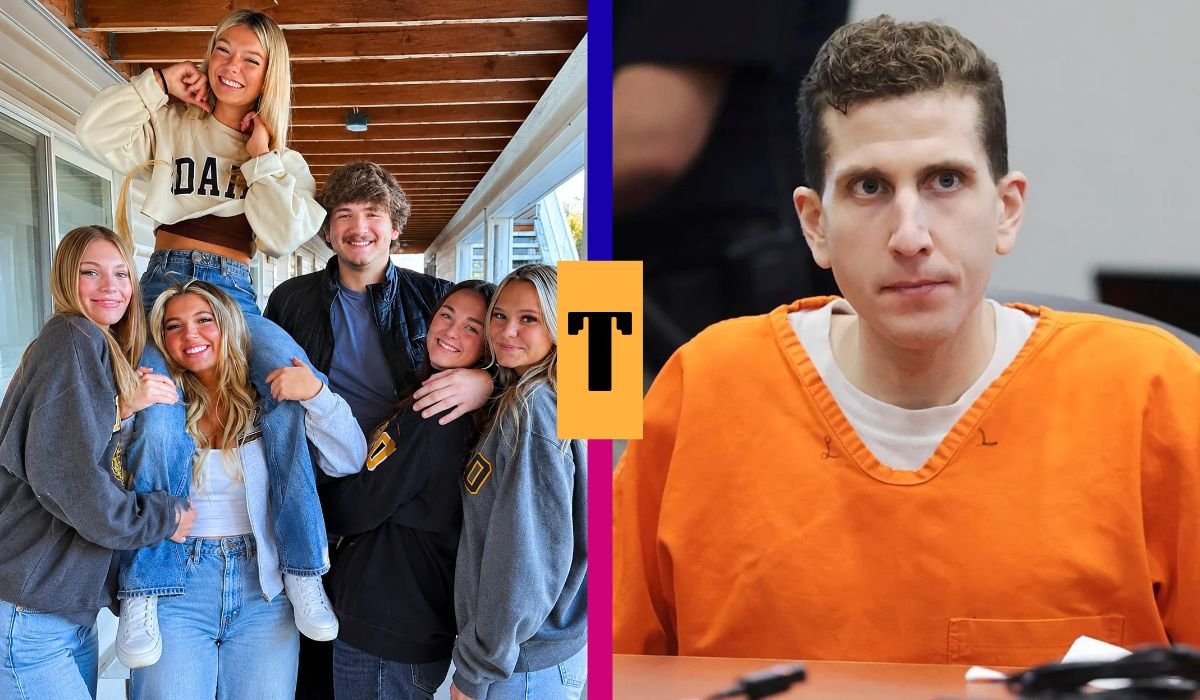
Nearly four years after the Idaho Murders shocked the nation, surviving roommate Dylan Mortensen is still struggling with the consequences of a tragedy that forever changed her life. Although Bryan Kohberger was sentenced in 2025 for killing four University of Idaho students, the attention surrounding the case hasn’t faded. For Mortensen, that attention has reportedly brought frightening threats, online harassment, and serious concerns about her personal safety.
During an emergency court hearing on November 12, 2026, Mortensen’s attorney revealed that her client had received threats involving murder, kidnapping, and physical harm. The hearing centered on a request to keep Mortensen’s face blurred in police body camera footage connected to the investigation.
The latest development offers a troubling reminder that surviving a violent crime doesn’t necessarily mean escaping its consequences. While the criminal proceedings against Kohberger reached a conclusion, Mortensen’s fight for privacy and a sense of security has continued.
Quick Bio Information About Dylan Mortensen and the Idaho Murders
| Information | Details |
|---|---|
| Full Name | Dylan Mortensen |
| Reported Age in 2026 | 22 Years |
| Known For | Surviving the Idaho Murders |
| University Connection | University of Idaho |
| Incident Location | Moscow, Idaho |
| Incident Date | November 13, 2022 |
| Other Surviving Roommate | Bethany Funke |
| Victim | Madison Mogen |
| Victim | Kaylee Goncalves |
| Victim | Xana Kernodle |
| Victim | Ethan Chapin |
| Convicted Killer | Bryan Kohberger |
| Kohberger’s Sentencing Date | July 23, 2025 |
| Mortensen’s Attorney | Robyn McPherson |
| Emergency Court Hearing | November 12, 2026 |
| Reported Family Relocations | Nine |
| Main Safety Concerns | Death Threats, Kidnapping Threats, and Harassment |
| Legal Request | Keep Her Face Blurred in Police Footage |
Idaho Murders Latest Update: What Happened at the Emergency Court Hearing?
The latest chapter in the Idaho Murders case unfolded during a virtual court hearing on November 12, 2026. Attorney Robyn McPherson appeared on behalf of Dylan Mortensen to argue for additional privacy protections involving police footage from the investigation.
At the center of the dispute was an emergency motion requesting that Mortensen’s face remain blurred in body camera recordings before their public release.
McPherson told the court that her client had already experienced serious harassment, including threatening messages and the exposure of personal information. She argued that releasing more footage showing Mortensen’s face could make it easier for strangers to identify or locate her.
The attorney emphasized that Mortensen’s concerns weren’t simply about unwanted publicity. According to the statements presented in court, she feared that greater public exposure could place her safety at risk.
After considering the arguments, the judge took the motion under advisement. No final ruling had been announced when the November 12 hearing concluded.
Who Is Dylan Mortensen, the Idaho Murders Survivor?
Dylan Mortensen became widely known after surviving the November 13, 2022, murders of four University of Idaho students in Moscow, Idaho.
She was living in an off-campus residence with several other students when the killings occurred. Mortensen and another roommate, Bethany Funke, survived the attack.
Mortensen, reported to be 22 years old in November 2026, later became an important witness because of what she described seeing inside the residence during the early morning hours.
Her account helped investigators establish part of the timeline surrounding the killings.
Although her connection to the case brought widespread public attention, Mortensen was never charged in connection with the murders. She was a surviving witness whose observations became part of the criminal investigation.
The years that followed, however, brought challenges that extended well beyond her involvement with law enforcement.
What Death and Kidnapping Threats Has Dylan Mortensen Reported?
Some of the most disturbing details from the emergency hearing concerned the threatening messages Mortensen says she has received since the murders.
Her attorney told the court that strangers had threatened to kill, harm, or kidnap her. Mortensen also described messages accusing her of participating in the killings or blaming her for the deaths of her friends.
According to her court filing, certain messages warned that strangers would find her. Others expressed wishes that she would suffer serious violence.
For Mortensen, these weren’t isolated concerns about negative comments online. The messages reportedly contributed to an ongoing fear of being recognized or approached in public.
McPherson argued that releasing additional footage showing Mortensen’s face could make an already difficult situation more dangerous.
It’s important to distinguish these reported threats from independently established findings. The available reporting describes allegations presented by Mortensen and her attorney but doesn’t confirm that authorities independently verified every message or identified everyone responsible.
Why Dylan Mortensen Wants Her Face Blurred in Police Footage
Mortensen’s latest legal request focuses on police body camera recordings associated with the Idaho Murders investigation.
She wants her face to remain obscured in the footage at issue before it becomes publicly available.
Her attorney explained that Mortensen’s personal information had already been exposed, including her address, phone number, and social media accounts.
That history, McPherson argued, makes further public identification especially concerning.
Although Mortensen’s identity is already widely known, additional recordings could make her easier to recognize in everyday settings. Her attorney warned that this might increase the possibility of unwanted encounters.
The dispute also raises an important legal question. Investigative records can serve the public interest by providing transparency, but their release may create risks for witnesses and other individuals connected to a crime.
Mortensen’s request asks the court to consider those competing concerns.
How the Idaho Murders Changed Dylan Mortensen’s Everyday Life
The impact of the murders on Mortensen’s life extends far beyond courtroom appearances and media coverage.
In her emergency court filing, she revealed that she and her family had moved nine times since November 2022.
She also described taking precautions that most people rarely have to consider.
At work, Mortensen said she uses an alternative name. When meeting unfamiliar people, she avoids immediately revealing her real identity.
Even receiving packages has become complicated. She explained that she sometimes uses a different name for deliveries because she worries about strangers connecting her identity to her location.
These details provide a clearer picture of how deeply the aftermath of the killings has affected her daily routine.
Activities that once seemed ordinary now require additional thought and caution.
Her experience also illustrates a difficult reality for people involved in widely publicized crimes: the end of a criminal case doesn’t always bring an end to public scrutiny.
Online Harassment and False Accusations Against Dylan Mortensen
The Idaho Murders attracted enormous attention across social media, where discussions about the investigation often extended beyond verified evidence.
According to McPherson, Mortensen’s name appeared in hashtags more than 30 million times. The attorney also told the court that manipulated photographs had circulated showing Mortensen holding weapons.
Such images can be particularly harmful when viewers mistake altered content for genuine evidence.
Mortensen also reported receiving messages from strangers accusing her of involvement in the killings.
Those accusations have not been established as facts and should not be confused with the findings of the criminal investigation.
The case demonstrates how quickly misinformation can spread when a major crime becomes the subject of widespread online speculation.
While public discussion can help people understand important events, unsupported claims can also damage reputations and place additional pressure on individuals already affected by tragedy.
For that reason, reporting on Mortensen’s experiences requires a clear distinction between documented evidence, statements made in court, and unverified internet rumors.
What Happened During the University of Idaho Murders?
The University of Idaho murders occurred during the early morning hours of November 13, 2022, inside an off-campus residence in Moscow, Idaho.
Four students were fatally stabbed.
The victims were Madison Mogen, Kaylee Goncalves, Xana Kernodle, and Ethan Chapin.
Their deaths devastated families, friends, and the university community. As investigators worked to determine what had happened, the case quickly attracted national attention.
Authorities examined physical evidence, interviewed witnesses, and reviewed information connected to the residence and surrounding neighborhood.
In December 2022, Bryan Kohberger was arrested in Pennsylvania in connection with the killings.
The investigation eventually developed into a major criminal prosecution that drew extensive media coverage.
Yet behind the headlines were four young people whose lives had been cut short, families facing unimaginable loss, and surviving roommates left to navigate the aftermath.
What Did Dylan Mortensen Witness on the Night of the Murders?
Mortensen’s account became an important part of investigators’ efforts to reconstruct the events of November 13, 2022.
According to the probable cause affidavit, she reported hearing unusual noises inside the residence during the early morning hours.
After opening her bedroom door, she described seeing an unfamiliar man dressed in black clothing. The man was wearing a mask covering his mouth and nose.
One detail stood out in her description: his bushy eyebrows.
The individual reportedly walked past her toward the rear sliding glass door.
Investigators described Mortensen as standing in a state of shock during the encounter.
Her observations helped authorities develop a timeline of activity inside the home.
However, her account should be understood within the limits of what she reported witnessing. It would be inappropriate to assume what she knew about the killings at that moment or why she responded as she did.
Her role was that of a surviving witness, and her statements became part of the evidence investigators considered.
Who Is Bryan Kohberger and What Happened to Him?
Bryan Kohberger was studying at Washington State University when investigators connected him to the killings in nearby Moscow, Idaho.
He was arrested in Pennsylvania in December 2022 and subsequently faced criminal charges related to the deaths of the four students.
The case moved through lengthy legal proceedings before Kohberger pleaded guilty in July 2025 to four counts of first-degree murder and one count of burglary.
On July 23, 2025, he was sentenced to four consecutive life terms without the possibility of parole, along with an additional sentence for burglary.
His guilty plea brought the criminal prosecution toward its conclusion without a full trial.
The sentencing hearing also renewed attention on the victims, their families, and the surviving roommates.
For Mortensen, however, the legal outcome didn’t eliminate the unwanted attention she says she continued to experience.
Why the Idaho Murders Continue to Attract Public Attention
Few criminal cases involving university students have generated the sustained attention seen in the Idaho Murders investigation.
The victims’ young ages, the circumstances of the attack, and the extensive investigation all contributed to widespread public interest.
News organizations followed the case closely, while true-crime communities and independent commentators discussed developments across social media platforms.
Even after Kohberger’s sentencing, interest continued in witness accounts, investigative records, and previously unreleased material.
There are legitimate reasons for the public to examine how a major criminal investigation was conducted. Access to official records can promote accountability and help people understand the justice system.
But public interest also carries responsibilities.
When speculation replaces verified information, surviving witnesses and victims’ families can face additional distress.
Mortensen’s request for privacy protections highlights the tension between the public’s desire for information and an individual’s need for personal safety.
What Did Dylan Mortensen’s Attorney Tell the Court?
During the November 12 hearing, Robyn McPherson described the threats and harassment that Mortensen reportedly experienced after the killings.
The attorney discussed the previous exposure of personal information, manipulated photographs, and messages containing threats of violence.
McPherson argued that releasing footage showing Mortensen’s unblurred face could make it easier for strangers to recognize or locate her.
Her position was that the court should carefully consider those risks before allowing the disputed material to become publicly accessible.
The emergency motion therefore focused on preventing additional exposure rather than challenging the outcome of Kohberger’s criminal case.
After hearing the arguments, the judge said the matter would be taken under advisement.
The November 12 report did not establish that a final ruling had been issued.
How the Idaho Murders Affected the Victims’ Families and Survivors
The consequences of the Idaho Murders reach far beyond the criminal proceedings.
For the families of Madison Mogen, Kaylee Goncalves, Xana Kernodle, and Ethan Chapin, the killings meant losing loved ones whose futures were abruptly taken away.
Friends, classmates, and members of the University of Idaho community also faced the shock and grief surrounding the tragedy.
The surviving roommates experienced a different kind of aftermath.
Although Mortensen and Bethany Funke survived the attack, their connection to the case placed them under intense public attention.
Mortensen’s statements reveal how that attention has continued to affect her sense of privacy and security.
Her experience underscores why survivors should be treated with care and why assumptions about their behavior or emotional responses can be misleading.
Every person’s experience of trauma is different, and public discussion should reflect that reality.
What Happens Next in Dylan Mortensen’s Court Case?
Following the emergency hearing on November 12, 2026, the judge said she would consider the arguments before issuing a decision.
The central question is whether Mortensen’s face should remain blurred in the disputed police footage.
A ruling could also help clarify how privacy and safety concerns are considered when investigative records from high-profile criminal cases are requested for public release.
The available November 12 reporting did not confirm a final decision.
Because court proceedings can develop quickly, any subsequent ruling should be verified through reliable reporting or official records before publication.
For Mortensen, the outcome could affect how much additional identifiable footage becomes available to the public.
Why Witness Privacy Matters in High-Profile Criminal Cases
Mortensen’s situation raises questions that extend well beyond the Idaho Murders.
Criminal investigations often involve witnesses, surviving victims, family members, and other individuals who may never have expected their lives to become subjects of national attention.
Public access to investigative records can support transparency. At the same time, releasing sensitive material may create unnecessary risks for people whose identities are already widely discussed.
The challenge is finding an appropriate balance.
In some circumstances, redacting identifying details can allow important information to remain accessible without exposing individuals to additional harm.
Mortensen’s legal request illustrates why courts must consider both public interest and individual safety when deciding how sensitive investigative material should be released.
Final Thoughts on the Idaho Murders and Dylan Mortensen’s Safety
The Idaho Murders remain one of the most devastating criminal cases involving American university students in recent years. Although Bryan Kohberger’s guilty plea and sentencing brought the criminal prosecution to a conclusion in 2025, the effects of the tragedy continue to shape the lives of those connected to it.
For Dylan Mortensen, the years since the killings have reportedly involved repeated relocations, threatening messages, online harassment, and difficult decisions about protecting her identity.
Her latest court request reflects a desire to regain some measure of privacy while remaining connected to a case that continues to attract national attention.
The dispute over police footage also raises a broader issue about responsible reporting and public access to sensitive records.
Transparency matters, but so does recognizing the human consequences of widespread exposure.
As the court considers Mortensen’s request, her experience serves as a reminder that surviving a tragedy is only the beginning of a much longer journey for some witnesses.
Respecting their privacy, avoiding unsupported accusations, and relying on verified information are essential parts of discussing cases as sensitive as the Idaho Murders.
FAQs About Idaho Murders
Who Is Dylan Mortensen?
Dylan Mortensen is one of two surviving roommates from the University of Idaho murders that occurred in Moscow, Idaho, on November 13, 2022. She became an important witness after reporting that she saw an unfamiliar man inside the residence during the early morning hours. Her account helped investigators establish part of the timeline surrounding the killings.
What Threats Has Dylan Mortensen Received?
According to Mortensen and her attorney, she has received death threats, kidnapping threats, and disturbing messages from strangers. She has also reported online harassment and false accusations linking her to the murders. These concerns were discussed during an emergency court hearing in November 2026.
Why Did Dylan Mortensen Request Court Protection?
Mortensen requested that her face remain blurred in police body camera footage connected to the investigation. Her attorney argued that releasing identifiable recordings could make it easier for strangers to recognize or locate her, potentially increasing the safety risks she says she already faces.
How Many Times Has Dylan Mortensen Moved?
According to her emergency court filing, Mortensen and her family moved nine times following the murders. She described these relocations as part of the difficulties associated with harassment, unwanted attention, and concerns about her personal safety.
Who Were the Victims of the Idaho Murders?
The four victims were Madison Mogen, Kaylee Goncalves, Xana Kernodle, and Ethan Chapin. All were University of Idaho students who were fatally stabbed inside an off-campus residence in Moscow, Idaho, on November 13, 2022.
What Happened to Bryan Kohberger?
Bryan Kohberger pleaded guilty to four counts of first-degree murder and one count of burglary in July 2025. He received four consecutive life sentences without the possibility of parole, along with an additional sentence for burglary. His sentencing hearing took place on July 23, 2025.
Has the Judge Ruled on Dylan Mortensen’s Request?
The November 12, 2026, hearing concluded without an announced final decision. The judge said the emergency motion would be taken under advisement. Any later ruling should be checked against official court records or reliable news coverage.
Who Was the Other Surviving Roommate?
Bethany Funke was the other surviving roommate in the University of Idaho murders. She lived in the Moscow residence and survived the November 2022 attack alongside Dylan Mortensen. Both women became connected to the investigation because they were present in the home when the killings occurred.
Learn more and explore exciting content on: Millie Bobby Brown Baby: Inside Her Growing Family and Motherhood Journey




Leave a Reply