
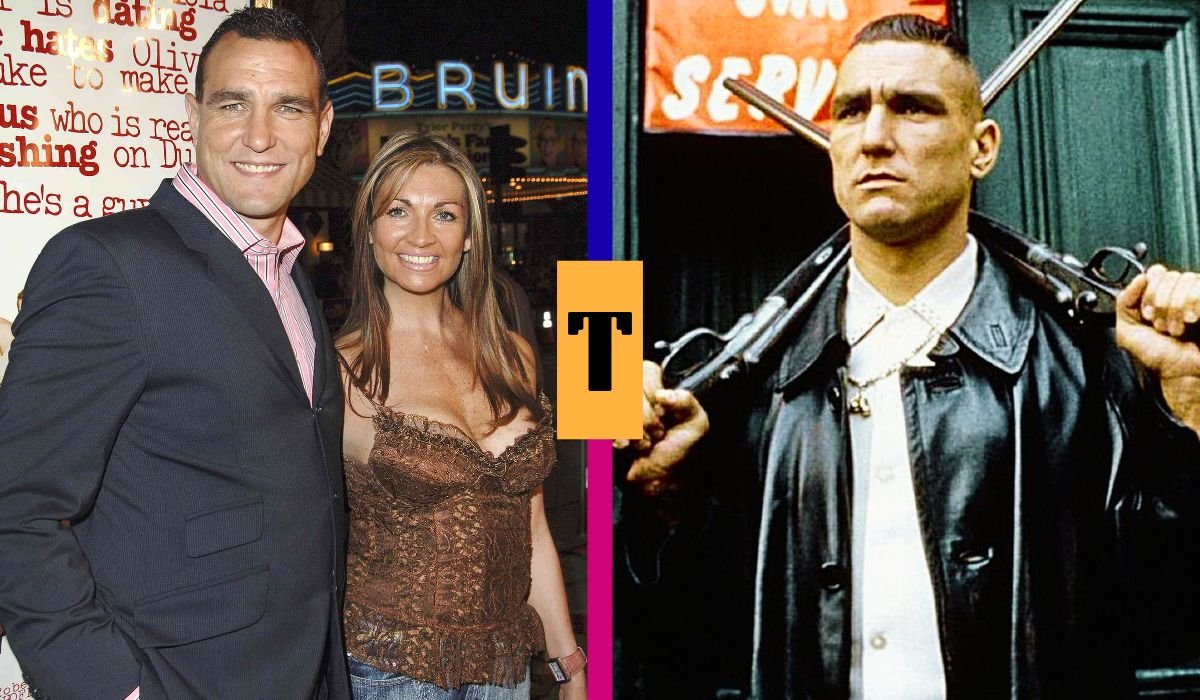
Few British entertainers have made a career change quite as striking as Vinnie Jones. Before he became a familiar face in Hollywood films, Jones was known on English football pitches as a fiercely competitive midfielder with a reputation for toughness. Born Vincent Peter Jones on January 5, 1965, in Watford, Hertfordshire, England, he spent around 15 years in professional football before finding an entirely new audience through acting.
His football journey took him to Wimbledon, Leeds United, Sheffield United, Chelsea, and Queens Park Rangers. He also represented Wales internationally after qualifying through his Welsh family connection. The defining achievement of his playing career came in 1988, when Wimbledon defeated Liverpool in the FA Cup final.
Then came the unexpected second act. Jones retired from professional football in 1999, but his move into entertainment had already begun. His appearance as Big Chris in Guy Ritchie’s Lock, Stock and Two Smoking Barrels in 1998 turned him into a recognizable film personality. Roles in Snatch, Gone in 60 Seconds, Mean Machine, and X-Men: The Last Stand followed.
There’s much more to Vinnie Jones than the hardman image that has followed him for decades. His story also includes a long marriage, family life, personal loss, and a later shift toward a quieter life in the countryside.
Quick Bio Information
Full Name: Vincent Peter Jones
Known As: Vinnie Jones
Date Of Birth: January 5, 1965
Birthplace: Watford, Hertfordshire, England
Nationality: British
Profession: Actor, Presenter, Former Professional Footballer
Football Position: Midfielder
International Team: Wales
International Caps: 9
Best-Known Football Club: Wimbledon
Major Football Honor: 1988 FA Cup Winner
Professional Football Career: 1980s–1999
Acting Breakthrough: Lock, Stock and Two Smoking Barrels
Breakthrough Character: Big Chris
Marvel Role: Cain Marko/Juggernaut
Wife: Tanya Jones
Children: Two
Parents: Peter Jones And Glenda Harris Jones
Nickname: The Axe
Vinnie Jones Early Life And Background
Vinnie Jones grew up in Hertfordshire, where football became an important part of his early life. He attended Chancellors School in Potters Bar before beginning his journey toward professional football. His route wasn’t the conventional rise of an academy star. Instead, Jones developed his career through early opportunities that eventually led him into the professional game.
Before making his name at the highest levels of English football, Jones played for Wealdstone and spent time with Swedish club IFK Holmsund. Those formative years gave him valuable experience and helped shape the determined approach that would later become a defining feature of his game.
Jones wasn’t known for being a delicate or understated midfielder. His strength, physical commitment, aggressive tackling, and willingness to compete made him stand out. Long before Hollywood audiences knew his face, English football fans had already formed a strong impression of him.
His Rise In Professional Football
Jones’s move to Wimbledon in 1986 marked a major turning point. The club was developing into one of the most unusual and unpredictable teams in English football, and Jones quickly became one of its most recognizable personalities.
From midfield, he brought physical strength and energy to the side. His playing style suited Wimbledon’s competitive character, and his reputation grew with each season.
Jones later played for Leeds United, Sheffield United, Chelsea, and Queens Park Rangers, while also returning to Wimbledon for a second spell. At QPR, he briefly took on player-coach responsibilities, giving him an early taste of life beyond simply being a player.
His professional career continued until 1999. Statistics can differ depending on whether a source is counting league matches, Premier League appearances, or other competitive fixtures, but there’s no question that Jones built a substantial career. His record included 184 Premier League appearances and 13 goals, alongside hundreds of senior matches across his wider football career.
Wimbledon And The Famous Crazy Gang
If one club is permanently linked with Vinnie Jones, it’s Wimbledon. His time there coincided with the period when the club became famous as the “Crazy Gang,” a nickname that reflected the team’s colorful personalities and unconventional character.
Jones was perfectly suited to that environment. He played with intensity and quickly became one of the players most associated with the club’s hard-edged identity. Yet Wimbledon’s story wasn’t simply about physical football. The club also achieved something remarkable on the pitch.
That achievement came in the 1988 FA Cup final. Wimbledon faced Liverpool, one of the most powerful teams in English football at the time, and won 1–0. Jones was part of the Wimbledon side that lifted the trophy, turning the victory into one of the club’s defining moments.
He eventually made more than 200 appearances for Wimbledon across two spells. For anyone researching Vinnie Jones’s football career, those years are essential. They explain where his reputation began and why his name became so strongly associated with the Crazy Gang era.
His Career With Leeds United, Sheffield United, Chelsea, And QPR
Wimbledon may have been the centerpiece of Jones’s football story, but it wasn’t the whole story. His career also took him to several established English clubs.
Jones moved to Leeds United in 1989 before continuing with Sheffield United. In 1991, he joined Chelsea, adding another major London club to his résumé. He later returned to Wimbledon and spent another significant period with the team.
His final professional club was Queens Park Rangers. His involvement there went beyond playing, as he also had a brief player-coach role.
These moves gave Jones experience across different dressing rooms and football environments. They also demonstrate that his career wasn’t built solely around his reputation as a “hardman.” He was a professional midfielder who spent years competing in demanding leagues and adapting to different teams.
Vinnie Jones And The Wales National Team
Jones’s international career is an interesting part of his football history because he was born in England but represented Wales. His Welsh family connection made him eligible to play for the national side.
He earned nine caps for Wales and also captained the team. Although his international career was relatively short compared with his years at club level, it remains an important part of his sporting résumé.
His experience also highlights an aspect of international football that can sometimes be overlooked. A player’s birthplace doesn’t always determine which national team they can represent. In Jones’s case, his family heritage gave him the opportunity to play international football for Wales.
Why Was Vinnie Jones Known As A Football Hardman?
Vinnie Jones’s “hardman” reputation didn’t appear out of nowhere. It grew from the way he approached matches. He was a powerful tackler, played with considerable physical intensity, and became known for standing his ground during confrontations.
Several moments from his playing career became part of football folklore. One particularly notorious incident involved Newcastle United midfielder Paul Gascoigne and was captured in a widely circulated photograph. Jones was also famously booked just three seconds into one professional match, a detail that became part of his football mythology.
Those incidents helped create the image that followed him into acting. Still, they represent only part of his story. Jones played hundreds of professional matches, represented Wales, and was part of a Wimbledon side that won the FA Cup.
His reputation did, however, become useful when he entered the entertainment business. His imposing presence, distinctive voice, confidence, and established public image made him an obvious fit for certain kinds of screen roles.
From Football To Acting
Jones’s move into acting came at a time when his football career was nearing its end. His major breakthrough arrived in 1998 with Guy Ritchie’s Lock, Stock and Two Smoking Barrels.
Jones played Big Chris, an intimidating debt collector and enforcer. The character required a commanding physical presence, something Jones already possessed in abundance. But simply looking the part wasn’t enough. His performance showed that he could use his personality, voice, timing, and mannerisms effectively on camera.
The timing of his breakthrough also worked in his favor. Jones was only 33 when the film was released, leaving plenty of room for a second professional career. Instead of treating acting as a brief extension of his football fame, he steadily developed it into a long-term occupation.
Lock, Stock And Two Smoking Barrels Changed His Career
The release of Lock, Stock and Two Smoking Barrels became the decisive moment in Jones’s transition from footballer to actor. The British crime comedy reached an audience far beyond the football world and helped establish Jones as a screen presence in his own right.
His performance as Big Chris was memorable partly because it felt believable. Jones didn’t have to manufacture the physical confidence associated with the character. Years of professional football had already made that aspect of his persona familiar to the public.
The film also gave him an opportunity to work alongside people who would remain important to his career, including Jason Statham. Jones later reunited with Statham in Snatch and Mean Machine.
The success of Lock, Stock and Two Smoking Barrels proved that Jones’s appeal extended beyond his sporting background. Football had opened the door, but acting gave him a completely new career.
Vinnie Jones Movies And Television Career
Following his breakthrough, Jones built an extensive body of work across film and television. He appeared in Snatch, another Guy Ritchie crime film, and later took roles in Gone in 60 Seconds, Mean Machine, EuroTrip, She’s the Man, The Riddle, The Midnight Meat Train, Year One, and Fire with Fire.
His television career grew alongside his film work. Jones appeared in productions including The Cape, The Musketeers, MacGyver, and NCIS: Los Angeles. His later credits include The Big Ugly and The Gentlemen.
A noticeable pattern runs through many of these roles. Jones has often been cast as criminals, enforcers, intimidating authority figures, or physically imposing characters. That isn’t surprising given the public image he brought with him from football.
At the same time, his filmography isn’t restricted to serious action and crime stories. Comedy roles and television appearances have allowed him to use his timing and personality in different ways, giving his career more variety than the “football hardman turned actor” description might suggest.
Vinnie Jones As Juggernaut In X-Men
One of the biggest steps in Jones’s international acting career came with X-Men: The Last Stand in 2006. He played Cain Marko, the powerful Marvel character better known as Juggernaut.
The role placed Jones inside one of Hollywood’s major superhero franchises and introduced him to an enormous international audience. Juggernaut’s physical strength and intimidating presence also aligned naturally with the screen persona Jones had developed over the previous decade.
For Jones, the film represented more than another acting credit. It showed how far his career had moved from the football grounds of England. The former Wimbledon midfielder was now appearing in a major American superhero production.
Awards And Career Recognition
Jones received notable recognition during the early part of his acting career. His performance in Lock, Stock and Two Smoking Barrels earned him an Empire Award for Best Newcomer. His work in Snatch was later recognized with an Empire Award for Best British Actor.
Other honors have also been associated with his career, particularly during the late 1990s and early 2000s.
These awards and nominations provide useful context for understanding his transition into acting. Jones wasn’t simply being hired because he was a famous former footballer. His performances received recognition within the entertainment industry, helping establish him as a legitimate working actor.
Vinnie Jones’s Wife, Tanya Jones, And Family
Vinnie Jones married Tanya Jones in 1994, and they remained together until her death in 2019. Their 25-year marriage was an important part of his life away from football and the film industry.
Tanya faced serious health challenges throughout her life. She had received a heart transplant when she was young and later battled melanoma. She died in 2019, leaving Jones and their family to deal with a profound personal loss.
For someone whose public identity had long centered on toughness, his experience with grief revealed a considerably more private side. Jones has spoken about the impact of Tanya’s death and the difficulty of adjusting to life without a person who had been beside him for decades.
The couple had two children, Aaron and Kayley Jones. Details about the family’s private lives are limited, so the most responsible approach is to focus on information that has been publicly documented rather than speculation.
Life Beyond Football And Movies
Football never completely disappeared from Jones’s life after his professional retirement. He later became involved with the Hollywood All Stars Football Club, allowing him to remain connected with the sport while living and working in the United States.
His interests have also extended into music. In the late 1990s, Jones was involved with a band called 007. He later worked with singer Joss Stone, providing a spoken introduction for a track on her album Introducing Joss Stone.
In more recent years, another side of his life has received attention: his connection with the countryside. Jones has spent time living on a farm in West Sussex, and the Discovery+ series Vinnie Jones in the Country offered viewers a glimpse into his life away from film sets and football grounds.
That change of pace is revealing. The public image built around football tackles and intimidating movie roles doesn’t tell the whole story. His later projects have allowed audiences to see his interest in nature, rural life, family, and a slower way of living.
Vinnie Jones Today
Vinnie Jones continues to be recognized for both halves of his career: his years as a professional footballer and his long-running work as an actor.
His sporting legacy remains closely tied to Wimbledon and the 1988 FA Cup victory. His entertainment career, meanwhile, has taken him from British crime movies to Hollywood blockbusters and television productions.
As his career has developed, Jones has also become more open about parts of his life that aren’t reflected in the tough characters he often plays. His experiences with family, grief, and country living have provided a different perspective on a man who spent much of his public career being portrayed as the quintessential British “hardman.”
His story therefore isn’t simply about changing professions. It’s about adapting to entirely different stages of life while maintaining connections to the experiences that shaped him.
Final Thoughts
Vinnie Jones’s career stands out because it contains two remarkably different professional chapters. He first became a professional footballer, established himself as one of Wimbledon’s best-known players, helped the club win the 1988 FA Cup, represented Wales, and eventually retired from professional football in 1999.
Acting then provided a completely new direction. His breakthrough as Big Chris in Lock, Stock and Two Smoking Barrels introduced him to audiences outside football, while films such as Snatch, Gone in 60 Seconds, Mean Machine, and X-Men: The Last Stand established him as a recognizable international actor.
But his biography goes beyond career achievements. His marriage to Tanya Jones, her death in 2019, his role as a father, and his later interest in country living all add important context to the man behind the familiar screen persona.
For decades, Vinnie Jones has been associated with toughness. His broader story is more nuanced. It is a story of professional ambition, unexpected opportunity, family, loss, and reinvention—from the football pitch to Hollywood and, eventually, toward a quieter chapter in the countryside.
FAQs About Vinnie Jones
Who Is Vinnie Jones?
Vinnie Jones is a British actor, presenter, and former professional footballer. He became well known as a midfielder, particularly during his time with Wimbledon, before establishing a successful acting career following his breakthrough in Lock, Stock and Two Smoking Barrels.
What Football Teams Did Vinnie Jones Play For?
Vinnie Jones played for several clubs during his professional career, including Wealdstone, IFK Holmsund, Wimbledon, Leeds United, Sheffield United, Chelsea, and Queens Park Rangers. Wimbledon became the club most strongly associated with his football career.
Did Vinnie Jones Win The FA Cup?
Yes. Jones was part of the Wimbledon team that defeated Liverpool 1–0 in the 1988 FA Cup final. The victory remains one of the most significant achievements in Wimbledon’s history.
Did Vinnie Jones Play For Wales?
Yes. Jones represented Wales despite being born in England because he qualified through his Welsh family connection. He made nine international appearances and also captained the Welsh team.
What Was Vinnie Jones’s First Major Movie?
Vinnie Jones’s major acting breakthrough came with Lock, Stock and Two Smoking Barrels in 1998. He played Big Chris, an intimidating enforcer, and the role helped launch his long-running film career.
Did Vinnie Jones Play Juggernaut?
Yes. Jones portrayed Cain Marko, also known as Juggernaut, in X-Men: The Last Stand. Released in 2006, the superhero movie became one of his most recognizable Hollywood appearances.
Who Was Vinnie Jones Married To?
Vinnie Jones was married to Tanya Jones from 1994 until her death in 2019. They had two children together. Tanya’s death was a significant personal loss for Jones, and he has spoken publicly about grief and remembering their life together.
What Is Vinnie Jones Known For Today?
Vinnie Jones remains known for both his football and acting careers. His sporting legacy is closely connected with Wimbledon and the 1988 FA Cup, while his acting credits include Lock, Stock and Two Smoking Barrels, Snatch, and X-Men: The Last Stand. His later work has also explored country living and given audiences a more personal view of his life.
Learn more and explore exciting content on: Johnny Lewis: Life, Career, Family, and the Story Behind the Actor















Leave a Reply