
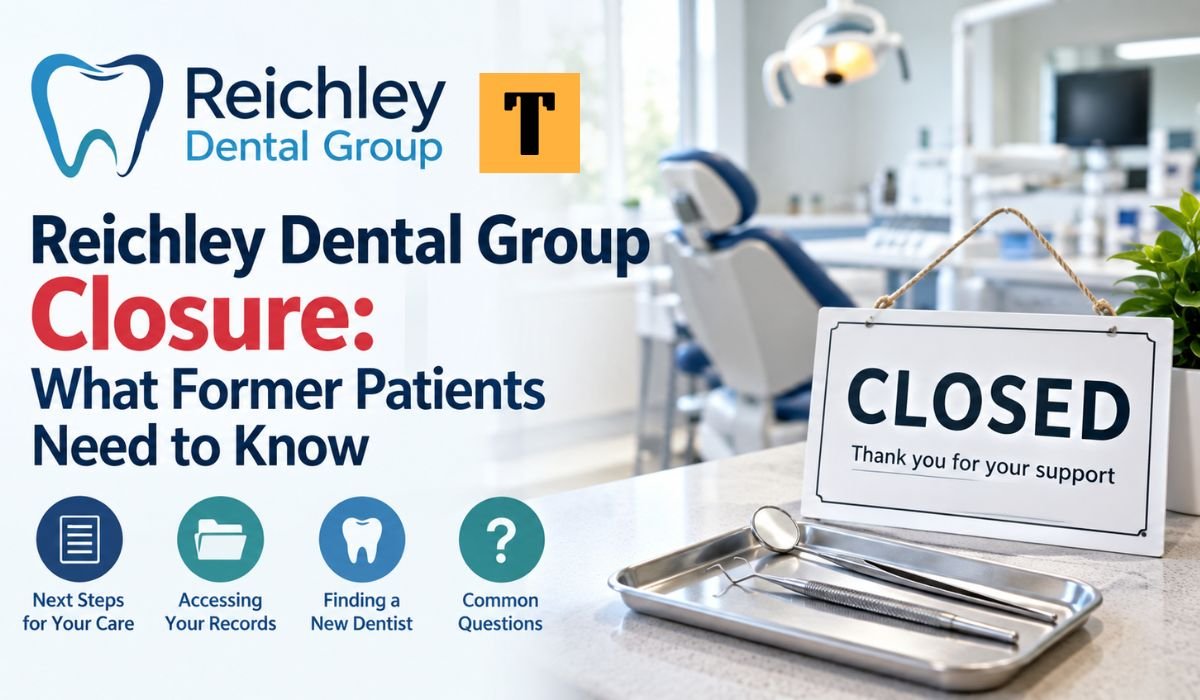
The Reichley Dental Group Closure has left many former patients in Beavercreek, Ohio, asking the same practical question: what happens now? After about 50 years of serving families in the area, the dental practice announced that it would permanently close in March 2026. According to local reporting and the practice’s public announcement, the decision followed Dr. Rochelle Reichley’s diagnosis of Stage 4 lung cancer that had spread to her brain. The practice said she needed to turn her attention to her health and treatment.
For longtime patients, however, the closure is about more than losing a familiar dental office. Some may need copies of years of Dental Records, X-Rays, treatment plans, insurance information, or billing records. Others may have had treatment underway when the office shut down and now need to find another dentist. This guide looks at what’s known about the Reichley Dental Group Closure, what remains unclear, and what former patients can do in 2026 to keep their dental care on track.
Quick Bio Information About Reichley Dental Group
| Information | Details |
|---|---|
| Practice Name | Reichley Dental Group |
| Location | Beavercreek, Ohio |
| Former Address | 1450 Hanes Road, Beavercreek, Ohio |
| Practice Type | General And Cosmetic Dentistry |
| Founded | 1975 |
| Founder | Dr. Joseph “Joe” Reichley |
| Moved To Beavercreek | 1988 |
| Dr. Rochelle Reichley Joined | 2000 |
| Dr. Joe Reichley Retired | 2016 |
| Closure Announcement | March 2026 |
| Closure Status | Permanent |
| Reported Reason | Dr. Rochelle Reichley’s Health And Treatment Needs |
| Reported Records Phone Number | 937-475-9541 |
| Historical Office Number | 937-426-5560 |
| Publicly Reported Records Period | 60 Days After Closure Announcement |
| Current BBB Business Status | Out Of Business |
| Practice Services | General And Cosmetic Dentistry |
| Successor Practice | No Successor Identified In The Public Sources Reviewed |
| Main Patient Concern | Records And Continuity Of Care |
What Happened To Reichley Dental Group?
Reichley Dental Group had deep roots in the Beavercreek community. The practice was founded by Dr. Joseph “Joe” Reichley in 1975 and later moved to Beavercreek in 1988. Dr. Rochelle Reichley, his daughter, joined the practice in 2000. She eventually continued running the business after her father retired in 2016.
That history helps explain why the closure has been significant for many local patients. This wasn’t a dental office that had been open for only a few years. It had become a long-standing family practice where some patients had received care for decades.
On March 11, 2026, the practice announced that it would permanently close. Public reports connected the decision to Dr. Rochelle Reichley’s serious cancer diagnosis and her need to concentrate on treatment. For patients who had depended on the practice for regular cleanings, restorative work, or more complicated procedures, the announcement meant they suddenly had to think about where their future care would come from.
Why Did Reichley Dental Group Close?
The publicly reported reason for the Reichley Dental Group Closure was Dr. Rochelle Reichley’s health and treatment needs. The practice’s announcement, as reported by WHIO, said that she had been diagnosed with Stage 4 lung cancer that had spread to her brain and needed to focus on her health.
That is the information publicly provided about the reason for the closure. There’s no need to go beyond it or speculate about private medical circumstances.
For former patients, the important point is that the closure was presented as a permanent health-related decision rather than a temporary pause in dental services or an ordinary change in business ownership. The practice also expressed appreciation to patients for the trust they had placed in the family and staff over the years.
Is Reichley Dental Group Permanently Closed?
Yes. Reichley Dental Group announced a permanent closure in March 2026. Local reporting described the end of the practice after roughly five decades, and the Better Business Bureau currently identifies Reichley Dental Group as out of business.
Former patients may still come across older business listings, websites, telephone numbers, or other online references when searching for the practice. That’s not unusual after a business closes. Online information can remain available long after an office has stopped seeing patients.
For that reason, an old listing shouldn’t automatically be taken as evidence that Reichley Dental Group is still accepting appointments. The available closure information indicates that former patients should now focus on transferring their care and obtaining their records rather than expecting the Beavercreek office to reopen.
What Happened To Former Reichley Dental Group Patients?
Former patients now have to arrange their continuing dental care elsewhere. The public information reviewed for this article describes the initial records-transfer process but doesn’t identify a successor dentist who automatically took over the entire Reichley patient base.
That distinction is important. Not finding a publicly announced successor doesn’t necessarily mean there is no private arrangement for patient records. It simply means that no successor practice or permanent Records Custodian has been clearly identified in the public sources reviewed.
Patients don’t need to wait for those questions to be settled before taking action. Finding a new dentist and locating previous records can happen at the same time. Doing both early can make the transition much smoother, particularly for people who were already in the middle of treatment.
How Can Former Patients Get Their Dental Records?
Dental Records should be near the top of the list for anyone who previously received care at Reichley Dental Group. WHIO reported that patients could use 937-475-9541 to request copies of their records.
Because the practice is closed, patients should ask who currently acts as the Records Custodian and where former patient files are being stored. A written request is especially useful because it provides a dated record of the request and makes follow-up easier.
The American Dental Association generally recognizes a patient’s ability to obtain copies of dental records, including applicable radiographs, subject to the law governing the records. Dental records can also be transferred when needed for future treatment.
HIPAA may provide additional access rights when the provider involved is a HIPAA-covered entity. The U.S. Department of Health and Human Services says individuals generally have a right to inspect or obtain copies of protected health information held in a covered entity’s designated record set. In many situations, patients can also direct their information to another provider.
For a former Reichley patient, the practical goal is simple: identify whoever currently maintains the file and make a clear, documented request.
What Dental Records Should You Request?
Asking for “my records” may not be enough. A new dentist will often benefit from seeing the actual information behind your previous treatment, not just a short summary.
That can include the complete dental chart, examination notes, progress notes, treatment plans, treatment consents, X-Ray reports and images, periodontal records, referrals, diagnostic studies, diagnoses, and clinical impressions. Ohio’s current dental recordkeeping rules specifically identify several of these categories as components of a patient’s health care record.
Patients who underwent more involved procedures should also ask for relevant information about Crowns, Bridges, Root Canals, Implants, Dentures, Orthodontic Appliances, Periodontal Treatment, and Laboratory Work when those records exist.
It’s also worth requesting financial information separately when needed. An itemized account can help explain what was charged, what was paid, what insurance processed, and whether a balance remained when the practice closed.
How Should You Submit A Dental Records Request?
A written request is usually the clearest way to begin. Include your full name, date of birth, former address if applicable, approximate treatment dates, and a description of the records you’re requesting.
If you want the records sent to a new dentist, identify that provider and the destination clearly. You may also need to complete an authorization or records-release form.
For HIPAA-covered providers, HHS generally requires an access request to be handled within 30 calendar days. A covered entity may receive one additional 30-day period when it can’t complete the request within the original period and provides the required written notice explaining the delay.
Patients can also ask for electronic copies when appropriate. HHS says a covered entity generally must provide information in the requested form and format when that format is readily producible.
Don’t throw away your own paperwork during the process. Save copies of written requests, emails, release forms, delivery confirmations, and notes from telephone conversations. If you have to follow up later, that record will show exactly when you made the request and what you were told.
What If The 60-Day Record Period Has Passed?
The 60-day period is one of the biggest concerns for former patients. Becker’s Dental Review reported in March 2026 that the practice planned to allow patients to transfer their records during the following 60 days. That period has now passed.
Still, its expiration doesn’t automatically mean that the records were destroyed or that a former patient can no longer ask for them.
Ohio’s current dental recordkeeping rule provides useful context. Under the rule that took effect in December 2025, dental health care records generally must be retained for five years from the last clinical encounter, termination of care, or dismissal from care. The rule also allows records for former patients to be stored off-site, provided they are maintained in a safe, confidential, and secure location.
That five-year retention requirement doesn’t identify who currently holds Reichley Dental Group records, nor does it mean every record request will be handled in exactly the same way. It does, however, make it unwise to assume that the end of the 60-day transfer period means the files simply disappeared.
HHS also says the HIPAA access right generally continues while protected health information is maintained by a covered entity or its business associate.
If you’re still trying to obtain your file, ask specifically for the current Records Custodian and make a dated request. If you don’t receive a response, keep documentation of your attempts and consider seeking appropriate guidance about the records-access issue.
What If You Had Unfinished Dental Treatment?
Patients who were halfway through a Crown, Bridge, Root Canal, Implant, Denture, Periodontal procedure, or another treatment should contact a new dentist rather than waiting indefinitely for the former practice’s situation to become clearer.
A new dentist will need to examine you and determine what makes sense based on your current dental condition. The previous treatment plan can be extremely helpful, but it doesn’t automatically dictate what treatment the new provider must perform.
Bring along any Treatment Estimates, temporary restorations, Implant Cards, appliance information, prescriptions, laboratory paperwork, or other documents you received. Even small details can help the new dentist understand what had already been completed.
This matters even more when treatment has been interrupted for a significant period. Dental conditions can change, so the new dentist needs to assess what’s happening now rather than simply picking up an old plan without reviewing it.
Why Are Dental X-Rays And Treatment Notes Important?
Previous X-Rays and treatment notes can give a new dentist valuable insight into your dental history. They may show which teeth were examined, what problems were identified, which restorations were placed, and what treatment was recommended or completed.
Ohio’s dental recordkeeping rules specifically include X-Ray reports, examinations, diagnostic studies, diagnoses or clinical impressions, and treatment plans among the information maintained in a patient’s health care record.
That doesn’t mean old X-Rays will always eliminate the need for new imaging. A new dentist may decide that updated images are appropriate because the existing images are too old, incomplete, unavailable, or no longer adequate for the treatment being considered.
For that reason, former patients should request actual diagnostic images when available instead of relying solely on a note saying that X-Rays were taken. Having the original information gives the new dentist a better view of the patient’s history and can make comparisons easier.
What About Dental Insurance, Payments And Balances?
The Reichley Dental Group Closure can also leave patients with financial questions. Someone may have paid a deposit for treatment that wasn’t completed, have an insurance claim still being processed, or have a balance that was never fully settled.
An itemized financial statement can help clear up those questions. It should make it easier to see payments, deposits, insurance activity, adjustments, charges, and any claimed balance associated with treatment.
It’s also a good idea to speak directly with your insurance company. Ask whether claims were submitted, whether any preauthorization remains relevant, what benefits are still available, and how treatment will be handled now that the original dentist has closed the practice.
Don’t assume that an old treatment estimate represents the final cost of future treatment. A new dentist may use different treatment codes, fees, materials, or recommendations after examining the patient.
Keeping the clinical and financial sides of the closure separate can prevent confusion. One issue is where your Dental Records are; another is what happened with money and insurance.
How Should You Choose A New Dentist?
Finding a new dentist after the closure doesn’t have to mean choosing the first office you see online. The right choice depends on what kind of care you need now.
A patient who only needs routine examinations and cleanings may have plenty of choices. Someone with an unfinished Implant, Root Canal, Crown, Denture, or Periodontal treatment may need a dentist with experience in that particular area.
Before booking an appointment, ask whether the office accepts new patients, participates with your Dental Insurance plan, reviews records from other providers, and can evaluate treatment that was started elsewhere.
Location and appointment availability matter, too. If you need ongoing Periodontal Maintenance or regular follow-up, a convenient office that can see you at appropriate intervals may be more practical than a distant provider.
Insurance directories can help narrow the search, but it’s wise to confirm network participation directly with the dental office because provider information can change.
What Should You Do If You Have A Dental Emergency?
A records request can wait. A serious dental problem shouldn’t.
Severe Dental Pain, significant Facial Swelling, uncontrolled Bleeding, Dental Trauma, fever associated with oral symptoms, or rapidly worsening symptoms should be evaluated promptly. If you believe you have a dental emergency, contact a dentist that offers urgent care and explain your symptoms clearly.
Tell the office that you’re a former Reichley Dental Group patient and mention any recent procedure that might be connected to the problem. If you have temporary dental work or other relevant information, explain that as well.
You don’t need to have your complete historical file in hand before seeking urgent treatment. A new dentist can address the immediate problem and work with the available records afterward.
Is There A New Dentist Taking Over Reichley Patients?
No successor dentist or practice has been identified in the public closure coverage reviewed for this article. The available reports provide information about the closure and initial record-transfer arrangements but don’t name an office that automatically assumed all Reichley patients.
That doesn’t prove that no private arrangement exists. Some records-management arrangements may not be publicly advertised.
For former patients, the safest approach is to ask directly who currently maintains the records. At the same time, patients should arrange their own continuing care instead of assuming they have been automatically transferred to another dentist.
What Information About The Closure Is Still Unclear?
The basic story of the closure is relatively clear. The practice announced a permanent shutdown in March 2026, and public reporting connected the decision with Dr. Rochelle Reichley’s health and treatment needs.
The less clear part concerns what happened to patient records after the initially reported 60-day transfer period. The public sources reviewed don’t clearly identify a long-term Records Custodian or a named successor dental practice.
That gap shouldn’t be interpreted as evidence that the records are unavailable. Ohio’s current rules provide for retention of dental records and allow records for former patients to be stored off-site under appropriate conditions.
For patients, the takeaway is straightforward: don’t assume an old phone number, online listing, or the absence of a public announcement tells the entire story. Ask specifically where your records are held and document your request.
Final Thoughts
The Reichley Dental Group Closure brought an end to a Beavercreek dental practice with a history stretching back to 1975. For former patients, the most important issue now isn’t simply understanding why the office closed. It’s making sure that the closure doesn’t disrupt the dental care they still need.
Obtaining Dental Records, X-Rays, treatment notes, and financial information can make the transition to a new dentist much easier. Patients who had unfinished treatment should arrange a new evaluation rather than assuming an old treatment plan can simply be resumed.
The reported 60-day records-transfer period has passed, but that doesn’t mean former patients should give up on finding their files. Ohio’s current dental recordkeeping rules provide important retention requirements, while HIPAA may provide additional access rights when applicable.
Most importantly, urgent Dental Problems shouldn’t be put on hold while administrative questions are being sorted out. A new dentist can address immediate concerns and work with historical records as they become available.
The practice may have closed, but former patients still have practical steps they can take to protect their treatment history and continue receiving appropriate Dental Care.
FAQs About Reichley Dental Group Closure
Is Reichley Dental Group Permanently Closed?
Yes. Reichley Dental Group announced a permanent closure in March 2026 after roughly 50 years of operation. Public reporting described the practice as permanently shutting down, and the Better Business Bureau currently identifies the business as out of business.
Why Did Reichley Dental Group Close?
The practice publicly attributed the closure to Dr. Rochelle Reichley’s serious cancer diagnosis and her need to focus on her health and treatment. Public reporting identified the diagnosis as Stage 4 lung cancer that had spread to her brain.
How Can I Get My Reichley Dental Group Records?
WHIO reported 937-475-9541 as the number patients could use to request copies of their Dental Records. Because the practice is now closed, patients should also ask who currently serves as the Records Custodian. A written request is recommended so there is a dated record of the request.
Can I Still Request My Records After The 60-Day Period?
The reported 60-day transfer period has passed, but that doesn’t automatically establish that the records are unavailable. Ohio’s dental recordkeeping rule generally requires dental records to be retained for five years from the last clinical encounter or other specified event. Records for former patients may also be stored off-site under secure conditions.
Did Another Dentist Take Over Reichley Patients?
No successor dentist or practice has been identified in the public sources reviewed for this article. That doesn’t establish that no private records arrangement exists. Former patients should ask who currently maintains their records and independently arrange continuing care with a new dentist.
What If I Had Unfinished Treatment?
Contact a new dentist and explain what procedure had already begun. Bring Treatment Estimates, temporary restorations, Implant Cards, appliance information, prescriptions, and other relevant paperwork. The new dentist will evaluate your current condition before deciding how treatment should proceed.
What Should I Do If I Have Dental Pain?
Don’t wait for your records if you have significant pain, facial swelling, uncontrolled bleeding, trauma, fever associated with oral symptoms, or rapidly worsening symptoms. Contact a dentist that offers urgent care and describe the problem clearly. Serious or worsening symptoms should receive prompt professional attention.
What Happens To My Dental Insurance And Payments?
Contact your insurance company about pending claims, preauthorizations, remaining benefits, and treatment that will now be completed by another provider. You can also request an itemized financial statement to clarify charges, payments, deposits, insurance activity, adjustments, and any outstanding balance connected with Reichley Dental Group.
Learn more and explore exciting content on: Victoria Granucci: The Life, Career, Family, and Story Behind Her Fame







Leave a Reply