
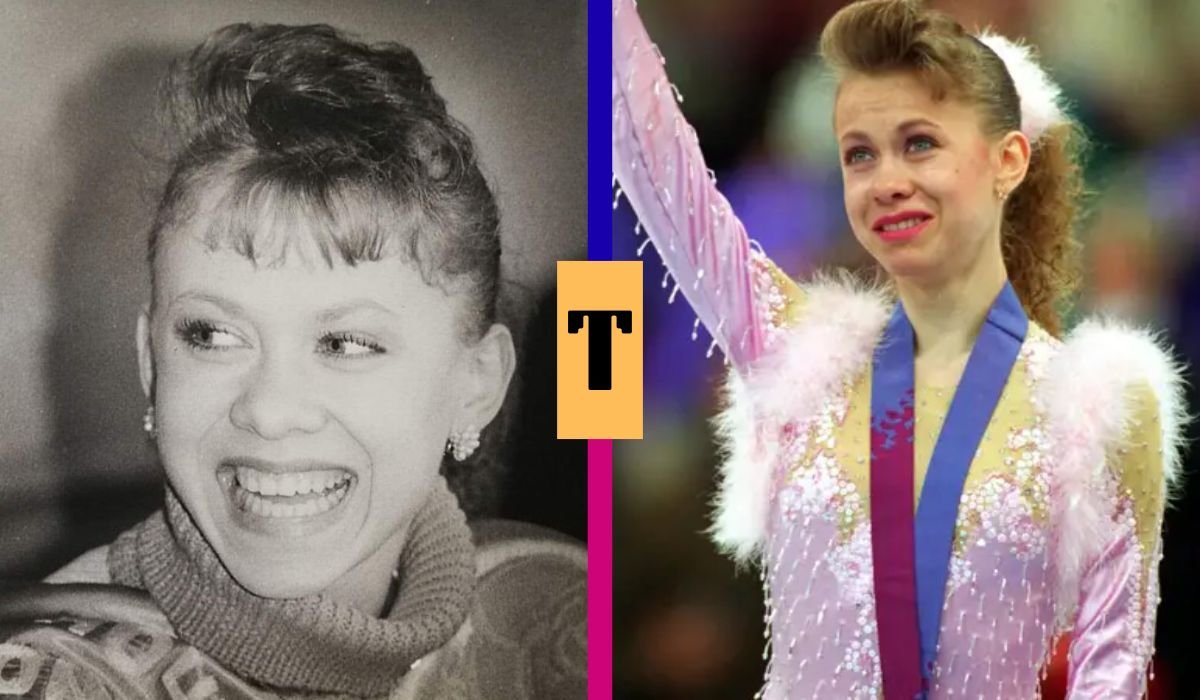
Oksana Bajuł’s rise to the top of Figure Skating happened with astonishing speed. In 1993, at just 15, the Ukrainian skater won the World Championship in Prague. A year later, at 16, she stood on the Olympic podium in Lillehammer with a Gold Medal around her neck.
Her achievement was significant for more than one reason. Bajuł was competing for Ukraine at a time when the country was establishing its identity as an independent Olympic nation. Her victory over Nancy Kerrigan in the 1994 Women’s Singles competition gave Ukraine its first Olympic Gold Medal.
Yet the Oksana Bajuł Biography is about much more than medals. Her childhood was marked by painful family losses, while her skating career demanded years of discipline and sacrifice. After reaching the highest level of Amateur Competition, she turned professional and built a second career through ice shows, television, film and other creative projects.
Her competitive career lasted only a few seasons, but those seasons were enough to secure her place in Figure Skating history.
Quick Bio Information
| Biography Detail | Information |
|---|---|
| Full Name | Oksana Serhiïvna Baiul-Farina |
| Known As | Oksana Bajuł / Oksana Baiul |
| Date Of Birth | November 16, 1977 |
| Birthplace | Dnipropetrovsk, Ukrainian SSR |
| Modern City Name | Dnipro, Ukraine |
| Nationality | Ukrainian |
| Sport | Figure Skating |
| Discipline | Women’s Singles |
| Olympic Games | 1994 Winter Olympics |
| Olympic Host City | Lillehammer, Norway |
| Olympic Result | Gold Medal |
| World Championship | Gold Medal, 1993 |
| European Championships | Silver, 1993 and 1994 |
| Ukrainian Championship | Champion, 1993 and 1994 |
| Competitive Career | Ended in 1994 |
| Major Coaches | Galina Zmievskaya and Valentin Nikolayev |
| Early Coach | Stanislav Korytek |
| Professional Career | Ice Shows, Television and Entertainment |
| Autobiography | Oksana, My Own Story |
| Olympic Age | 16 |
Olympedia records Bajuł’s November 16, 1977 birth date, Dnipro birthplace, Ukrainian representation and Olympic Gold Medal. Its historical record also lists her 1993 World Championship and European Silver Medals in 1993 and 1994.
Oksana Bajuł’s Early Life And Family
Oksana Bajuł was born on November 16, 1977, in Dnipropetrovsk, then part of the Ukrainian SSR. She was the only child of Sergei and Marina Baiul. Her parents separated when she was very young, and her mother and grandparents played important roles in her upbringing.
Her childhood became increasingly difficult as she grew older. Bajuł lost her grandparents while she was still young, and her mother died of ovarian cancer when Bajuł was 13. Around that time, Figure Skating was no longer simply an extracurricular activity. It had become the path around which much of her life was organized.
After her mother’s death, coach Galina Zmievskaya took Bajuł into her home in Odesa and continued to guide her skating development. Biography.com describes Zmievskaya as a surrogate parent to the teenager, while Olympedia records that Bajuł continued her rise under Zmievskaya’s guidance.
Those circumstances are an important part of Bajuł’s story, but they aren’t the whole story. Her success also reflected exceptional ability and years of demanding preparation.
How Oksana Bajuł Started Figure Skating
Bajuł began skating as a young child. Her official biography says her grandfather gave her her first pair of skates when she was three, and that she won her first competition at seven. Biography.com places the beginning of her skating journey at around age four, so the precise starting age varies slightly among sources.
What is clear is that she showed unusual promise early.
Her skating combined athletic technique with an expressive quality that gave her performances a distinctive character. The Ukrainian Figure Skating Federation took notice of her natural Ballet-Inspired artistry, according to Bajuł’s official biography. That artistic quality later became an important part of the way audiences remembered her.
Training In Odesa
Bajuł’s development was closely tied to the Figure Skating community in Odesa. Her early coach was Stanislav Korytek, while Valentin Nikolayev became a major coaching influence during the period in which she won her most important international titles. Bajuł’s official biography identifies Korytek as a coach from 1983 to 1992 and Nikolayev from 1992 onward during her championship years.
Galina Zmievskaya also played a major role in Bajuł’s life and training. The combination of coaching, intensive practice and the demanding Ukrainian skating environment helped prepare the teenager for international competition.
The conditions weren’t luxurious. Contemporary accounts described the difficulties surrounding the Odesa rink after the collapse of the Soviet Union, including limited equipment and financial resources. Biography.com quoted Zmievskaya describing how difficult it was to prepare an Olympic champion under such circumstances.
The Rise Of A Ukrainian Figure Skating Star
Bajuł’s breakthrough came quickly. In 1993, she won the Ukrainian National Championship and then earned Silver at the European Championships in Helsinki, finishing behind France’s Surya Bonaly.
The result established Bajuł as a serious international contender, but the World Championships in Prague would make her a global name.
At the time, she was still only 15.
Oksana Bajuł Becomes World Champion In 1993
The 1993 World Figure Skating Championships in Prague were Bajuł’s first World Championships, and she produced a result few expected from a teenager making her debut at that level.
Bajuł won the Women’s Singles title after finishing second in the technical program and first in the Free Skate. The Los Angeles Times reported that she landed five Triple Jumps in her winning program. Surya Bonaly took Silver, while China’s Chen Lu won Bronze.
The victory was extraordinary partly because of her age. At 15, Bajuł became World Champion at her first appearance at the event.
It also changed the expectations surrounding her. Instead of being viewed simply as a promising young Ukrainian skater, she now entered the Olympic conversation as the reigning World Champion.
The 1994 European Championships
Bajuł carried that momentum into the 1994 season. At the European Championships in Copenhagen, she won another Silver Medal, again finishing behind Surya Bonaly.
The result gave her two consecutive European Silver Medals and confirmed that her World Championship victory had been no one-off achievement. She had established herself among the leading Women’s Singles skaters in the world.
The next stop was Lillehammer.
Oksana Bajuł At The 1994 Lillehammer Olympics
The 1994 Winter Olympics became the defining chapter of Bajuł’s career.
The Women’s Singles competition was already under intense scrutiny. The event took place only weeks after the attack on American skater Nancy Kerrigan at the U.S. Figure Skating Championships, and the controversy surrounding Kerrigan and Tonya Harding attracted enormous media attention.
Bajuł entered the competition as the reigning World Champion, but much of the international spotlight was elsewhere.
After the Short Program, she was in second place behind Kerrigan. The Free Skate would decide the medals.
How Oksana Bajuł Won Olympic Gold
Bajuł’s Olympic Free Skate was not perfect, but it was dramatic and highly effective. She made mistakes during the program yet produced difficult elements late in the performance as she fought to stay in contention.
The competition was exceptionally close.
Contemporary Los Angeles Times reporting said that the nine judges split five to four in Bajuł’s favor. The same report noted that Kerrigan won the Silver Medal, while Bajuł took Gold.
A Washington Post account described the decision as coming down to an extremely narrow judging margin, with the artistic impression tiebreaker helping determine the outcome.
Bajuł was 16 years old.
With that result, she became the 1994 Olympic Champion in Women’s Singles Figure Skating.
Why The Olympic Victory Was Historic For Ukraine
Bajuł’s Gold Medal carried significance well beyond Figure Skating.
She was competing for Ukraine, which had recently become an independent state. The Lillehammer Games marked an important early appearance for Ukraine as an independent Olympic nation, and Bajuł delivered its most celebrated result.
Her victory was Ukraine’s first Olympic Gold Medal. Contemporary Los Angeles Times coverage explicitly described it that way, while Olympedia records Bajuł as Ukraine’s Olympic Gold Medalist in Women’s Singles Figure Skating.
That context is essential when discussing Oksana Bajuł’s Olympic legacy. Her medal wasn’t simply a personal accomplishment; it became part of the sporting history of a newly independent country.
Why Oksana Bajuł Left Amateur Competition
Perhaps the most surprising part of the Oksana Bajuł Career is how quickly she left the Amateur Competition circuit.
After winning Olympic Gold in 1994, Bajuł turned professional. Olympedia records that she negotiated a professional contract in the United States and ended her competitive skating career after only two seasons.
The move allowed her to continue skating for audiences while pursuing opportunities that weren’t available within the amateur system. Economic difficulties affecting Ukrainian Figure Skating also formed part of the broader background to the transition.
In other words, Olympic retirement did not mean Bajuł was finished with Figure Skating. It marked the beginning of a different chapter.
Oksana Bajuł’s Professional Skating Career
After Lillehammer, Bajuł became a professional performer and appeared in ice shows, television productions and other entertainment projects.
Her official biography says she toured internationally and performed with major skating productions, while Olympedia confirms that she went on to appear in ice shows, television programs and movies.
The transition happened when she was still extremely young. She had gone from a teenage Olympic hopeful to an Olympic champion and then to an internationally marketable professional performer within a remarkably short period.
That sudden change in circumstances became an important part of her post-Olympic life.
Life Beyond The Ice
Bajuł gradually expanded her work beyond professional skating. She became involved in television, film, writing and design, using the recognition she had gained through the Olympics to develop a broader public career.
Biography.com reports that she published her autobiography, Oksana, My Own Story, in 1997 and launched a skating apparel line in 2002. It also notes her appearance in the 2007 musical Cold as Ice.
Her official website describes additional work as an actress, designer, author, spokesperson and philanthropist. Because these descriptions come from Bajuł’s own website, they are best treated as first-party information about her professional activities rather than independent evaluations.
Personal Challenges After Olympic Success
The years following Bajuł’s Olympic triumph were not always straightforward. Fame arrived while she was still a teenager, and the transition into professional entertainment exposed her to pressures very different from those of Amateur Competition.
In 1997, Bajuł made headlines after driving under the influence and crashing her car. Olympedia records the incident as part of her post-Olympic biography.
Her personal difficulties continued to receive media attention, but they should be considered within the broader context of her life. They form one chapter of her story rather than a definition of her career.
By the late 1990s, she was also working to return to the ice and continue performing. A 1997 Los Angeles Times report covered her return to major professional competition after the crash and described her determination to continue skating.
Oksana Bajuł’s Books And Personal Story
Bajuł has also documented parts of her journey through writing.
Her 1997 autobiography, Oksana, My Own Story, gave readers a personal account of her childhood, skating career and rapid rise to Olympic fame. Biography.com identifies the book as one of her significant projects after Lillehammer.
Her official biography also lists Secrets of Skating among her books.
These works can provide useful first-person context, particularly when readers want to understand how Bajuł viewed her own experiences. However, autobiographical accounts should naturally be distinguished from independent historical records when establishing factual details.
Oksana Bajuł’s Skating Style And Legacy
Bajuł’s legacy begins with an extraordinary competitive record. She became European Silver Medalist in 1993 and 1994, World Champion in 1993 and Olympic Champion in 1994. She also won Ukrainian national titles in 1993 and 1994.
But statistics alone don’t fully explain why her Olympic performance remains memorable.
Bajuł brought a distinctive artistic quality to her skating. Contemporary reporting on her 1993 World Championship victory also highlighted the technical difficulty of her program, including five Triple Jumps.
Her story also stands out because of its compressed timeline. She reached the highest levels of international Figure Skating as a teenager, won Olympic Gold at 16 and then moved into professional skating instead of pursuing another Olympic cycle.
For Ukraine, her legacy is even more significant. Her Lillehammer victory became one of the country’s defining early Olympic achievements as an independent nation.
Oksana Bajuł’s Major Career Achievements
The central achievements of Oksana Bajuł’s competitive career came within an unusually short period.
She won the Ukrainian National Championship in 1993 and 1994, European Silver in 1993 and 1994, the World Championship in 1993 and Olympic Gold in 1994. Olympedia records her 1993 World title, two European Silver Medals and Olympic Gold as the major highlights of her international career.
The 1994 Olympic victory remains the defining moment. Bajuł entered Lillehammer as a World Champion and left as an Olympic Champion.
That combination of youth, speed of achievement and historical significance makes her competitive career unusual even by Olympic standards.
Final Thoughts
Oksana Bajuł’s journey from Dnipropetrovsk to the Olympic podium is far more complex than a simple story about a young athlete winning Gold.
She endured profound losses during childhood, developed into an elite Figure Skater in Odesa and became a World Champion at 15. One year later, she faced one of the most closely watched Olympic competitions of the era and defeated Nancy Kerrigan to win Gold for Ukraine.
Her competitive career ended almost as quickly as it had reached its peak. Rather than continuing toward another Olympic Games, she entered professional Figure Skating and built a career through ice shows, television, film, writing and other projects.
There were difficult chapters afterward, too. Yet reducing Bajuł’s life to those challenges would miss the larger picture. Her legacy is rooted in an extraordinary sporting achievement and in the historical importance of the country she represented.
For anyone searching for an Oksana Bajuł Biography, the clearest lesson is found in the remarkable speed of her rise. At 15, she was a World Champion. At 16, she was an Olympic Champion. And decades later, her Lillehammer victory remains an important chapter in both Figure Skating history and Ukraine’s Olympic story.
FAQs About Oksana Bajuł
Who Is Oksana Bajuł?
Oksana Bajuł is a Ukrainian former Figure Skater who won the 1993 World Championship and the 1994 Olympic Gold Medal in Women’s Singles. She achieved both titles as a teenager and became one of the best-known Ukrainian athletes of her generation.
When Was Oksana Bajuł Born?
Oksana Bajuł was born on November 16, 1977, in Dnipropetrovsk, Ukrainian SSR. The city is now known as Dnipro, Ukraine.
What Did Oksana Bajuł Win At The 1994 Olympics?
Bajuł won the Gold Medal in Women’s Singles Figure Skating at the 1994 Winter Olympics in Lillehammer, Norway. She finished ahead of Nancy Kerrigan, who won Silver, in a competition decided by a very narrow judging margin.
How Old Was Oksana Bajuł When She Won Olympic Gold?
Bajuł was 16 years old when she won Olympic Gold in February 1994. The victory came only a year after she became World Champion at age 15.
When Did Oksana Bajuł Become World Champion?
She became World Champion at the 1993 World Figure Skating Championships in Prague. It was her first appearance at the World Championships, and she won the title at just 15 years old.
Who Coached Oksana Bajuł?
Several coaches influenced Bajuł’s development. Her official biography identifies Stanislav Korytek as an important early coach and Valentin Nikolayev as a major coach during her championship years. Galina Zmievskaya also played an important role in her training and personal life.
Why Did Oksana Bajuł Leave Competitive Figure Skating?
After winning Olympic Gold in 1994, Bajuł turned professional rather than continuing in Amateur Competition. Olympedia records that she signed a professional contract in the United States and ended her competitive career after only two seasons.
What Did Oksana Bajuł Do After The Olympics?
Bajuł continued her career through professional ice shows and later expanded into television, film, writing and design. She published Oksana, My Own Story in 1997 and continued to work in areas connected with Figure Skating and entertainment.
Learn more and explore exciting content on: Sharon Brophy: The Life and Story of Robert Duvall’s Third Wife







Leave a Reply